
Historical background and importance of the EU ETS
The European Emissions Trading Scheme (EU ETS), first introduced in 2005, is the world’s first and largest carbon market. The main objective of the scheme is to reduce greenhouse gas emissions and encourage the transition to more sustainable energy sources through economic incentives. The EU ETS covers a wide range of sectors, from industrial production to aviation and, more recently, maritime transport. In 2024, a significant change was made when the scheme was extended to maritime transport, which brings new challenges and opportunities for the sector.
Emission allowance prices on the rise
The price of emission allowances under the EU ETS reached an all-time high of over €100 per tonne of CO₂ in February 2023. Although there was some decline during 2023, prices are rising again in 2025, reflecting increased demand for allowances. This growth is partly due to the extension of the scheme to new sectors, including shipping, which increases pressure on ship operators to reduce their emissions and adapt to the new regulations.
Maritime transport under the magnifying glass
From January 2024, the EU ETS covers CO₂ emissions from large ships (over 5,000 gross tonnage) calling at EU ports. The scheme covers 50% of emissions from journeys starting or ending outside the EU and 100% of emissions between EU ports. These measures aim not only to reduce emissions but also to encourage shipping companies to seek more energy-efficient and environmentally friendly solutions, such as alternative fuels or route optimisation.
Monitoring, reporting and verification of emissions
A key part of the EU ETS is the monitoring, reporting and verification (MRV) process. For shipping companies, this means monitoring their emissions, preparing annual reports and submitting them to the competent authorities. This process is essential to ensure transparency and accuracy of data and allows the system to operate efficiently. In addition, the European Commission provides tools and templates to facilitate the fulfilment of these obligations.
Challenges for shipping companies
The inclusion of shipping in the EU ETS brings a number of challenges, especially for smaller shipping companies that have to adapt to the new rules. The purchase of emission allowances represents a significant financial cost, which may affect their competitiveness. On the other hand, investing in green technologies and fuels can bring savings and increase the sustainability of their business in the long term.
Impact on global objectives
Maritime transport is responsible for around 2.9% of global CO₂ emissions, making it a key sector in the fight against climate change. Extending the EU ETS to this sector is an important step towards achieving the Paris Agreement and the EU’s climate neutrality targets by 2050. According to experts, this change can serve as an inspiration for other regions and contribute to the introduction of global measures to reduce emissions in maritime transport.
Future perspectives and expectations
Further increases in the price of emission allowances and the introduction of new rules and regulations are expected in the coming years. The European Commission plans to extend the scheme to other sectors and introduce further measures to promote sustainable development. For maritime transport, this means not only new challenges but also opportunities to innovate and strengthen its role in global climate protection efforts.

 Czech Republic, Písek
  WITHOUT SHIPPING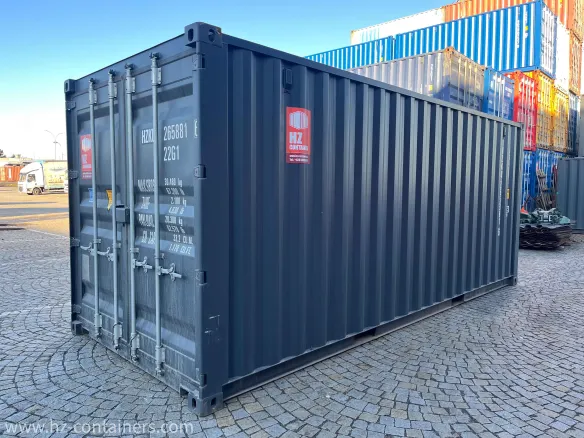


Other container news...

20 Foot shipping container cost
If you are researching the cost of a 20 foot shipping container, you have likely already encountered wildly different prices — from $999 listings online to quotes exceeding $5,500. That range is not a sign of inconsistency. It reflects real differences in container condition, location, delivery logistics, and the seller you are dealing with.
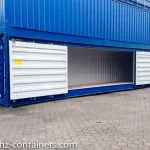
Side Opening container
A side opening container is an ISO-compliant intermodal shipping container engineered with full-length bi-fold doors along one of its long side walls, in addition to the standard cargo doors at one end. Unlike conventional containers that restrict access to a single set of rear doors, a side opening container — also widely called an open side container, open-sided shipping container, or side door container — provides unobstructed lateral access across the entire 20-foot or 40-foot length of the unit. This design transforms the container from a narrow tunnel into a wide-open space that forklifts can enter from the side, multiple workers can load simultaneously, and oversized cargo that would never fit through standard end doors can be placed without struggle.
40 Foot High Cube container cost
A 40 foot high cube container — often abbreviated as 40ft HC, 40′ HC, or 40-foot high cube — is one of the most common shipping container sizes sold on the secondary market. But if you are researching what a 40 foot high cube container costs, you have almost certainly noticed that prices are all over the map. One seller quotes $1,500. Another quotes $7,000. Both could be legitimate.
20 Foot container cost
If you have ever searched for a shipping container, you have almost certainly asked one question first: how much does a 20 foot container cost? The answer is not a single number. It is a range that spans from under $1,000 for a weathered, as-is unit to over $5,000 for a pristine, one-trip container — and that is before delivery, site preparation, or modifications enter the picture.