
Cryptocurrency mining in a shipping container
Cryptocurrency mining in a shipping container refers to a modern, highly specialized and mobile solution for efficiently running large-scale mining operations. It is usually a standardized steel container (most often 20 or 40 feet), which is carefully adapted to function as a self-sufficient, portable data center designed exclusively for cryptomining – the mining of cryptocurrencies such as Bitcoin, Ethereum, Kaspa, Litecoin or Dogecoin.
The concept of the mining container (also crypto container, crypto mining shipping container, mobile mining unit, containerized mining farm) emerged as a response to the growing energy and infrastructure demands of industrial cryptocurrency mining. Instead of building expensive, static infrastructure, the robustness and mobility of containers allow rapid deployment, easy scaling and a reduction in operating and investment costs. These units are designed to optimize performance, minimize operating expenses, enable rapid deployment on a global scale and are often intended for connection to renewable energy sources.
Detailed description and operating principle

Structure and function of a mining container:
- Basic frame: The container is made of highly durable steel (often Corten), which ensures a long service life even in demanding climatic conditions. Standard dimensions are 20 feet (approx. 6.1 m) or 40 feet (approx. 12.2 m) in length, width 2.44 m, height 2.59 m (high-cube up to 2.90 m).
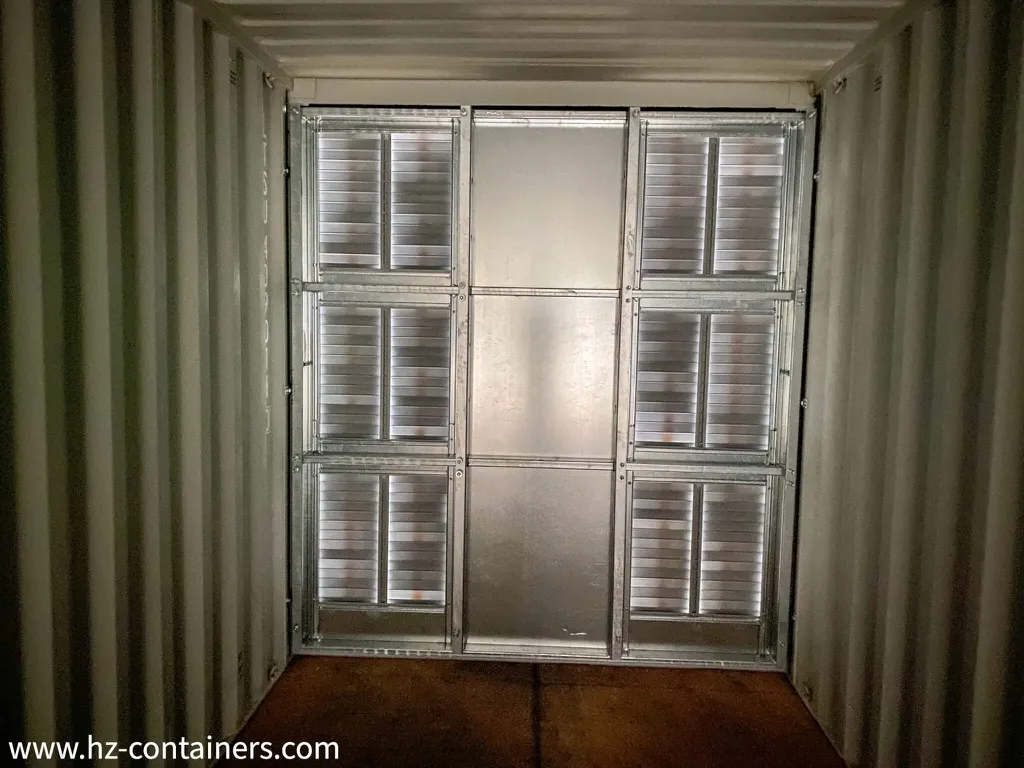
- Complete conversion: The container is equipped with industrial ventilation, air intake and exhaust openings, filtration systems, cable glands, internal racks and special mounts for placing hundreds of pieces of mining hardware (ASIC and GPU).
- Electrical infrastructure: A robust distribution network includes transformers, distribution boards, circuit breakers, high-power power distribution units (PDUs), power consumption metering, surge protection and options for remote monitoring. A typical connection is 400/480 V, often up to 600 kW for a 20-foot container, and over 1 MW for 40-foot units.
- Cooling: Selected according to hardware and location – from high-performance industrial fans (air cooled), through hydro cooling to state-of-the-art immersion cooling with dielectric fluid.
- Network infrastructure: High-speed Ethernet, backup 4G/5G or satellite connection, real-time monitoring, remote management.
- Security: Reinforced doors, alarms, CCTV, motion monitoring, and possibly physical security.
Operating principle (scheme):
- Preparation and modification of the container: Construction and technical adaptation tailored to the required hardware and chosen cooling type.
- Installation of electrical and network distribution: High-performance PDUs, distribution boards, monitoring, backup power sources.
- Hardware installation: Insertion of ASIC or GPU miners (e.g. Bitmain Antminer S19, WhatsMiner, Innosilicon, Canaan Avalon).
- Cooling and filtration: Installation of fans, possibly coolant, filtration systems (G4/M5 panels, size 592×592 mm, etc.).
- Remote monitoring and management: Management software, monitoring of temperatures, consumption and performance.
- Connection at deployment site: Electrical connection, network connection, possibly connection to renewable energy sources.
Typical technical parameters and variants
| Type of container | Dimensions | Miner capacity (ASIC) | Max. power input | Cooling | Price (approx.) |
|---|---|---|---|---|---|
| Standard 20ft | 6.1×2.44×2.59 m | 120–162 pcs (Antminer S19) | up to 600 kW | Air/Hydro/Immersion | 45,000 – 150,000 USD |
| Standard 40ft | 12.2×2.44×2.59 m | 250–350 pcs (Antminer S19) | up to 1.2 MW | Air/Hydro/Immersion | 80,000 – 300,000 USD |
| Special Minipods | various | 30–60 pcs | 80–150 kW | Air/Hydro | 15,000 – 45,000 USD |
- Note: The price depends on configuration, cooling and equipment. The most advanced immersion cooling containers can be more expensive, but they allow higher power density and longer hardware lifespan.
Key components of a crypto mining container
Mining hardware (ASIC/GPU)
- Most commonly, ASIC miners are used (e.g. Bitmain Antminer S19 Pro, WhatsMiner M30S++), optimized for specific algorithms (SHA-256 for Bitcoin).
- GPU rigs are used for mining altcoins (Ethereum, Kaspa, Ravencoin etc.).
- Installation density: up to 180–350 ASIC miners per crypto mining container depending on model and cooling type.
Cooling systems
- Air cooling (air cooled): Industrial axial fans, filtration, automated speed control, optimized airflow.
- Water cooling (hydro cooled): Closed loops with water blocks on the ASICs, pumps, heat exchangers, low noise, higher efficiency.
- Immersion cooling: Complete immersion of hardware in dielectric fluid (e.g. 3M Novec, Bitcool), enables overclocking, minimal dust, extreme power density.
Electrical infrastructure
- High-performance PDUs (Power Distribution Units): Intelligent variants enable monitoring and remote reboot of individual miners.
- Distribution boards, circuit breakers, consumption metering: Load monitoring, overload protection, short-circuit and surge protection.
- Backup power (optional): UPS systems for short outages, generators.
Network infrastructure
- Ethernet network (CAT 6/7), gigabit switches.
- Backup links (LTE/5G/SAT) to ensure pool availability.
- Monitoring and management: Remote access via web interface, mobile apps, alarms in case of failure.
Security systems
- Physical protection: Reinforced doors, electronic locks, motion detectors.
- CCTV: Camera system with night vision, remote supervision.
- Alarms: Connection to a security service, detection of unauthorized entry.
Air filtration and conditioning
- Intake filters: Dust panels G4/M5, often replaceable cartridges.
- Insect protection (screens), maintaining cleanliness of the interior.
Advantages and benefits of crypto mining containers
Overview of main advantages
| Advantage | Description |
|---|---|
| Mobility | Easy relocation to cheap electricity (e.g. hydropower plants, solar farms, surplus industrial energy). |
| Scalability | Modular solution – containers can be added or removed according to current market conditions. |
| Deployment speed | Construction and deployment in 4–8 weeks (a conventional data center takes months to years). |
| Climate optimization | Precise temperature control, minimizing failures and extending hardware lifespan. |
| Flexibility | Customization to a specific algorithm, performance and infrastructure. |
| Environmental impact | Option to connect to renewable sources, reducing carbon footprint. |
| Cost efficiency | Lower CAPEX and OPEX; minimal investments in land, buildings, air conditioning. |
| Residual value | The container can be sold as a functional unit, easy liquidity. |
Additional benefits
- Security: Easy securing and protection of valuable assets.
- Standardization: Uniform solution for multiple locations, easy management.
- High power density: Up to 2–3× more computing capacity per m² compared to traditional server rooms thanks to immersion cooling.
Challenges, drawbacks and important aspects
Possible risks and complications
- High upfront costs: Equipment and hardware mean an investment in the hundreds of thousands to millions of CZK.
- Securing a suitable location: Access to cheap, reliable electricity is necessary (ideally 24/7, outages can be fatal).
- Logistics and transport: Transport of a heavy crypto mining shipping container requires special equipment, and customs and legal conditions in the destination country often need to be addressed.
- Noise: Powerful fans generate noise, crypto mining containers are not suitable for densely populated areas.
- Heat: Waste heat can be used (e.g. heating greenhouses), but without utilization it represents energy loss.
- Regulation and legislation: Rapidly changing regulations in different countries (consumption limits, mining permits, environmental limits).
- Maintenance: Remote or isolated locations can complicate repairs and regular maintenance.
Comparison: mining container vs. traditional data center
| Feature | Mining container | Traditional data center |
|---|---|---|
| Mobility | High (easy to relocate) | None |
| Deployment time | 4–8 weeks | 6–24 months |
| Upfront costs | Lower | Higher (construction work, land) |
| Scalability | Modular, almost unlimited | Limited, expensive |
| Location flexibility | High | Low |
| Performance optimization | Precise (directly for mining) | Universal (servers, storage) |
| Residual value | Can be sold as a whole | Difficult to liquidate building |
| Environmental impact | Option of green energy | Dependent on connection |
| Power density | Extreme (up to 1.2 MW/40ft) | Usually lower |
Most common use cases and deployment scenarios

- Farm near hydropower plants: Use of cheap surplus energy during periods of excess.
- Deployment in industrial sites: Use of waste heat for heating, connection to high-capacity power lines.
- Solar and wind farms: Seasonal or permanent use of renewable energy sources.
- Mobile mining: Rapid relocations to the cheapest electricity, responding to changes in legislation or market conditions.
Modern trends and the future of containerized mining
- Immersion cooling is becoming the standard for high-end mining – it enables extreme power density, reduces the energy consumption of fans, and increases hardware lifespan.
- AI and automation: Systems for predictive monitoring, performance optimization according to electricity prices, failure prediction.
- Use of waste heat: Heating greenhouses, swimming pools, buildings, industrial operations – a significant trend to increase efficiency.
- Hybrid energy systems: Combination of solar, wind energy and battery storage to balance fluctuations in generation and consumption.
- Standardization and mass production: Faster production, lower price, higher-quality components, including European origin and guarantees.
- Ecology and regulation: Emphasis on a lower carbon footprint, use of green energy and minimization of noise and waste heat.
Practical examples (case studies)
- Power Mining 20ft container: Capacity up to 162 ASIC miners, 600 kW power input, intelligent PDU (12×C19, 3×63A), monitoring, optional camera system; build time approx. 45 days.
- OneMiners Minipod/M300: Compact mining container for up to 60 miners, option of air or hydro cooling, immediate deployment, possibility of turnkey solutions.
- BMarko Structures: Specialized containers with the option of connection to renewable sources, focus on energy efficiency and ecology.

 Czech Republic, Třebíč
  WITHOUT SHIPPING

Other container news...
Shipping container 12m (40 ft)
A 12m shipping container is an investment that, if properly selected and cared for, will pay off in decades of trouble-free use. Whether you plan to use it as a warehouse, workshop, garage or the basis for a residential module — the key is careful selection of the condition, a thorough inspection before purchase and high-quality preparation of the base for placement. Take the time to compare offers, check the seller’s references and do not hesitate to personally inspect the container before buying. A properly selected 40-foot container will serve you reliably for many years.
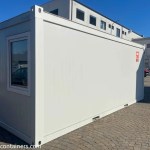
Construction container
A construction container is an investment in safety, order and comfort — whether it is protecting tools from thieves or providing a dignified environment for workers. There are three key decisions: type (storage, residential, sanitary, rubble), form of acquisition (rent vs. purchase) and legislative provision (occupation, building code).
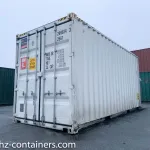
Used shipping container marketplace – prices, condition, transport and how to avoid scams
Buying a shipping container from a second-hand store doesn’t have to be risky if you know what to look for. Always check the seller, compare prices including VAT and shipping, and if possible, arrange a personal inspection. A suspiciously low price is the most common warning sign – a quality used shipping container at a fair price is worth much more than the cheapest option, which can cost you extra money and nerves.
Rental of shipping containers
Do you need a quick and reliable solution for storing materials, tools or goods, but you don’t want to invest hundreds of thousands in buying your own container? Renting shipping containers is one of the most effective solutions for companies and individuals today – whether you are dealing with seasonal storage, arranging facilities on a construction site, or looking for temporary space when moving. This guide will give you a complete overview: from prices and types of containers to rental conditions and a comparison of verified providers. After reading it, you will know exactly which container to choose, how much you will pay for it and what to look out for when renting.