Shipping Containers with Side Doors
What is a shipping container with side doors?
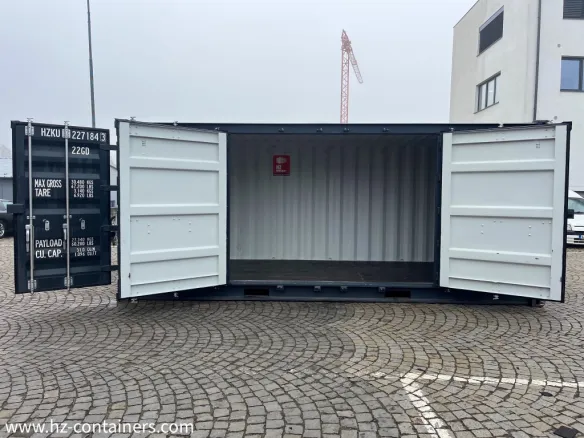
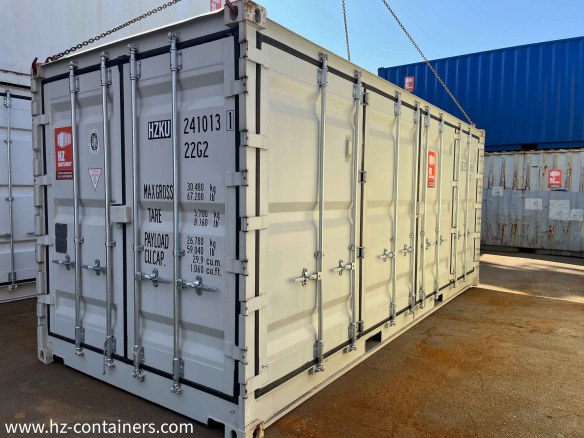
A shipping container with side doors is a modified standard shipping container that has one or more full-sized openings along the long side of the unit, in addition to the traditional doors at the cargo end. This special configuration allows significantly better access compared to conventional containers, which provide access only from the end. Side door containers are designed to replace part or the entire side wall of a standard container with bi-fold, swing, or roll-up doors that can open at various widths, transforming the container into a highly versatile solution for storage and transport.

The term “shipping container with side doors” encompasses several related configurations, all of which share the fundamental characteristic of providing side access. These containers are also commonly referred to as “side-opening containers,” “open-side containers,” “side-access containers,” or “full side-access containers,” depending on the extent of the side opening and the specific door mechanism. The main difference between these containers and standard ISO shipping containers lies in their method of access — while standard containers restrict loading and unloading to one end, side door containers allow operators to access cargo from the long side of the unit, dramatically reducing handling time and improving operational efficiency.
Side door containers are manufactured in various standard sizes, most commonly in 20-foot and 40-foot lengths, with both standard height (8’6″) and high cube (9’6″) configurations available. This size flexibility allows businesses and industries to select the container that best matches their specific cargo dimensions and operational requirements. The structural integrity of side door containers is maintained through careful engineering, as removing or modifying the side wall requires additional reinforcement to ensure the container can withstand the stresses of transport, stacking, and long-term storage. The corrugated walls and corner posts of standard containers are specifically designed to distribute loads, and any modification must preserve this load-bearing capacity.
How do side door containers differ from standard shipping containers?
Standard ISO shipping containers are designed with a single set of double cargo doors located at one short end of the unit. These doors are designed to provide a watertight and rodent-resistant closure, using a double-hinged, wind-tight steel construction with heavy locking bars, cam keepers, and secure sealing elements. The design prioritizes security and weather protection, as containers must protect cargo during international ocean transport, exposure to salt water, extreme temperatures, and rough handling in ports. However, this end-door-only configuration creates significant limitations for certain applications, particularly when loading and unloading bulky, irregular, or oversized cargo.
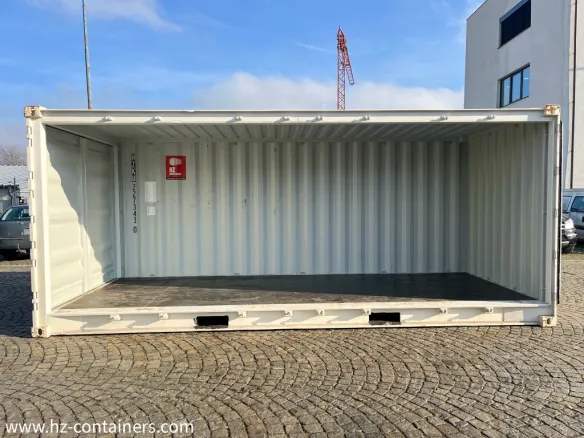
Side door containers fundamentally change this access paradigm by introducing side entry points. The most comprehensive configuration is the “open-side container,” which removes the entire side wall and replaces it with a full-width opening that can swing open to create an unobstructed entrance spanning the entire length of the container. This differs significantly from containers with simple side doors, which may have one or more individual doors (typically bi-fold or swing-type) that open in sections, allowing partial or incremental access to the interior.
The structural and engineering differences between standard and side door containers are substantial. Standard containers derive their structural integrity from corrugated side walls that work in conjunction with corner posts and roof/floor rails to create a rigid box structure capable of being stacked eight units high in port vessels. When the side wall is removed or significantly modified, this structural system is compromised, requiring additional reinforcement in the form of internal or external bracing, thickened corner posts, or reinforced roof and floor systems. This additional engineering is why side door containers are more expensive to manufacture and are rarely used in international shipping — the added weight and structural modifications make them less economically viable for ocean transport compared to standard containers.
| Property | Standard Container | Side Door Container | Open-Side Container |
|---|---|---|---|
| Access Points | End doors only | End doors + side doors | End doors + full side opening |
| Loading Efficiency | Single-end access only | Improved side access | Maximum full-width access |
| Cargo Handling Time | Longer (sequential loading) | Moderate (flexible access angles) | Shortest (unobstructed entry) |
| Structural Integrity | Standard ISO design | Reinforced side wall area | Reinforced entire container |
| Weather Protection | Excellent (sealed walls) | Good (door seals) | Good when closed (wall seals) |
| Stacking Capability | 8+ units high | 4–6 units high | 4–6 units high |
| Price | Base price | 20–30% premium | 30–50% premium |
| Common Use | Ocean shipping | Mixed storage/transport | Heavy equipment, retail, construction |
What are the primary advantages of side door containers?
The most significant advantage of side door containers is the dramatic improvement in loading and unloading efficiency. Traditional end-door-only containers force operators to load cargo sequentially, starting from the back of the container and working forward. For bulky items, oversized equipment, or long materials such as timber, rebar, or piping, this sequential loading process is extremely cumbersome and time-consuming. Forklifts must navigate through the narrow end opening at awkward angles, and manual workers must carefully maneuver items through the limited space. Side door containers eliminate this constraint by providing wide, unobstructed side access that allows forklifts to enter the container directly at an optimal angle, dramatically reducing handling time and the risk of cargo damage.
The accessibility advantage extends beyond mere time savings. Many types of cargo are simply impractical or impossible to load through end doors. Heavy machinery, industrial equipment, vehicles, and other oversized items may have dimensions or shapes that prevent them from fitting through the end opening, even if they fit within the overall dimensions of the container. Side door containers make these items loadable by providing the full width of the container as an entry point. This capability makes side door containers invaluable in industries such as construction, manufacturing, and heavy equipment logistics, where transporting large machinery is routine.

Another critical advantage is improved inventory visibility and accessibility. In a standard container, items stored toward the back are difficult to access without removing everything in front. This creates inefficiency in storage operations where frequent access to various items is required. Side door containers allow operators to see the entire contents at once and access any item without disturbing others, significantly improving warehouse and depot logistics. This advantage makes side door containers particularly popular in retail and commercial applications, where pop-up shops, mobile showrooms, and temporary retail installations require frequent access to merchandise.
Side door containers also offer flexibility in partial opening configurations. Many side door containers feature bi-fold doors that can open in sections — for example, the side doors of a 20-foot container can open to 25%, 50%, or 100% of the width. This flexibility allows operators to control the degree of access based on security needs, weather conditions, or the specific task at hand. A retailer may choose to open the doors fully for customer access but partially close them during inclement weather to protect merchandise. A construction site may choose to open the doors fully for loading large equipment, but only partially open them when retrieving specific tools, reducing security risks and protecting stored items from the weather.
What types of side door configurations exist?
The term “side door container” encompasses several distinct configurations, each offering different access patterns and structural implications. Understanding these variations is essential for selecting the appropriate container for a specific application.
Bi-Fold Side Door Containers feature doors that fold back on themselves, typically in two sections. When fully opened, one section swings to the left and the other to the right, creating a wide opening. These containers are among the most common side door configurations and offer excellent access while maintaining reasonable structural integrity. The bi-fold mechanism allows partial opening, where operators can open only one section or open one section fully while leaving the other closed. This flexibility is particularly valuable in applications where security or weather protection is important.

Full Side Opening Containers, also called “open-side containers,” remove the entire side wall and replace it with a single large opening spanning the full length of the container. This configuration provides maximum accessibility but requires the most significant structural modifications and reinforcement. The entire side wall is replaced by a system of hinges and support mechanisms that allow the wall to open as a single unit. These containers are ideal for applications requiring unobstructed access along the entire length of the container, such as loading long materials or large equipment.
Partial Side Opening Containers have openings that cover only a portion of the side length. For example, a container may have a 10-foot or 20-foot opening on one side while the remaining wall stays intact. This configuration offers a compromise between standard containers and full side opening containers, providing improved access while maintaining better structural integrity and lower modification costs than full-opening designs.
Roll-Up Side Doors are another configuration option, where a flexible door panel rolls upward or to the side, similar to a garage door mechanism. These doors offer excellent weather protection when closed and provide full access when open, although they are less common than bi-fold configurations and may require additional maintenance.
| Door Configuration | Opening Width | Structural Impact | Price Premium | Best Use Case |
|---|---|---|---|---|
| Bi-Fold Doors (partial) | 25–50% of side | Moderate | 20–25% | Flexible access, security-focused applications |
| Bi-Fold Doors (full) | 100% of side (in sections) | Moderate–High | 25–30% | General storage and transport |
| Full Side Opening | 100% of side (single swing) | High | 35–50% | Large equipment, long materials, unobstructed access |
| Partial Opening (fixed) | 30–60% of side | Moderate | 20–28% | Specific cargo types, cost-focused buyers |
| Roll-Up Side Doors | 100% of side | Moderate | 25–35% | Weather-sensitive cargo, frequent access |
What are the primary applications for side door containers?
Side door containers have found widespread use across various industries and applications, each leveraging the unique advantages of side access.
Equipment and Machinery Storage is one of the largest application categories. Construction companies, manufacturing facilities, and equipment rental companies use side door containers to store heavy machinery, generators, compressors, welding equipment, and other industrial tools. The ability to load and unload equipment without maneuvering through a narrow end opening significantly reduces the risk of damage and labor time. Large excavators, bulldozers, and other construction equipment can be driven directly into side door containers, making them essential for construction site logistics.
Retail and Pop-Up Shop Conversions represent a rapidly growing application segment. Retailers and entrepreneurs convert side door containers into mobile showrooms, pop-up shops, and temporary retail installations. The wide side opening creates an inviting storefront that allows customers easy access to merchandise while maintaining the security and weather protection of the container structure. These applications often include shelving, lighting, and branding modifications that transform the container into a fully functional retail space. Food service providers use side door containers for food stalls, outdoor restaurants, and mobile cafés, where the wide opening provides customer service points and visibility.
On-Site Construction Storage utilizes side door containers for secure storage of tools, materials, and equipment on site. Easy access allows workers to quickly retrieve needed items without unpacking the entire container, improving construction efficiency. Full side access also enables better organization of stored items, as everything is visible at once and can be accessed without disturbing other items.
Transport of Long Materials is uniquely suited to side door containers. Industries transporting timber, rebar, steel piping, structural components, and other elongated materials benefit from the ability to load these items through the side opening without bending or angling them through end doors. This capability reduces handling damage and allows for more efficient packing of these materials.
Warehouse and Logistics Operations use side door containers for temporary storage, material staging, and inventory management. The improved access enables faster inventory rotation and better organization of stored goods. Some logistics operations use side door containers as temporary extensions of warehouse space, positioning them at loading docks for efficient material transfer.
Military and Emergency Response Applications utilize side door containers for equipment storage, mobile command centers, and field operations. The accessibility and flexibility of side door configurations make them valuable for rapid deployment scenarios where quick access to equipment is critically important.
What are the engineering and structural considerations for side door containers?
Modifying a standard shipping container to add side doors is not a simple matter of cutting a hole and installing a door frame. The structural integrity of the container must be carefully maintained, as the side walls of standard containers are critical load-bearing elements. Understanding the engineering requirements is essential for anyone considering side door container modifications or purchases.
Standard ISO containers are designed as a unified structural system, where corrugated side walls, corner posts, roof, and floor work together to distribute loads and maintain rigidity. The corrugations in the side walls provide both material efficiency and structural strength, creating a series of small columns that resist bending and compression. Corner posts are the primary load-bearing elements, spanning the full height of the container and transferring vertical loads from the roof to the floor. When the side wall is removed or significantly modified, this load path is interrupted and alternative load paths must be created.
For full side opening containers, engineers typically add reinforcement in several areas. Roof and floor rails may be thickened or reinforced to span the full width of the container without intermediate support from the side wall. Additional internal bracing may be added to prevent lateral deflection. In some designs, corner posts are reinforced with additional steel or increased wall thickness. The hinges and support mechanisms for the side opening doors must be designed to bear the weight of the door panel (typically several tons for a 40-foot container) and distribute the concentrated loads they create.
The welding required for container modifications and side door installation is a critical factor in structural performance. Poor-quality welds can create stress concentration points that may fail under load or vibration. Professional container modification requires certified welders using appropriate welding procedures, materials, and inspection protocols. Welds must be inspected using non-destructive testing methods such as ultrasonic testing or radiography to ensure they meet the required standards.
Corrosion protection is another important engineering consideration. When the exterior wall of the container is cut and modified, the interior surfaces of the new openings are exposed to the elements. These areas must be properly treated with anti-corrosion coatings or paint to prevent rust that could compromise structural integrity. Door hinges, latches, and hardware must be made from corrosion-resistant materials such as stainless steel or galvanized steel, or must be properly coated to prevent rusting.
What are the pricing implications of side door containers?
The price premium for side door containers varies depending on the configuration, opening size, manufacturing quality, and current container market conditions. Understanding these pricing factors is important for businesses evaluating whether side door containers justify the additional investment.
A standard 20-foot or 40-foot container with a single end door typically costs between $2,000 and $4,000 for used containers and $4,000 to $6,000 for new one-trip containers. A side door container with bi-fold doors typically costs 20–30% more than an equivalent standard container, translating to an additional $400–$1,200 for a used container or $800–$1,800 for a new container. Full side opening containers command a 35–50% premium, adding $1,400–$2,000 to the cost of a used container or $1,400–$3,000 to a new container.
The price difference reflects the additional materials, engineering, production time, and welding required to create side door configurations. Full side openings require significantly more welding than bi-fold doors, as the hinges and support mechanisms must be fabricated and installed to support the weight of the entire side panel. The structural reinforcement required to maintain container integrity also adds material and labor costs.
For businesses considering container modifications rather than purchasing pre-built side door containers, the costs are typically higher. Adding side doors to an existing standard container through modification can cost $2,000–$5,000 or more, depending on the door type, size, and manufacturing quality. This cost must be weighed against the value of the improved functionality, as the total investment (purchase price plus modification costs) may approach the price of a new side door container.
The gains in operational efficiency, however, often justify the price premium. Reduced loading and unloading time, decreased risk of cargo damage, improved inventory accessibility, and the ability to transport cargo that would otherwise not fit through end doors often provide a return on investment within months of deployment, especially in high-volume operations or applications involving high-value cargo.
How are side door containers manufactured and modified?
Side door containers are created by two primary methods: manufacturing new containers with side door configurations from the outset, or modifying existing standard containers to add side doors.
Factory Manufacturing of side door containers follows the same basic process as manufacturing standard containers, but with modifications during the assembly phase. Container manufacturers in Asia and other manufacturing centers produce the side wall with door frames and hinges instead of a standard corrugated wall. The manufacturing process involves cutting and preparing the side wall opening, fabricating door panels and hinges, and installing door hardware. The container is then tested for structural integrity, watertightness, and door operation before shipping. Factory-manufactured side door containers benefit from quality control, proper engineering, and professional manufacturing techniques, making them more reliable and durable than field modifications.
Field Modifications of existing containers are carried out by container modification specialists, welding shops, and fabrication companies. The modification process typically follows these steps:
First, the container is placed on a level surface and measured to determine the exact position of the door opening. A cutting plan is created specifying the precise dimensions of the opening, accounting for the door frame and hinges.
Second, the opening is cut using an angle grinder or plasma cutting equipment. The corrugated side wall is carefully cut along the marked lines and the cut section is removed. The steel must be cooled after cutting to prevent warping and to be safe for handling.
Third, a steel frame is fabricated and welded into the opening to support the doors. The frame must be precisely fitted to the opening and welded using proper welding procedures. The frame provides the structure to which the hinges and door panels will be attached.
Fourth, door panels are fabricated or sourced. For bi-fold doors, two separate panels are created with hinges connecting them. For a full side opening, one large panel is fabricated. Door panels must be structurally sound, properly balanced, and designed to distribute loads correctly.
Fifth, hinges and latches are installed. Heavy-duty hinges capable of supporting the weight of the door panels and withstanding repeated opening and closing cycles must be selected. Latches and locking mechanisms must be installed to secure the doors when closed.
Finally, the container is painted and finished. Any bare steel created by cutting and welding must be coated with anti-corrosion primers to prevent rust. The doors may be painted to match the container or serve as a visual accent.
Quality field modifications require skilled fabricators, proper welding equipment, and attention to detail. Poor-quality modifications can result in structural weakness, water leaks, and premature failure of door mechanisms.
What are the maintenance and durability considerations for side door containers?
Side door containers require ongoing maintenance to ensure longevity and reliable operation, particularly the door and hinge mechanisms that are subject to repeated stress and environmental exposure.
Hinge Maintenance is critical for side door containers. Hinges must be regularly inspected for wear, corrosion, and proper alignment. Over time, hinges may develop rust or corrosion, especially in coastal or humid environments. Regular cleaning and application of anti-corrosion lubricants can significantly extend hinge service life. If hinges become damaged or excessively worn, they should be promptly replaced, as failed hinges can render the doors inoperable and create a safety hazard.
Door Seals and Weather Strips must be regularly inspected to ensure the container remains watertight when the doors are closed. Seals can deteriorate due to UV exposure, temperature cycling, and mechanical wear. Degraded seals should be replaced to prevent water ingress and corrosion of interior contents.
Latch and Locking Mechanism Maintenance ensures that the doors remain secure. Latches should be regularly lubricated and checked for proper operation. Locks should be maintained in accordance with manufacturer recommendations, and any signs of rust or damage should be promptly addressed.
Structural Inspection of the door frame and surrounding container structure should be carried out regularly, especially after the container has been transported or subjected to rough handling. Any signs of cracking, deformation, or misalignment should be investigated and repaired by qualified professionals.
Corrosion Prevention is essential for maintaining structural integrity. Any bare steel exposed by paint damage or coating failure should be cleaned and promptly repainted. In corrosive environments such as coastal areas, more frequent inspection and maintenance may be necessary.
With proper maintenance, side door containers can provide 15–20 years of reliable service, comparable to standard containers. Neglected maintenance can significantly shorten the container’s service life and may result in operational failures that compromise the container’s usefulness.
What technical specifications and dimensions do side door containers have?
Understanding the precise technical specifications is essential for the correct selection and use of side door containers. Standard dimensions vary depending on the container size and configuration.
20-Foot Side Door Container has the following typical dimensions:
- Exterior length: 6.05 m (19’10”)
- Exterior width: 2.44 m (8’0″)
- Exterior height: 2.59 m (8’6″)
- Interior length: 5.87 m (19’3″)
- Interior width: 2.35 m (7’8″)
- Interior height: 2.39 m (7’9″)
- Side Door Opening: 5.8 m (19’0″) length × 2.3 m (7’6″) height
- Tare Weight: 2,380–2,940 kg (5,247–6,480 lbs)
- Cargo Capacity: 21,700 kg (47,840 lbs)
- Cubic Capacity: 33 m³ (1,165 ft³)
40-Foot Side Door Container has the following typical dimensions:
- Exterior length: 12.19 m (40’0″)
- Exterior width: 2.44 m (8’0″)
- Exterior height: 2.59 m (8’6″)
- Interior length: 12.03 m (39’5″)
- Interior width: 2.35 m (7’8″)
- Interior height: 2.39 m (7’9″)
- Tare Weight: 4,700 kg (10,362 lbs)
- Cargo Capacity: 26,730 kg (58,935 lbs)
- Cubic Capacity: 67 m³ (2,306 ft³)
40-Foot High Cube Side Door Container has the following typical dimensions:
- Exterior length: 12.19 m (40’0″)
- Exterior width: 2.44 m (8’0″)
- Exterior height: 2.89 m (9’6″)
- Interior length: 12.03 m (39’5″)
- Interior width: 2.35 m (7’8″)
- Interior height: 2.69 m (8’9″)
- Tare Weight: 5,210 kg (11,470 lbs)
- Cargo Capacity: 26,220 kg (57,760 lbs)
- Cubic Capacity: 76 m³ (2,694 ft³)
| Specification | 20ft Standard | 40ft Standard | 40ft High Cube |
|---|---|---|---|
| Exterior Length (m) | 6.05 | 12.19 | 12.19 |
| Exterior Width (m) | 2.44 | 2.44 | 2.44 |
| Exterior Height (m) | 2.59 | 2.59 | 2.89 |
| Interior Length (m) | 5.87 | 12.03 | 12.03 |
| Interior Width (m) | 2.35 | 2.35 | 2.35 |
| Interior Height (m) | 2.39 | 2.39 | 2.69 |
| Tare Weight (kg) | 2,660 | 4,700 | 5,210 |
| Max. Gross Weight (kg) | 24,000 | 30,480 | 30,480 |
| Cargo Capacity (kg) | 21,340 | 25,780 | 25,270 |
| Cubic Capacity (m³) | 33 | 67 | 76 |
What are the standards and compliance requirements for side door containers?
Side door containers, especially those intended for international transport, must comply with relevant international standards and regulations. Understanding these requirements is important for ensuring the legality and safety of containers.
ISO 668 is the international standard that specifies the dimensions and capacities of shipping containers. This standard defines dimensions for standard containers as well as special types, including those with side openings. Containers complying with ISO 668 are designated as ISO-compatible and may be used in international shipping.
ISO 1496 specifies the design and safety requirements for shipping containers. This standard covers structural integrity, testing, and certification of containers. Any modification to a container, including the addition of side doors, must maintain compliance with these requirements.
CSC (Convention for Safe Containers) is an international agreement that establishes safety standards for shipping containers used in international transport. Containers must be certified and marked with a CSC plate in order to be used in international shipping. Modified containers may be CSC-certified if they meet the safety requirements.
Local and National Regulations may also apply to side door containers, particularly when they are used for storage on land or within buildings. Building codes, safety requirements, and zoning regulations may vary by jurisdiction.

 France, Toulouse
  WITHOUT SHIPPING