
ONE WAY – shipping container
Term “ONE WAY – shipping container”, often referred to as one‑way container lease or cabotage container, describes a specific logistics and leasing model, not a physical type of container. In this model the lessee (shipper) rents a shipping container only for a single trip from point A to point B. After delivery and unloading, the container is returned at the destination – its return to the origin is not required.
One‑way leasing is a key solution to one of the biggest problems in global logistics: costly and inefficient repositioning of empty containers (so‑called repositioning). For the container owner it is a way to efficiently move equipment to a high‑demand location without paying for the transport of an empty unit. For the shipper it is a flexible, often cost‑effective way to move goods.
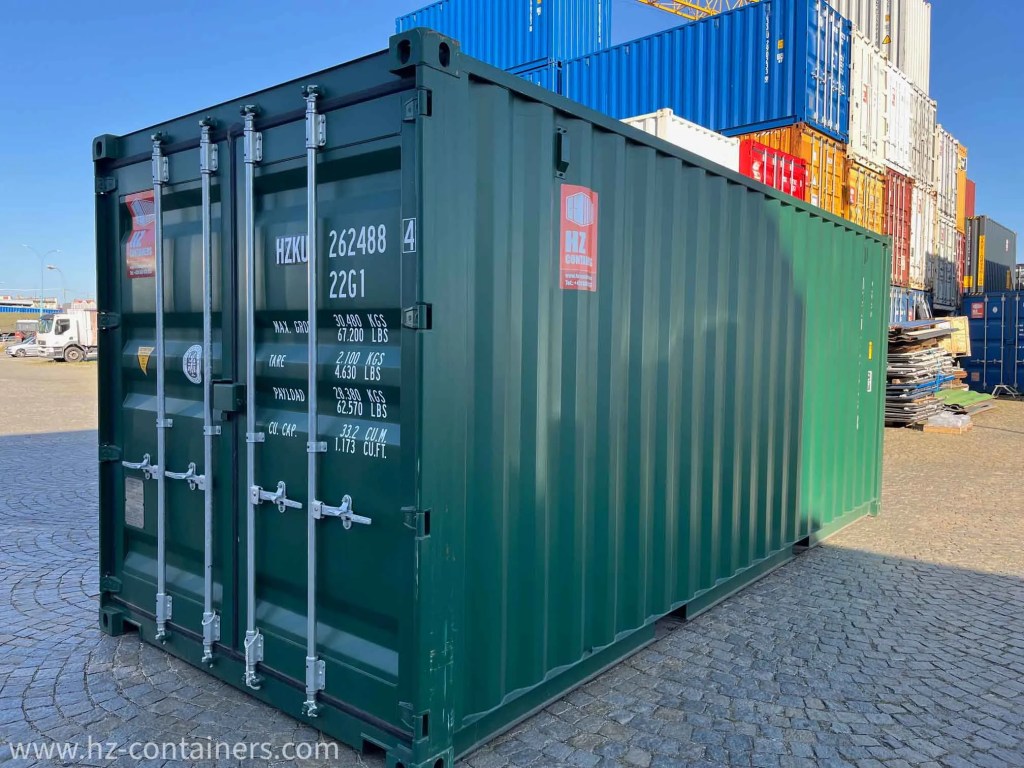
Do not confuse: “ONE WAY” vs. “ONE‑TRIP” container
- ONE WAY = service/process (leasing for one trip, can be new or used container)
- ONE‑TRIP = product/state (almost new container that has completed only one trip from production)
Global problem: Costs of repositioning empty containers
Why does repositioning become necessary?
- Global trade imbalance: Export regions (e.g., China, Southeast Asia) × import regions (Europe, USA)
- Statistic: Every third container is shipped empty
- Annual cost: More than USD 20 billion per year, representing over 12 % of liner operators’ operating expenses
Main cost items of repositioning
| Item | Description |
|---|---|
| Ground transport | Costs of transport to/from the port |
| Terminal handling | Charged loading, unloading and shifting |
| Sea transport | Physical movement of the empty container by sea |
| Storage | Fees for storage and maintenance at the port/depot |
| Administration | Processing of shipping documents and permits |
Main causes of repositioning
- Trade imbalance – surplus of containers in import regions, shortage in export regions
- Seasonality and demand volatility – e.g., harvest periods, holidays, political crises
- Port congestion and logistical inefficiency – delays, overload, high fees
How does one‑way leasing work?
One‑way leasing enables efficient use of every container trip and minimizes the transport of empty units.
Step‑by‑step process
- Container owner (e.g., leasing company):
- Has a surplus of containers in a certain area (e.g., Europe)
- Needs to move containers to a location with high demand (e.g., Asia)
- Instead of costly repositioning, offers the container for one‑way lease
- Shipper (lessee):
- Needs to transport goods on a route where a container is available
- Leases it for only one trip
- After delivery returns the container to a designated depot in the destination
- Result:
- Owner moves the container “for free” (costs covered by the cargo)
- Shipper gets a container without the obligation to arrange its return
- Empty movements are reduced, lowering fees for demurrage and detention
Benefits for container owners
- Efficient relocation of inventory to demand hotspots
- Reduction of operating costs
- Ability to generate income from otherwise idle containers
Benefits for shippers
- Simplified logistics (no return transport)
- Flexibility in route planning
- Lower demurrage fees (free days, per‑diem negotiable)
- Access to high‑quality containers (including one‑trip units)
SOC vs. COC containers
| Container type | Description | Benefits for lessee |
|---|---|---|
| SOC (Shipper Owned Container) | Container owned/leased by the shipper | Savings on detention, freedom in destination, flexibility |
| COC (Carrier Owned Container) | Container owned by the carrier | Comfortable service, but often higher fees |
SOC containers in a one‑way lease allow direct negotiation of terms (pick‑up fee, free days, per‑diem) and minimize the risk of unexpected charges.
Economic aspects and trends (2024)
- Globally, over 60 million empty container moves occur each year
- One‑way leasing is a key strategy to cut these costs and emissions
- Dynamic pricing: Leasing a 40′ HC container on the Hamburg – Rotterdam route may cost, for example, $120 pick‑up fee, $44.20 per diem, 19 free days (source: container‑xchange.com)
- Growing demand for one‑way leases due to geopolitical events (e.g., Red Sea crisis, seasonal export peaks from China)
One‑Trip container: State vs. service
One‑trip container is an almost new container that has completed only a single journey from the factory (typically China) to its destination (Europe, USA).
Technical specifications of a one‑trip container
| Parameter | Value / Description |
|---|---|
| Condition | Almost no signs of wear, structurally sound and perfectly sealed |
| Surface | Uniform, fresh coating, minimal cosmetic defects |
| Floor | High‑quality plywood, often “new‑smelling” |
| Certification | CSC (Container Safety Convention) valid, ready for export |
| Equipment | Option for lockbox, modifications for specific use (ventilation, fittings) |
| Service life | 20–30 years (static use), 10–15 years in international transport |
Differences: One‑trip vs. used container
| Feature | One‑trip container | Standard used (cargo‑worthy) |
|---|---|---|
| Condition | Almost new | Worn, dents, corrosion |
| Certification | New/valid CSC | May require CSC renewal |
| Suitability for conversions | Ideal, minimal modifications | Often requires grinding, repairs |
| Residual value | High | Lower |
Legislative requirements and certifications
- CSC certification (Container Safety Convention): Mandatory for every container used for international transport
- ISO standards: Dimensions, strength, markings – ensure global compatibility and safety
- Rules for repatriation/return of container: Must be returned to a predefined depot, in appropriate condition
Practical examples
Typical applications of one‑way leasing
- International forwarding: Cost optimisation, assurance of equipment availability
- Project logistics: One‑off events, large cargo moves to construction sites or industry
- Temporary storage and facilities: Use as storage or office modules
Sustainability and environmental benefits
- CO₂ emission reduction: Limiting transport of empty containers lowers the carbon footprint
- More efficient resource use: Every container trip carries cargo instead of “air”
Risks and recommendations when leasing/purchasing
- Verify the supplier: Purchase/lease only from vetted companies (reviews, references, company ID, history)
- Beware of fraud: Offers that are “too good to be true” are suspicious; always request detailed photos and the possibility of an on‑site inspection
- Contract terms: Clearly define who is responsible for damages, the exact return location, and any demurrage fees
Frequently asked questions (FAQ)
What is the main difference between a one‑way and a one‑trip container?
- One‑way is a leasing service (lease for one trip), one‑trip is a state (almost new container after a single journey from production).
Is the surcharge for a one‑trip container worthwhile?
- If long service life, appearance, minimal maintenance, or construction modifications are important, the answer is definitely yes. For pure storage purposes, an older water‑tight container is sufficient.
Can a one‑trip container be reused for export again?
- Yes, it has a valid CSC certification and is at the beginning of its service life.
What are the current prices for one‑way leasing?
- Prices depend on route, container condition and negotiated terms (pick‑up fee, free days, per‑diem). For example, on the Hamburg–Rotterdam route the pick‑up fee may be $120, the daily rate $44.20, with 19 free days.
Summary and recommendations
ONE WAY – shipping container is a key concept for anyone who wants to optimize costs and maximize efficiency in global logistics. Thanks to a smartly set one-way rental model, unnecessary movements of empty containers can be minimized, saving time, money and at the same time contributing to reducing emissions.
One-trip containers are the top of the line among used containers and are an excellent investment not only for transportation, but also for conversions and long-term static use, such as for shipping container homes and container houses.

 Edmonton, Canada
  WITHOUT SHIPPING

