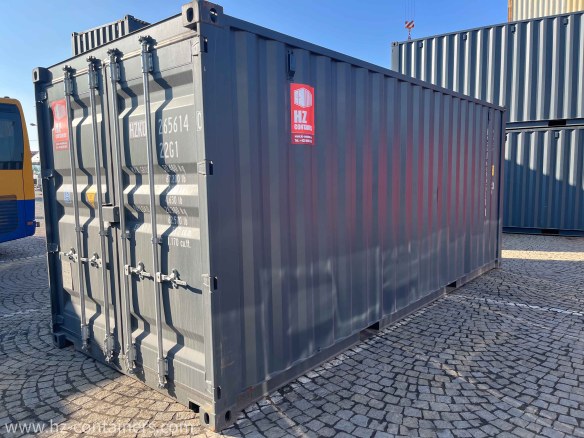
Hygroscopicity in Shipping Containers
What is hygroscopicity and why is it important in cargo transport?
Hygroscopicity is a fundamental physical property of certain materials to attract, absorb, and retain moisture from the surrounding air. The term originates from the Greek words “hygro” (water or moisture) and “skopein” (to observe or examine). In the context of shipping containers, hygroscopicity represents one of the most serious threats to cargo integrity, affecting everything from wooden pallets and paper packaging to food products such as coffee, cocoa, spices, and bulk foods. Understanding hygroscopicity is essential for anyone involved in international shipping, logistics, or containerized cargo transport.
The phenomenon of hygroscopicity operates on the principle of Equilibrium Moisture Content (EMC). When hygroscopic materials are exposed to air at a certain relative humidity, they naturally absorb or release moisture until they reach equilibrium with their environment. This equilibrium point depends on both the relative humidity and the temperature of the surrounding air. For example, wooden pallets, which are ubiquitous in container operations, will continuously exchange moisture with the container atmosphere and can potentially release up to 24% of their own weight in water vapor under certain conditions. This seemingly simple physical process becomes dramatically problematic during maritime transport, where temperature fluctuations and the enclosed container environment create conditions for catastrophic moisture damage.
The significance of hygroscopicity in transport cannot be overstated. Research suggests that up to 75% of the moisture found inside a shipping container originates from the hygroscopic cargo itself, not from external sources. This internal moisture production creates what the shipping industry calls “container rain” or “cargo sweat” — a phenomenon where condensation forms on the walls and ceiling of the container and drips onto the cargo, causing rust, mold, deterioration, and complete loss of value. For companies shipping wood, paper products, textiles, organic food products, or any hygroscopic cargo, moisture damage represents a direct financial loss that can exceed the total value of the entire shipment.
| Material Type | Hygroscopicity Level | Typical Moisture Content | Risk in Containers |
|---|---|---|---|
| Wood (green timber) | Very high | 50–100% | Extreme – releases significant amounts of moisture |
| Wood (kiln-dried) | Medium | ~19% | Low – below EMC threshold |
| Paper and cardboard | Very high | 5–10% | High – absorbs and releases moisture |
| Textiles | Very high | 12–15% | High – sensitive to moisture |
| Coffee and cocoa | Very high | 10–12% | High – quality degradation |
| Spices and powders | High | 8–15% | High – caking and degradation |
| Plastics (certain types) | Low to medium | 0.1–2% | Low – minimal moisture exchange |
| Metals and ceramics | Non-hygroscopic | N/A | None – no moisture exchange |
How does Equilibrium Moisture Content (EMC) work in container environments?
Equilibrium Moisture Content (EMC) is the precise moisture level at which a hygroscopic material stops exchanging moisture with its environment. At this point, the rate of moisture absorption equals the rate of moisture release, creating a state of equilibrium. EMC is not a fixed value — it changes dynamically based on the relative humidity and temperature of the surrounding air. This fundamental principle governs all moisture behavior inside shipping containers and is critical for understanding why certain cargo combinations are particularly hazardous.
The relationship between relative humidity, temperature, and EMC is logarithmic and non-linear. As relative humidity increases, materials absorb more moisture and their EMC rises. Conversely, when humidity decreases, materials release moisture. Temperature also plays a decisive role: the same relative humidity at different temperatures will produce different EMC values. For example, a container maintaining 80% relative humidity at 25°C will create different EMC conditions than the same 80% humidity at 10°C. This interaction of temperature and humidity is why shipping routes that pass through different climatic zones are particularly problematic.
Wooden pallets exemplify how EMC creates practical problems. Kiln-dried pallets have a moisture content of approximately 19%, which is below the typical EMC in shipping containers (around 30%). This means kiln-dried pallets will actually absorb excess moisture from the container atmosphere, helping to reduce overall humidity. Green timber pallets — freshly cut wood that has not been dried — can contain 50–100% moisture relative to their weight. When loaded into a container, these pallets release enormous amounts of water vapor, raising the container’s relative humidity to dangerous levels. The difference between kiln-dried and green timber pallets is absolutely critical: heat treatment alone does not achieve the same moisture reduction as kiln drying, making heat-treated pallets an inadequate substitute.
The practical implications of EMC apply to all hygroscopic packaging materials. Corrugated cardboard, paperboard, and OSB (oriented strand board) all behave like sponges, absorbing moisture when the relative humidity in the container is high and releasing it when humidity drops. Paper packaging materials can increase the total moisture content inside a container by 5–15%, depending on their initial moisture content and the container’s humidity conditions. This is why plastic wrapping or vacuum-sealed packaging that isolates hygroscopic materials from the container atmosphere offers protection — although such measures increase costs and environmental burden.
| Relative Humidity | Wood EMC | Paper EMC | Cardboard EMC | Temperature Effect |
|---|---|---|---|---|
| 40% | 7–8% | 6–7% | 6–7% | Dry conditions – minimal moisture |
| 60% | 11–12% | 10–11% | 10–11% | Moderate – equilibrium point |
| 75% | 14–15% | 13–14% | 13–14% | Mold risk |
| 85% | 16–17% | 15–16% | 15–16% | High humidity – rapid degradation |
| 90%+ | 18–20%+ | 17–19%+ | 17–19%+ | Extreme – severe damage likely |
What causes high humidity and moisture accumulation inside shipping containers?
The sources of moisture inside a shipping container are diverse and often interconnected, making moisture management a complex challenge. Contrary to common assumptions, seawater and rain are not the primary sources of moisture inside sealed containers. Instead, moisture comes from four primary sources: the air inside the container, packaging materials, wooden pallets, and the cargo itself.
Air as a moisture source: Air always contains water vapor, a phenomenon known as humidity. The amount of water vapor air can hold depends on temperature: warmer air holds more moisture, while cooler air holds less. One cubic meter of air at 25°C and 80% relative humidity contains approximately 18 grams of water vapor. When the same air cools to 10°C, it can hold only approximately 8 grams of water vapor at 80% relative humidity. The excess 10 grams must condense into liquid form — this is the physical basis of “container rain.” During container loading in hot, humid climates (for example, in tropical ports), the air inside the container becomes saturated with moisture. When the container travels to cooler climatic zones or undergoes a nighttime temperature drop, this moisture condenses on the coldest surfaces: typically the steel ceiling and walls of the container.
Packaging materials as moisture sources: Packaging made from wood, cardboard, paper, and similar materials contains inherent moisture and serves as both a reservoir and a source of moisture. When these materials are at or above their EMC, they release moisture into the container atmosphere. A single pallet of corrugated cardboard boxes can contain 50–100 liters of water, all of which can evaporate into the container atmosphere. This is particularly problematic when packaging materials are stored in humid conditions before loading — a common scenario in humid climates where warehouses lack air conditioning.

Wooden pallets as major moisture contributors: Wooden pallets represent perhaps the single largest source of moisture in many containers. Green timber pallets can contain more than 10 pounds (4.5 kg) of water per pallet. A container can hold 20–30 pallets, meaning 200–300 pounds of water could potentially be released during transport. Even accounting for only partial moisture release, this is an enormous amount of moisture. The industry standard strictly distinguishes between kiln-dried pallets (safe) and green or heat-treated timber pallets (hazardous), yet many shippers remain unaware of this critical distinction. Heat treatment (which kills insects and pathogens for phytosanitary purposes) does not achieve the same degree of drying as kiln drying, making heat-treated pallets potentially problematic.
Hygroscopic cargo as internal moisture sources: Organic products themselves are hygroscopic. Coffee, cocoa, spices, grains, powders, and other food products contain moisture and will exchange moisture with the container atmosphere. When the container’s relative humidity exceeds the cargo’s EMC, the cargo absorbs moisture. When humidity drops below the cargo’s EMC, the cargo releases moisture. This two-way exchange means hygroscopic cargo simultaneously acts as both a source and a sink of moisture, complicating moisture management. For sensitive products such as coffee or cocoa, even a small increase in moisture content can degrade flavor, aroma, and market value. Research shows that coffee and cocoa require relative humidity between 50–65% to maintain optimal quality, with higher humidity leading to rapid deterioration of flavor and aroma.
What are the consequences of high humidity and condensation in containers?
The consequences of uncontrolled humidity and condensation inside shipping containers manifest as various forms of cargo damage, each with serious financial implications. Understanding these consequences helps explain why moisture management is not optional but essential for profitable shipping.
Mold and mildew growth: Mold and mildew begin to develop when relative humidity exceeds approximately 75% and temperature remains between 20–30°C. These conditions are extremely common inside shipping containers, particularly during voyages through tropical regions or when containers are stored in humid climates. Mold growth is irreversible and renders many products completely unsaleable. Textiles, leather goods, paper products, wooden items, and food products are all highly susceptible. A single container of clothing or furniture that molds can represent a total loss, as mold spores penetrate deep into materials and cannot be fully removed.
Rust and corrosion: Although container walls are made of steel, they are not immune to corrosion. Condensation on steel surfaces, combined with salt spray (in maritime transport) and oxygen, creates ideal conditions for rust formation. Metal cargo, tools, machinery, and even metal components in other products corrode rapidly in high-humidity environments. The rust that forms is not merely cosmetic — it weakens structural integrity and can render products unsafe to use. Automotive parts, machinery, tools, and metal goods all suffer serious loss of value due to corrosion.
Packaging degradation: Cardboard, paper, and wooden packaging absorb moisture and lose structural integrity. Boxes become soft and collapse, wooden crates warp and split, and paper labels become illegible. This packaging degradation not only damages the products inside but also creates handling hazards. Collapsed boxes can spill their contents, creating secondary damage and safety risks during unloading.
Product degradation: Different products degrade in different ways under high humidity. Wood warps, swells, and becomes susceptible to rot and insect damage. Paper becomes brittle or soft depending on specific conditions. Textiles develop mold, odors, and color changes. Food products such as coffee, cocoa, spices, and bulk goods absorb moisture and cake together, change color, or develop off-flavors. Electronics suffer corrosion of circuits and connectors. Pharmaceuticals can chemically degrade if humidity levels exceed specifications. Each product category has specific humidity thresholds beyond which damage occurs.
Container sweat (cargo sweat): The term “container sweat” or “cargo sweat” refers to condensation that forms when warm, humid air inside the container contacts the cold walls or ceiling of the container. This condensation drips onto the cargo like rain, creating localized wet spots that trigger mold growth, corrosion, and product degradation. Container sweat is particularly severe in containers loaded in hot, humid climates that then travel to cold regions — the temperature differential maximizes condensation. A container loaded in Singapore (hot and humid) destined for Rotterdam (cold and humid) experiences extreme temperature fluctuations that virtually guarantee condensation unless moisture is actively managed.
| Damage Type | Humidity Threshold | Temperature Range | Reversibility | Financial Impact |
|---|---|---|---|---|
| Mold and mildew | 75%+ RH | 20–30°C | Irreversible | Likely total loss |
| Rust and corrosion | 60%+ RH | Any | Irreversible | 20–100% value loss |
| Packaging collapse | 85%+ RH | Any | Irreversible | 10–50% value loss |
| Wood warping | 75%+ RH | 15–35°C | Partially reversible | 10–30% value loss |
| Food degradation | Varies (60–75%) | 20–30°C | Irreversible | 30–100% value loss |
How do desiccants work to manage moisture in shipping containers?
Desiccants are hygroscopic substances specifically engineered to absorb and retain moisture from the air inside shipping containers. Rather than fighting hygroscopicity, desiccants harness it as a solution: they are extremely hygroscopic materials that absorb moisture more aggressively than cargo or packaging, thereby reducing the container’s relative humidity to safe levels.
The most commonly used desiccant materials include silica gel, activated carbon, calcium sulfate, and calcium chloride. Each has different absorption capacities and performance characteristics. Silica gel is widely used for small packets and electronics because it is non-toxic, reusable (can be dried and reused), and provides consistent performance. Activated carbon offers absorption capacity similar to silica gel but with additional odor control benefits. Calcium sulfate is stable and performs well under moderate humidity conditions. Calcium chloride at 99% purity offers the highest absorption capacity — up to 250% of its own weight under normal field conditions and more than 400% under laboratory conditions — making it the most effective for large shipping containers.
The mechanism of desiccant action is straightforward: desiccants absorb water vapor from the air and remove it from circulation. As moisture is removed, the relative humidity inside the container decreases. Lower relative humidity means cargo and packaging are less likely to absorb additional moisture and more likely to release moisture they already contain. This creates a positive feedback loop: as desiccants absorb moisture, the relative humidity in the container drops, materials release moisture, and the desiccants absorb that released moisture. This cycle continues until equilibrium is reached at a safe humidity level.
The critical challenge with desiccants is determining the correct quantity needed. The industry standard DIN 55474 provides a complex mathematical formula for calculating desiccant requirements:
n = 1/a · (V · b + m · c + A · e · D · t)
Where:
- n = number of desiccant units required
- a = moisture absorption capacity per unit
- V = container volume (m³)
- b = moisture content per m³ of air
- m = weight of hygroscopic packaging (kg)
- c = moisture content factor
- A = barrier film area (m²)
- e = correction factor for final humidity
- D = water vapor permeability (g/m²)
- t = transport and storage duration (days)
This formula accounts for container volume, initial moisture load from air and materials, desiccant absorption capacity, and transport duration. Underestimating desiccants is extremely common and dangerous: insufficient desiccants cannot absorb all the moisture released by cargo and packaging, leaving humidity at harmful levels. Excess desiccants add unnecessary cost but provide a safety margin. Professional shippers typically use the DIN 55474 formula or commercial calculators (such as the DESI-PAK calculator from Clariant) to ensure adequate desiccant quantities.
Performance testing of desiccants reveals significant differences between laboratory conditions and actual field conditions. Climate chamber tests show that calcium chloride absorbs more than 400% of its weight, but actual field conditions rarely achieve such performance. Real containers are not perfectly sealed, desiccants are not always optimally placed, and moisture sources are not always precisely quantified. This is why field testing and validation are essential — theoretical calculations must be verified by actual shipping trials.
| Desiccant Type | Absorption Capacity | Cost | Reusable | Best Use |
|---|---|---|---|---|
| Silica gel | 40% of weight | Low | Yes (reusable) | Small packets, electronics |
| Activated carbon | 50% of weight | Low | Limited | Small packets, odor control |
| Calcium sulfate | 30% of weight | Low | No | Moderate humidity management |
| Calcium chloride (94–99%) | 250–400% of weight | Medium | No | Large containers, high humidity |
What are the prevention and mitigation strategies that reduce moisture damage?
Effective moisture management in shipping containers requires a multi-layered approach combining prevention, active mitigation, and monitoring. No single strategy is universally optimal; the best approach depends on cargo type, route, season, budget, and risk tolerance.
Using kiln-dried pallets: The simplest and most effective moisture prevention strategy is to use kiln-dried or plastic pallets instead of green timber pallets. Kiln-dried pallets have a moisture content of around 19%, which is below the typical EMC in containers. These pallets not only do not release moisture but can actually absorb excess moisture from the container atmosphere. The price difference between kiln-dried and green timber pallets is typically 10–20%, far less than the cost of moisture damage. Yet many shippers continue to use green timber pallets due to inertia, lack of awareness, or perceived cost savings. Plastic pallets completely eliminate moisture issues but cost 3–5 times more than wood, making them economically viable only for high-value goods or repeat routes where pallet reuse justifies the investment.
Desiccant placement and sizing: Proper desiccant use requires both the correct quantity (as calculated by DIN 55474) and strategic placement. Desiccants are most effective when distributed throughout the container rather than concentrated in one location. Placement strategies include attaching desiccant poles to container walls, distributing desiccant bags across the floor, or applying special desiccant-impregnated coatings to the container ceiling. The goal is to maximize desiccant contact with the container air, allowing it to absorb moisture evenly. Desiccants placed directly opposite cold walls (where condensation forms) are particularly effective.
Ventilation: Ventilating a container involves allowing airflow between the interior and exterior of the container, equalizing temperature and humidity with the external environment. Ventilation is effective only under certain conditions, summarized in the maritime industry’s well-known saying: “From hot to cold, ventilate bold. From cold to hot, ventilate NOT.” When a container travels from a hot, humid area to a cold area, ventilation helps: cool, dry outside air enters the container and reduces both temperature and humidity. However, when a container travels from a cold area to a hot, humid area, ventilation is counterproductive: hot, humid outside air enters and increases humidity. Ventilation also requires adequate airflow; many container vents provide insufficient air exchange to achieve true equilibrium.
Vapor barrier packaging: Wrapping individual products or entire pallets in moisture-impermeable film creates a barrier between hygroscopic materials and the container atmosphere. This approach is most practical for high-value items such as electronics, precision instruments, or luxury goods. Wrapping must be done carefully to avoid trapping moisture inside the package. Common vapor barrier materials include polyethylene-foil-polyethylene for lighter products and fabric-foil-nylon for heavier items. Although effective, vapor barrier packaging adds significant cost and labor and raises environmental concerns due to plastic waste.
Insulation: Insulating the container walls and ceiling reduces temperature fluctuations between the interior and exterior of the container. Foam insulation, lining, bubble wrap in metallic casing, and aluminum barriers all reduce the temperature differential that causes condensation. Insulation is particularly valuable for routes with extreme temperature changes or for products extremely sensitive to moisture. However, insulation adds weight, reduces usable container volume, and increases transport costs, making it economically viable only for high-value cargo.
Dehumidification: Active dehumidifiers or air conditioning creates a climate-controlled container environment with humidity maintained below 40%. These systems are highly effective but expensive (dehumidifiers cost $300–$1,000 and more) and require a reliable power source and water drainage. They are typically used only for high-value cargo, pharmaceuticals, electronics, or specialized applications where moisture control is critical to product integrity.
Monitoring and measurement: Quantifying moisture through moisture meters allows shippers to verify that moisture management strategies are working. Moisture meters can detect humidity levels in wood, concrete, paper, and other materials. By measuring container humidity at loading, during transport (where possible), and at unloading, shippers can verify their moisture management calculations and identify problems early. Temperature and humidity data loggers that record conditions inside the container during transport provide detailed information about container conditions and help optimize future shipments.
What standards and industry guidelines govern moisture management?
The shipping industry has developed several standards and guidelines to ensure consistent, effective moisture management practices. Understanding these standards helps shippers implement best practices and demonstrates due diligence in cargo protection.
DIN 55474 Standard: The German standard DIN 55474 is the primary international guideline for calculating desiccant requirements in shipping containers. This standard provides a mathematical framework for determining how many desiccants are needed based on container volume, cargo type, humidity conditions, and transport duration. Although not legally binding in all jurisdictions, DIN 55474 is widely recognized and accepted by insurers, shipping companies, and cargo owners as the standard for desiccant sizing. Compliance with DIN 55474 demonstrates that shippers have taken reasonable precautions against moisture damage.
American Institute of Marine Underwriters (AIMU) Guidelines: The AIMU, which represents marine insurance interests, has published guidelines on container condensation and moisture management. These guidelines emphasize the distinction between ventilation conditions (“From hot to cold, ventilate bold. From cold to hot, ventilate NOT”) and the importance of using dry pallets and desiccants. AIMU guidelines inform premium decisions and can influence insurance rates or coverage terms.
ISO Standards: Various ISO standards address moisture, hygroscopicity, and packaging. ISO 12944 addresses the protection of steel structures against corrosion, relevant to container preservation. ISO 11607 addresses packaging for sterilized medical devices, including moisture management requirements. These standards, while not universally applicable, establish industry best practices for moisture management in specific sectors.
Phytosanitary Requirements: International phytosanitary standards (ISPM 15) require that wooden pallets and packaging be either kiln-dried or heat-treated to prevent the transmission of pests and diseases. However, as noted earlier, heat treatment does not achieve the same moisture reduction as kiln drying. This creates a common situation where pallets are technically compliant with phytosanitary requirements but still problematic for moisture management. Shippers must specify kiln-dried pallets to simultaneously meet both phytosanitary and moisture management requirements.
What is the relationship between hygroscopicity and container rain?
Container rain, also called cargo sweat or container sweat, is a specific manifestation of hygroscopicity and condensation that occurs when warm, humid air inside the container contacts the cold walls or ceiling of the container. Understanding container rain is essential because it represents the most visible and damaging consequence of uncontrolled hygroscopicity.
The physics of container rain are straightforward: air has a dew point — the temperature at which air becomes saturated and water vapor condenses into liquid droplets. When warm air (which holds more moisture) cools, it eventually reaches its dew point and condensation forms. In shipping containers, this process repeats many times during transport. During the day, sunlight heats the steel walls and ceiling of the container. The air inside warms up and any moisture absorbed by the air increases (warm air holds more moisture). At night or when the container passes through cooler climates, the container walls cool rapidly. The air inside cools, its capacity to hold moisture decreases, and condensation forms on the coldest surfaces — typically the ceiling and upper walls, where moisture drips like rain onto the cargo below.
The severity of container rain depends on the initial moisture content of the air inside the container, the temperature differential between day and night (or between regions), and container ventilation. A container loaded in a tropical port with hot, humid air experiences extreme condensation when it reaches a cold climate. The temperature differential could be 30–40°C, more than enough to cause severe condensation. Even containers traveling in temperate climates experience daily temperature fluctuations of 10–20°C, sufficient to cause condensation if initial humidity is high.
Container rain is particularly problematic because it concentrates moisture on specific cargo items — those directly beneath the dripping ceiling. This creates localized wet spots that trigger rapid mold growth, corrosion, and product degradation. While the overall humidity in the container may be manageable, locally wet areas suffer serious damage. This is why desiccants and insulation are more effective than ventilation alone: they address the root cause (excess moisture in the air) rather than attempting to manage the symptoms (condensation on cold surfaces).
How do different types of cargo respond to hygroscopicity differently?
Different products respond to hygroscopicity in fundamentally different ways, and understanding these differences is essential for effective cargo protection. A humidity level that is safe for one product could be catastrophic for another.
Wood and wood products: Wood is hygroscopic and exchanges moisture with its environment until it reaches equilibrium. Untreated wood warps, swells, and shrinks as moisture content changes. Treated wood (painted or varnished) resists moisture exchange but can still absorb moisture at edges and joints. Wood becomes susceptible to rot, insect damage, and fungal growth at moisture levels above 20%. Wood density, species, and surface all affect its hygroscopicity. Dense hardwoods are less hygroscopic than softwoods, but all wood products require moisture control during transport.
Paper and cardboard: Paper is highly hygroscopic and extremely sensitive to moisture. Paper absorbs moisture and becomes soft and weak; it releases moisture and becomes brittle. Cardboard boxes lose structural integrity when moisture content exceeds 15%, leading to collapse under load. Printed materials develop color shifts and illegibility. Paper products require humidity maintained below 60% to prevent damage. This is why many paper shipments include desiccants and vapor barriers.
Textiles: Textiles are hygroscopic and develop mold, odors, and color changes in high-humidity environments. Natural fibers (cotton, wool, silk) are more hygroscopic than synthetic fibers (polyester, nylon), but all textiles absorb moisture. Mold growth begins at humidity above 75%, making moisture management critical for textile shipments. Dyes can also migrate and bleed under high-humidity conditions, causing color shifts or staining on adjacent items.
Food products: Different food products have varying moisture sensitivity. Coffee and cocoa are hygroscopic and absorb moisture that degrades flavor and aroma. Spices absorb moisture and lose potency and flavor. Bulk goods (flour, sugar, salt) cake together and become unusable when exposed to high humidity. Grains absorb moisture and become susceptible to mold and insect damage. Most food products require humidity maintained below 65% to preserve quality. For premium coffee or cocoa, humidity below 60% is preferred. Specific studies show that coffee with relative humidity above 65% in the container suffers rapid degradation of aroma and flavor.
Metals and ceramics: Metals are not hygroscopic (they do not absorb moisture) but are susceptible to corrosion in high-humidity environments. Steel, iron, aluminum, and copper all corrode when exposed to moisture and oxygen. Ceramics and glass are not hygroscopic and do not absorb moisture, but can be damaged by the effects of moisture on packaging and handling. Metal and ceramic products require humidity control not to protect the product itself, but to prevent corrosion of surfaces and degradation of metal components in packaging.
Electronics and precision instruments: Electronics are particularly sensitive to moisture, as humidity causes corrosion of circuits, connections, and components. Even brief exposure to high humidity can cause permanent damage. Precision instruments (optics, measuring equipment, machinery) can fail if moisture causes dimensional changes or corrosion. Electronics typically require humidity maintained below 50% and are often shipped with desiccants and vapor barrier packaging.
What role do temperature fluctuations play in hygroscopicity problems?
Temperature fluctuations amplify hygroscopicity problems by creating dynamic conditions that maximize moisture exchange and condensation. A static temperature is far less problematic than temperature variation.
The relationship between temperature and the air’s capacity to hold moisture is exponential: small temperature changes create large changes in the amount of moisture air can hold. A 10°C increase in temperature allows air to hold approximately 50% more moisture. This means a container experiencing a 20°C temperature fluctuation (common during transport) experiences massive changes in the air’s moisture-holding capacity, driving moisture exchange between the air and cargo.
Temperature fluctuations also drive the dew point below the temperature of the container walls, causing condensation. A container with a stable temperature and constant humidity experiences minimal condensation, even at high humidity levels. The same container with the same average humidity but experiencing daily temperature fluctuations of 15–20°C will experience severe condensation. This is why insulation (which reduces temperature fluctuations) is effective and why containers traveling through regions with extreme temperature changes face the highest risk.
Seasonal variations also play a role: containers shipped in winter from cold regions to hot regions, or vice versa, experience greater temperature differentials than containers shipped during seasons with more stable temperatures. This is why certain shipping routes and seasons carry higher risk of moisture damage than others.
How does hygroscopicity relate to practical examples in shipping?
Real-world practical examples demonstrate the critical impact of hygroscopicity on shipping operations. A cocoa case study shows that up to 40% of cocoa bags were damaged by container rain during transport from West Africa to Europe. Real-time monitoring revealed that humidity in containers from Lagos was lower than in containers from Abidjan, despite the Lagos journey being longer — the difference lay in initial storage conditions and packaging quality. Cocoa beans, which are hygroscopic, absorb moisture when stored in humid conditions before loading, adding to the internal moisture load.
Similarly, coffee transport requires relative humidity between 50–65% to maintain optimal quality. Coffee with higher humidity develops mold and loses flavor and aroma. Coffee shippers therefore use desiccants and monitor humidity during transport. Spices and powders are even more sensitive — high humidity causes them to cake together and degrades the chemical compounds that give spices their characteristic flavor and aroma.
What are the best practices for minimizing hygroscopicity risk?
Best practices for minimizing hygroscopicity risk involve a combination of prevention, monitoring, and active management. The first step is always to use dry pallets — kiln-dried or plastic pallets are essential. The second step is to properly size desiccants according to DIN 55474 and place them strategically throughout the container. The third step is to monitor humidity during transport using moisture meters or data loggers. The fourth step is to document conditions and evaluate the effectiveness of the strategy after cargo delivery.
For highly sensitive cargo such as electronics or premium coffee, it is advisable to combine multiple measures: dry pallets, properly sized desiccants, vapor barriers, and insulation. This combination provides maximum protection. For less sensitive cargo, using dry pallets and adequate desiccants may be sufficient.
The key is to understand that hygroscopicity is not a problem that can be completely eliminated — it is a physical phenomenon that is part of shipping. Rather than elimination, the goal is to manage it and minimize its impact on cargo quality and value.

 Czech Republic, Třebíč
  FREE SHIPPING