AS IS Shipping Container
Welcome to our detailed glossary, where we bring you deep insight into key terms from the field of logistics and container transport. Today we will focus on a fundamental, yet often misunderstood concept: Shipping Container AS IS. This term is key for anyone considering the purchase of a used container, whether for storage, construction projects, or other creative uses. Proper understanding of its meaning, risks, and potential benefits is the key to an informed decision and can save you considerable resources and concerns.
What is a Shipping Container AS IS?
Shipping container AS IS (often called decommissioned) is a commercial and legal classification that designates a container in the lowest possible quality category. This means that the container has been decommissioned from active maritime transport and is offered for sale in its current, unchanged state, without any warranties from the seller.
Legal and Commercial Meaning of the “AS IS” Designation
The phrase “AS IS” is a legal term common in Anglo-Saxon law and in international commercial practice, which means that the buyer takes the product with all its defects – whether obvious or hidden. By this designation, the seller disclaims any responsibility for functionality, condition, or future lifespan of the container. If the buyer discovers a defect after taking possession, they have no right to claim or refund. In essence, you are buying a “pig in a poke.”
Typical Origin and Life Cycle of AS IS Containers
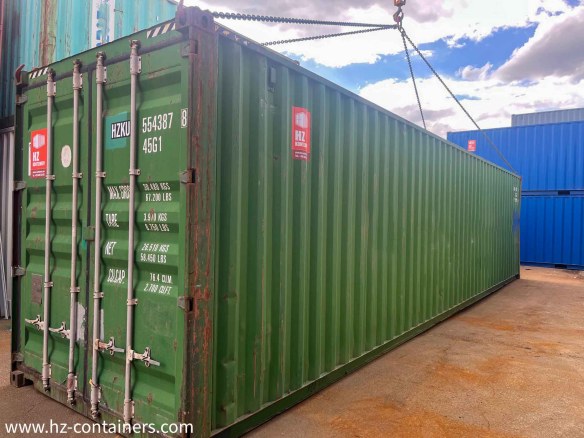
Containers AS IS are at the very end of their life cycle for transport purposes. Over the years, they have undergone repeated handling in ports, on ships, railways, and roads. They were typically exposed to extreme weather conditions, repeated impacts, and mechanical stress, which fundamentally affects their condition.
Detailed Characteristics and Condition of AS IS Containers
When considering the purchase of a container in the “AS IS” category, it is essential to have realistic expectations. This category is intended for customers who are aware of the risks and are able to accept them.
External Condition
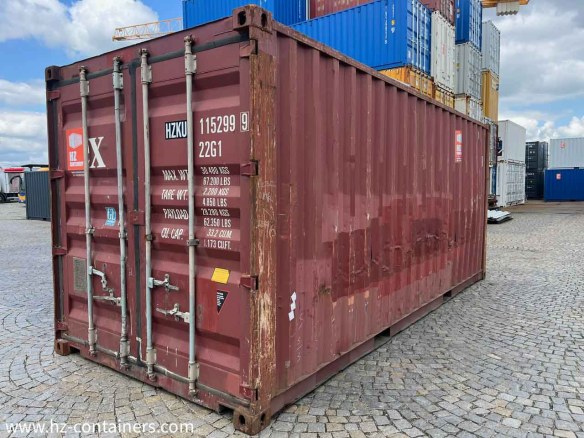
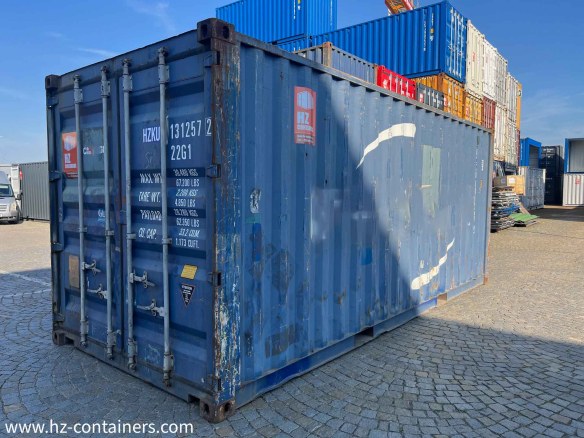
- Corrosion and rust: Extensive surface and deep corrosion is common. So-called “perforating” corrosion may also be present, which creates holes and significantly reduces the load capacity of the container.
- Dents and damage: A large number of dents, deep scratches, and impact marks are standard. These defects can affect structural integrity.
- Paint: The original paint is usually significantly damaged, chipped, often with amateur repairs or repainting.
- Holes: Frequent occurrence of holes in walls, roof, or floor, caused by corrosion or mechanical damage.
Internal Condition
- Floor: Usually made of plywood, often severely damaged – delamination, cracks, holes, rot, or saturation with chemicals.
- Odor and contamination: High risk of lingering odors from the transport of chemicals, food, or other contaminants.
- Leaks: Light and water can penetrate through holes in walls or roof; tightness is not guaranteed.
Functionality
- Doors: May be warped, stuck shut, or with non-functional seals.
- Locking mechanisms: Rusted, bent, or non-functional; locking may not be possible.
- Structural damage: Frequent deformation of beams, corner castings, which makes safe lifting and handling impossible.
Comparison of AS IS Containers with Other Quality Grades
For better orientation in the market, it is essential to compare AS IS with other commonly available categories.
| Property | AS IS | WWT (Wind & Water Tight) | Cargo Worthy (CW) | One-Trip (New) |
|---|---|---|---|---|
| Approximate age | 15+ years | 10–15 years | 8–15 years | < 1 year |
| Water-tightness warranty | No | Yes | Yes | Yes |
| Structural integrity | Not guaranteed | Usually sufficient | Guaranteed | Excellent |
| Valid CSC plate | No | No | Yes | Yes |
| External appearance | Extensive rust, holes | Rust, dents, repairs | Rust, minor defects | Nearly perfect |
| Internal condition | Damaged floor | Worn floor | Intact floor | New floor |
| Door functionality | Problematic | Functional, but cumbersome | Functional | Easy to operate |
| Typical use | Scrap, waste storage | Material storage | Transport, storage | Premium storage, construction |
| Price | Lowest | Low | Medium | Highest |
Why Buy an AS IS Container? Typical Uses
Despite their risks, AS IS containers have their uses:
- Storage of non-demanding materials: Suitable for example for scrap, rubble, wood, tires.
- Project with extensive modifications: If you plan to cut the container, create a shelter, workshop, or otherwise significantly modify it, the original condition may not be decisive.
- Source of material: An inexpensive way to obtain Corten steel and steel components for welding projects.
- Temporary barriers and fencing: Quick assembly of barriers on construction sites or during events.
- Training purposes: For firefighters, police, military, etc., where functionality is less important.
- Artistic installations: Industrial appearance is sometimes desirable for artistic and architectural projects.
Risks and Disadvantages of Buying an AS IS Container
- High repair costs: Welding holes, floor replacement, paint restoration, and door repairs can multiply the price several times over.
- Hidden defects: Surface rust can hide deep corrosion of load-bearing elements, which is difficult to detect without detailed inspection.
- Safety risks: Degraded construction can lead to accidents during handling or loading.
- Difficult transport: Some transport companies refuse to handle containers in poor condition.
- No possibility of complaint: After taking possession, all risk transfers to the buyer.
Technical and Data Specifications of AS IS Containers
Typical Dimensions and Material
| Length | Width | Height | Construction Material | Floor Material |
|---|---|---|---|---|
| 20′ (6 m) | 8′ (2.43 m) | 8’6″ (2.59 m) | Corten Steel | Plywood 28 mm |
| 40′ (12 m) | 8′ (2.43 m) | 8’6″ (2.59 m) | Corten Steel | Plywood 28 mm |
Note: With AS IS, the floor may be severely damaged, missing, or contaminated.
Container Identification and Registration
Each container has its unique designation (BIC code), manufacturing label, and in case of validity, a CSC Plate (International Convention for Safe Containers). AS IS containers typically do not have a valid CSC plate and must not be used for international transport.
Practical Guide: What to Watch Out for When Buying an AS IS Container
Recommended procedure:
- Personal inspection: Never buy an AS IS container without a thorough personal inspection. Focus on the floor, beams, doors, and look for signs of significant corrosion.
- Repair cost estimate: Find out the prices of welding and carpentry work, paint, and transport. Compare with the price of a WWT container.
- Check the seller: Buy only from verified companies that allow personal inspection and are transparent about the condition of the goods.
- Arrange transport: Verify that the transport company is willing and able to load such a damaged container.
- Consider location: The price and availability of AS IS containers depends on the region.
Frequently Asked Questions (FAQ)
What exactly does “AS IS” mean?
It means that you buy the container in the state it is currently in, without any warranty. All risk is borne by the buyer.
Is an AS IS container watertight?
Almost certainly not. Expect leaks and holes.
Can I use an AS IS container for maritime transport?
No. It does not have a valid CSC plate and its condition does not meet transport requirements.
Is it worth repairing an AS IS container?
In most cases, no. Repair costs often exceed the price of a higher-quality container.
Where can I buy an AS IS container?
From specialized sellers, especially in logistics depots and major cities. However, availability is limited.
Conclusion: For Whom is AS IS the Right Choice?
Shipping container AS IS is a choice for specific customers with minimal budget who are willing to accept risks and have a clear plan for how to use the damaged container. For most customers looking for a reliable storage or construction base, investment in a higher grade (WWT, Cargo Worthy) is safer and more economical in the long term.
Before purchasing, always carefully consider your expectations and benefits and carefully weigh whether the savings on an AS IS container is really worth the possible complications. An informed decision is the best protection for your investment.

 Czech Republic, Znojmo
  FREE SHIPPING