
Containers for farmers
Containers for farmers: the ideal solution for storing raw materials
Proper storage of cereals is crucial in agriculture, helping to maintain the quality and safety of harvested crops. Farmers are constantly seeking efficient and economical storage solutions, and this is where shipping containers become indispensable. These standard storage containers provide robust and flexible options for storing various grains, including wheat, barley, and other raw materials. Due to their sturdy construction and versatility, containers are now an essential part of agricultural operations. While containers were originally designed for transporting goods, they now fulfill a much broader range of needs. Farmers can adapt them to meet specific requirements for storing different types of crops, fertilizers, or feed, ensuring every inch of space is used efficiently.
Advantages of using shipping containers
Shipping containers are popular for storing agricultural products because of their durability and ease of handling. One of their main benefits is versatility: containers can be easily relocated and adapted to various storage conditions, making them ideal for farmers who need flexible storage options. These containers protect against weather, rodents, and other threats that could compromise grain quality.
Feed safety and quality protection
Shipping containers help keep grain safe and protected from moisture and pests. Designed to withstand adverse weather conditions at sea (wind, sun, salt water), they are also suitable for long-term storage. The containers’ tightly sealed doors and solid construction prevent moisture penetration and protect contents from contamination.
Proper storage of raw materials is key to maintaining their quality and safety. Containers allow control of internal climate conditions, which is essential for storing sensitive agricultural products. Options like fans and adjustable temperature and humidity levels help create the ideal environment, reducing the risk of mold, pests, and quality loss.
Flexibility and cost savings
Shipping containers are not only durable but also cost-effective. Farmers can repurpose them for various uses after the harvest season, contributing to significant cost savings. Additionally, containers come in different sizes, allowing the amount of stored grain to match actual needs. Containers for agricultural use don’t need to be brand new; used “Cargo Worthy” containers often meet safety standards for conventional sea transport and provide maximum protection for raw materials. Thus, farmers can acquire affordable containers that fulfill their purpose despite potential cosmetic imperfections.
Easy handling and transport
Shipping containers are also easy to handle and transport. Standard agricultural equipment can move them easily, simplifying storage and distribution logistics. This feature is especially helpful for farmers who must quickly adjust to changing demand or market conditions.
Ecological solutions
Using shipping containers is an environmentally friendly choice. Recycling and reusing containers reduces the need for new storage facilities, thus minimizing environmental impact. Farmers can contribute to environmental conservation while managing their stocks efficiently. Known for their long lifespan, containers can serve agricultural purposes for many years.
Agricultural containers: more than just raw material storage

In modern agriculture, efficiency and resource optimization are becoming increasingly important. Containers offer a practical and flexible solution not only for storing raw materials but also for safely housing smaller agricultural equipment.
Container shelters as an extension of space
For those who need to expand their workspace, container shelters are an excellent solution. These canopies can be easily installed over containers to create a covered area for maintenance equipment or storage of other materials. They provide long-lasting protection and can also withstand adverse weather conditions. Thanks to their flexible design, they can be used for both temporary and year-round solutions.
This shelter can also serve as a roofed area for a tractor or combine harvester without needing to invest in a large shed. Moreover, these shelters can be dismantled at any time and moved to a new location quickly and flexibly. These shipping container shelters not only save money but also represent a considerable financial benefit.
Of course, not only large garden equipment can be stored under these shelters. They also serve well as a roof for stacks of hay and other large, bulky raw materials stored in large quantities in agriculture.
Safety and protection of smaller agricultural machinery
A key aspect of any farm operation is the protection of small agricultural equipment. In addition to tractors, combines, and other large machinery, smaller equipment represents a significant investment, so it is important to protect it from adverse weather and potential damage. Containers provide a safe storage area that protects machinery from rain, snow, and sunlight. The durable steel construction and options for additional modifications, such as insulation or ventilation, make containers ideal storage for agricultural machinery.
Flexibility and adaptability of containers
One of the biggest advantages of containers is their ability to adapt to different needs and conditions. Farmers can easily move containers according to their current needs, making them ideal for seasonal use. In addition, they can be modified and adapted to special requirements, such as installing shelving, lighting, or security features. Containers can also be stacked to create large storage spaces.
Using containers in agriculture brings practical, ecological, and economic advantages. Containers are recyclable, and converting them into storage areas or shelters is a sustainable way to use existing resources. Moreover, thanks to their long life and minimal maintenance costs, they represent an economically viable solution for every farmer. Containers offer farmers a wide range of options for storing raw materials and agricultural equipment. Their versatility, safety, and economic benefits make them an essential part of modern agriculture.
How to choose the right container for farmers?
When choosing a container for storing cereals, it is important to consider several factors. These include the container size, its condition, and the specific storage needs of the type of cereal in question. It is a good idea to choose ISO-certified containers that guarantee quality and safety.
Choosing the right container for agricultural purposes is a key decision that can greatly affect the efficiency and success of your agricultural business. The right container not only ensures optimal storage and transport of your produce but can also serve as the basis for innovative growing methods, such as container farming. Choosing a container for agricultural purposes is thus a complex process that requires consideration of:
- the purpose of the container
- the type of container after its location and security
- size of shipping container
Each of these aspects plays a role in how efficiently you will be able to use the container. By planning carefully and considering your specific needs, you can find a solution that will help you optimize your farming operations.
Determine the purpose of the container
The first step in choosing a container is to define what you will use it for. Do you need a container for storing your harvest, transporting agricultural products, or as a space for growing plants? Each purpose has specific requirements. For example, for storage, it is important that the container is moisture-proof and well-ventilated, while a container for growing should support irrigation systems and lighting.
Consider the size and type of container
Containers vary in size and type, with 20-foot and 40-foot storage containers being the most common. Choosing the right size depends on the quantity and type of product you intend to store or transport. Standard containers are suitable for most agricultural purposes, but if you have specific needs, such as transporting liquids or frozen foods, consider specialty containers such as tank containers or refrigerated containers.

Container material and construction
The durability of the container is essential, especially if you plan to use it for long periods or in harsh conditions. Steel containers are known for their strength and weather resistance, while plastic containers can be lighter and easier to handle. When choosing a material, also consider whether the container will be exposed to chemicals or other potentially harmful substances.
It is also important to consider the quality of the shipping container. If you will be storing feed, you need to obtain a quality cargo-worthy container that is still secure and leak-proof. On the other hand, if you only need to store tires, shovels, or gardening tools that are not as vulnerable, you can also opt for a retired container, which may have some minor flaws, such as a leaky door, but will be perfectly adequate for these purposes.
Container customisation for specific needs
Farmers often need containers that can be adapted to their specific requirements. This includes the installation of shelves, racks, irrigation systems, or lighting for growing plants. Customization can also mean modifications to provide better insulation or pest control. Before buying, consider what modifications will be needed and whether they can be easily carried out.
Logistics and container location
Where the container will be placed is another important factor. Consider the accessibility of the area, the possibility of electricity and water connections, and access for loading and unloading. Make sure that the location of the container suits your operational needs and does not interfere with other activities on the farm.
Security and content protection
Security is key, especially if you store valuable or sensitive products. Consider containers with robust locks and monitoring capabilities. Protection from light or temperature fluctuations may be important for some agricultural products, so choose containers that meet these requirements.
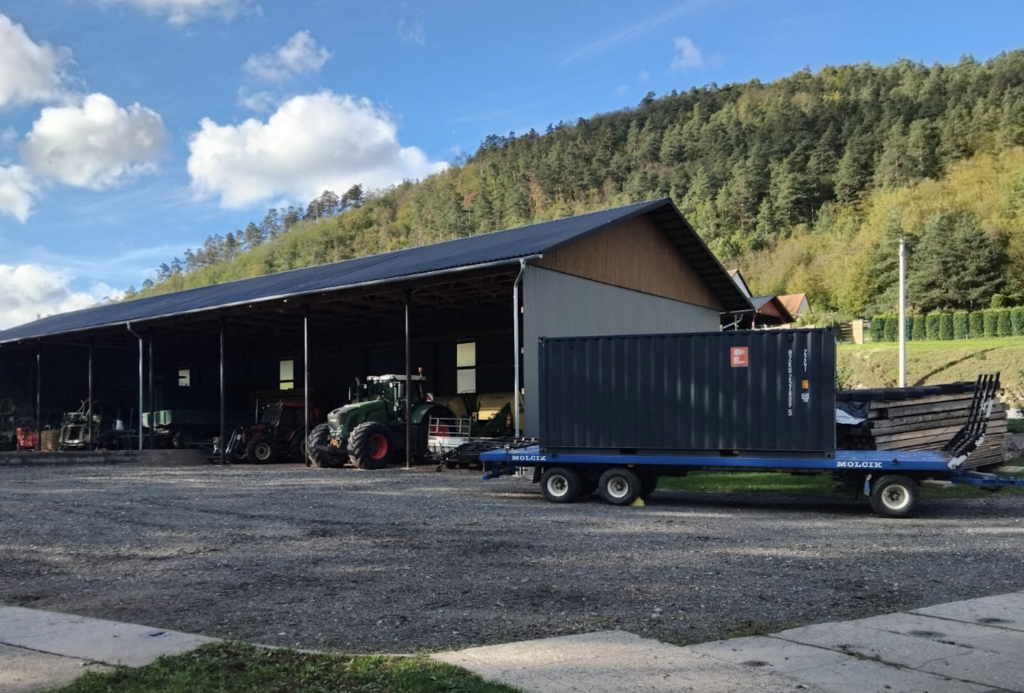
The purchase of a shipping container for use in agriculture was also utilized by the company AGROSLUŽBY SOUKUP from Doubravník, which is involved in, among other things, baling hay and straw, harvesting, or tractor transport in the area.