
Why are photos of the shipping container from the depot not possible?
Photographic documentation of shipping containers in depots is often limited or completely prohibited. This fact may seem surprising at first, but the reasons range from operational restrictions, security concerns, privacy protection, to legal and logistical aspects. This article explores key issues and provides a comprehensive look at the problem of the impossibility of taking photographs of shipping containers in depots.
What is a shipping container and a container depot?
Shipping Container
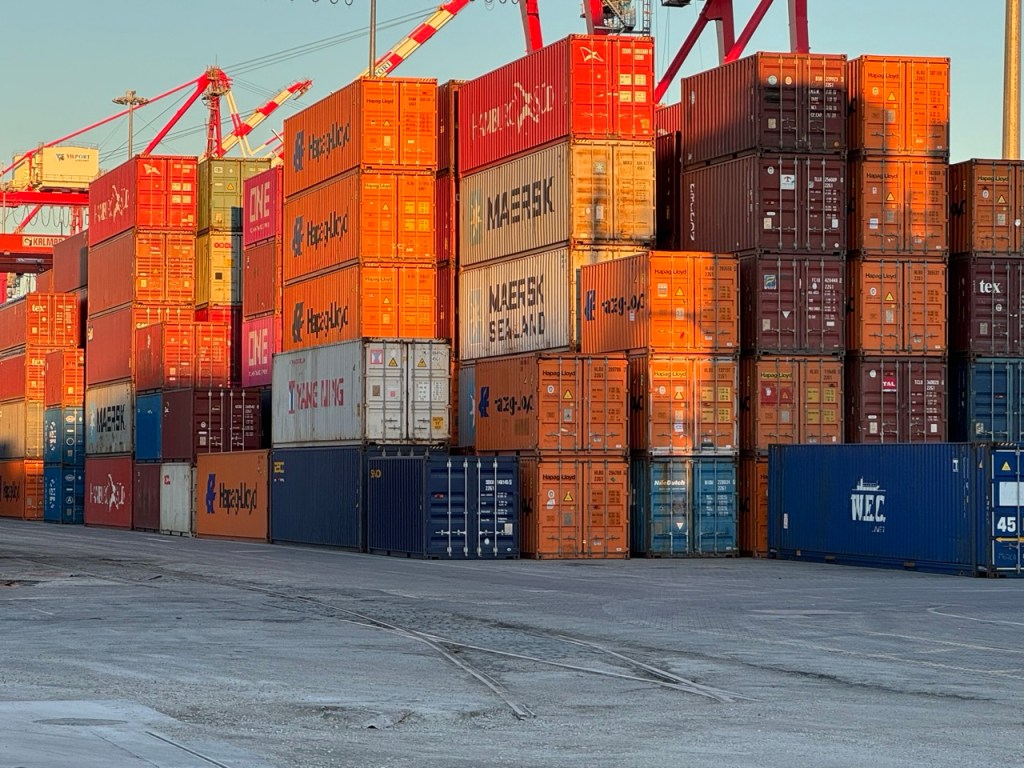
Shipping containers are standardized transport units that allow efficient transportation of goods by sea, rail, or road. These containers are robust, weather-resistant, and their design allows for easy handling. There are several types of containers:
- 20-foot containers (20 ft): Ideal for heavy cargo such as minerals, metal products, or cement.
- 40-foot containers (40 ft): Suitable for bulky cargo such as furniture or textiles.
- High Cube (HC) containers: Offer higher capacity due to greater height.
- Refrigerated containers (Reefers): Used for transporting goods requiring regulated temperatures.
- Special containers: Such as containers for transporting liquids or open containers for oversized cargo.
Container Depot
A container depot is a specialized logistics facility where shipping containers are stored, repaired, and distributed. Depots are a key link in the global logistics chain, and their functions include:
- Storage: Containers are securely stored until their next use.
- Repairs and maintenance: Damaged containers are repaired here.
- Redistribution: Containers are assigned to different transport routes and vehicles.
For example, the container depot in Hamburg processes up to 120 TEU (Twenty-foot Equivalent Units) of cargo daily, demonstrating its key role in logistics.
Why is photography not allowed in container depots?
1. Safety reasons
Container depots are highly active logistics centers with heavy machinery movement, such as cranes and forklifts. Photography may disrupt safety measures and endanger workers.

- Example: A photographer standing near the container handling area may unintentionally enter a dangerous zone.
2. Property and privacy protection
Many containers contain valuable or sensitive goods. Photography may reveal their contents or logistics procedures, which could be exploited.
- Confidentiality: The contents of containers are often protected by contractual terms between the sender and recipient.
- Theft protection: Photographs may be misused to plan thefts.
3. Legal restrictions
Depots are private spaces with clear rules. Unauthorized photography may be considered a violation of the law.
- Trade secrets: Logistics processes in depots are often protected as trade secrets.
- GDPR: The publication of photographs of employees may violate data protection legislation.
4. Operational efficiency
Photography in depots can disrupt the smooth flow of operations, affecting employee productivity and overall efficiency.
5. Risk of misuse of photographs
Photographs may be misused for unauthorized surveillance of logistics processes or planning illegal activities.
Alternative methods of documentation
- Official photographs from the depot operator
Depot operators often offer official photographic documentation for commercial purposes. If the depot is able to photograph a container, high fees are charged for these services, up to 200 € for photographing one container. - Photography outside the depot
It is possible to take photographs during loading or on public roads. - Virtual documentation
Some companies offer approved virtual tours.

 Slovakia, Žilina
  FREE SHIPPING


Other container news...

Can Flammable Materials Be Transported in a Shipping Container?
Brief answer: Yes, but under very strict conditions. The transport of flammable materials and other dangerous materials (hazardous materials, abbreviated HAZMAT) in shipping containers represents one of the most regulated areas of global logistics. This process is not just about loading barrels into a steel box and sending them to sea – it is a highly specialized, legally regulated and safety-priority activity that is under the supervision of both international and national institutions.

Rust on Spare Parts for Shipping Containers
Rust on spare parts for shipping containers is common and technologically desirable. It is not a sign of poor quality, but evidence of the use of modern corten steel, which in this way protects the container structure from deep destructive corrosion. The key is to correctly distinguish surface patina from dangerous structural corrosion and to carry out repairs professionally. Accepting this principle allows for the efficient, safe and economically sustainable operation of the global container fleet.

Differences between Telex Release and Original Bill of Lading (OBL)
Knowing the differences between Original Bill of Lading, Telex Release and Express Release is essential for anyone working with containers and international shipping. Choosing the right method optimizes costs, reduces risks and ensures a smooth flow of goods in the supply chain.

Most Frequently Asked Questions About Refrigerated Shipping Containers
This article is intended for anyone who wants to gain an in-depth understanding of the technology, operation, design and use of these specialized units in modern logistics. We answer the most frequently asked questions, supplement them with technically accurate information from verified sources, and add practical advice for selection, operation and maintenance.