
What VAT is for Shipping Containers in the EU?
VAT (Value Added Tax) on shipping containers in the European Union represents a complex system whose application depends on the specific business model, the status of the entities, and the type of transaction. It is key to distinguish whether the container is the subject of sale, serves as transport packaging, or is part of an international transport regime.
In practice, we distinguish these main scenarios:
- Purchase/sale of containers: Container is goods – standard VAT rate applies according to the state (e.g., 21%25 in the Czech Republic).
- Import of goods in a container from a country outside the EU: VAT is assessed on the customs value of the goods, not the container itself, if it is packaging.
- Export of goods in a container to a third country: Export is VAT-exempt with the right to deduct (reverse charge).
- Use of container as a transport vehicle: In international transport, a temporary use regime without customs duties or VAT can be applied.
- Special regimes (ship supply): Supplies for vessels on the high seas are VAT-exempt (Article 148 of Directive 2006/112/ES).
Basic Principles of VAT and Shipping Containers
Legal Definition
According to Act No. 235/2004 Coll., on VAT, and Council Directive 2006/112/ES, two key roles of containers are distinguished:
- Container as goods: If the container is sold (new/used), the standard VAT regime for the supply of goods applies. The seller is obliged to pay VAT according to the rules applicable in the country of sale.
- Container as transport packaging: If it serves only to transport goods, its value does not enter the basis for VAT on the transported goods. The decisive factor is the purpose – the container is not considered a transport vehicle according to § 4 para. 4 of the VAT Act.
Territoriality and Place of Supply
VAT is a consumption tax – it is payable at the place of final consumption. This means that:
- For goods – VAT is applied in the country of destination (final consumer).
- For services (e.g., transport) – the place of supply is determined according to the rules of § 9 of the VAT Act:
- B2B: place of service recipient
- B2C: place of service provider
| Role of Container | VAT Tax Regime | Key Technical Aspects |
|---|---|---|
| Goods (sale) | Standard VAT | Invoice, rate according to state, reverse charge for B2B in EU |
| Transport packaging | VAT on goods | Value of packaging is not included, VAT is handled by goods inside |
| Transport vehicle | No | Container is not a transport vehicle under VAT law |
Detailed Explanation and VAT Scenarios for Shipping Containers
Scenario 1: Purchase and Sale of Shipping Container within the EU
- B2B (between VAT payers):
- Supply between entities in different member states is VAT-exempt (intra-community supply).
- The buyer declares VAT in their country under reverse charge – tax neutral.
- B2C (payer → non-payer):
- Sale to an end customer is taxed according to the rules for distance sales, or according to the local rate (Czech Republic: 21%25).
- Exceeding the EU-wide limit (EUR 10,000) means the obligation to register for VAT in the consumer’s country.
Scenario 2: Import of Shipping Container (or Goods in It) from a Third Country
Process of Applying VAT Deduction Step by Step
| Step | Description | Documents/Notes |
|---|---|---|
| 1 | Import of goods and customs procedure | Goods arrive at port, declaration to free circulation |
| 2 | Determination of customs value | Price of goods + transport + insurance + fees |
| 3 | Assessment of customs duties and VAT | Customs duty according to TARIC, VAT from the sum of customs value and duty |
| 4 | Payment of customs duties and VAT | Payment before release of goods |
| 5 | Receipt of SAD | Single Administrative Document (official import document) |
| 6 | Application of VAT in declaration | Input VAT is stated in the declaration – right to deduct |
Calculation of Import VAT – Example
| Item | Amount (CZK) | Description |
|---|---|---|
| Price of goods | 500,000 | Invoice from supplier |
| Transport to EU | 80,000 | Costs to port |
| Insurance | 5,000 | Shipment insurance |
| Customs value | 585,000 | Sum of above |
| Customs duty (3%25) | 17,550 | 3%25 of customs value |
| VAT basis | 602,550 | Customs value + duty |
| VAT (21%25) | 126,535.50 | 21%25 of VAT basis |
- A VAT payer can claim this amount in their declaration – a cash flow effect, not an expense.
- A non-payer (identified person) has no right to deduct.
Most Common Mistakes in Applying VAT
- Missing or incorrectly completed SAD.
- Incorrect determination of customs value.
- Application of deduction in the wrong period.
- Failure to provide documents during inspection.
Scenario 3: Export of Shipping Container (or Goods in It) to a Third Country
- Export is VAT-exempt (zero rate) with the right to deduct input VAT.
- Key is the ability to prove that goods have left the EU territory (SAD, customs authority confirmation).
- The exporter does not state VAT on the invoice and does not have to pay it.
Scenario 4: Special Regimes and Exceptions
Temporary Admission Regime
- Shipping containers in international transport can enter the EU territory without customs duties or VAT if they are exported again within a specified period.
- Requires clear documentation and compliance with customs regime conditions.
Ship Supply
- Supply of goods (including containers) for vessels on the high seas is VAT-exempt (Article 148 of Directive 2006/112/ES).
- A vessel is considered a “third country” from a VAT perspective.
VAT Rates in the European Union
| Member State | Standard VAT Rate |
|---|---|
| Czech Republic | 21%25 |
| Germany | 19%25 |
| Poland | 23%25 |
| Austria | 20%25 |
| Slovakia | 20%25 |
| Hungary | 27%25 |
- Rates are harmonized by directive, but each state determines the specific level.
- Reduced rates (5–15%25) generally do not apply to containers.
Practical Aspects for Entrepreneurs
- VAT Registration and EORI: Mandatory for all entities trading in goods within the EU.
- Incoterms: Determine who pays for transport, customs duties, VAT, and who bears the risks.
- Documentation: Invoices, SAD, transport documents, customs authority decisions, payment documents – must be kept in case of inspection.
- VAT vs. Customs Duty: VAT is refundable (for payers), customs duty is an expense.
Key Terms and Their Meaning
| Term | Meaning |
|---|---|
| VAT | Value Added Tax – consumption tax in the EU |
| Customs Duty | Fee for import from a third country, non-refundable expense |
| Customs Value | Price of goods + transport + insurance + fees to EU border |
| Single Administrative Document (SAD) | Official document on import/export, necessary for VAT deduction claim |
| EORI | Registration number of an economic entity in the EU |
| Reverse Charge | Transfer of tax obligation to the buyer (mainly B2B within EU) |
| Temporary Admission | Temporary use regime – exemption from customs duties/VAT upon re-export |
Frequently Asked Questions and Answers
Can I deduct VAT when importing a container from a third country?
- Yes, if you are a VAT payer, use the container in economic activity, and provide the SAD.
Do I pay VAT when exporting a container outside the EU?
- No, export is VAT-exempt, but you must be able to prove that it has left the EU.
What is the VAT when purchasing a used container within the EU?
- If you purchase from a payer in another member state, reverse charge applies; within the Czech Republic, you pay the standard rate.
What if I only use the container for a short time on EU territory?
- You can use the temporary admission regime with exemption from customs duties and VAT (documentation and re-export required).
VAT Exemptions and Exceptions
- From July 1, 2021, VAT applies to almost all commercial shipments from third countries (abolition of exemption up to EUR 22).
- Exceptions: humanitarian goods, personal property during relocation, etc.
Recommendations for Companies
- Always keep all documentation related to import/export.
- Monitor current legislation and changes in EU rules.
- Consult unclear cases with a tax advisor or experienced customs broker.

 Czech Republic, Třebíč
  FREE SHIPPING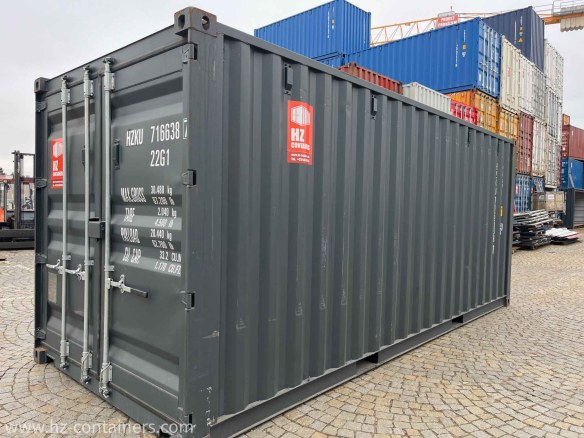


Other container news...

New shipping containers
If you are currently considering purchasing a new shipping container, you are not alone. While just twenty years ago containers were used almost exclusively for maritime transport, today they have found their way into construction, storage, business, and even housing. This growing popularity brings with it a host of questions: Which type should you choose? How much does it cost? How do you recognize quality? How can you avoid falling victim to scammers?
New sea shipping containers
If you are currently considering purchasing a new shipping container, you are not alone. While just twenty years ago containers were used almost exclusively for maritime transport, today they have found their way into construction, storage, business, and even housing. This growing popularity brings with it a host of questions: Which type should you choose? How much does it cost? How do you recognize quality? How can you avoid falling victim to scammers?

6m shipping container
Are you thinking about buying a 6-meter shipping container but aren’t sure what to look for? You are not alone—this 20-foot container is the best-selling size on the Czech market, and the differences between various types, conditions, and prices can be significant. In this guide, you will find everything you need to know: from exact dimensions and a comparison of categories (such as “one-way,” refurbished, and “Cargo Worthy”) to current prices and shipping advice.
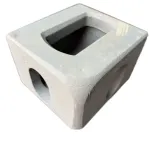
Corner casting steel vs aluminum
Every shipping container in the world — all 40 million of them — rests on eight critical components. Corner castings are the load-bearing blocks at each corner of an ISO shipping container, and they are the universal interface between the container and every crane, twistlock, spreader, and chassis on the planet. When you lift a container, stack it nine high on a ship, or lock it to a truck trailer, every ton of force flows through these fittings.