
What is the difference between a refrigerated and a freezer shipping container?
If you’re involved in transporting or storing goods that require specific temperature conditions, you’ve probably come across the terms refrigerated and freezer containers. But what’s the difference between the two? Let’s take a closer look.
Refrigerated containers
Refrigerated containers, often referred to as “reefer” containers, are specialized containers designed to maintain a constant temperature inside. These containers use refrigeration units that allow a temperature range of -25°C to +25°C to be maintained, depending on the requirements of the cargo. Reefer containers are ideal for transporting and storing goods that need to be refrigerated, such as fruits, vegetables, dairy products and other foods.
Cooling containers are equipped with various technologies such as compressors, condensers and fans to ensure efficient cooling. The insulation of the container prevents thermal exchanges with the outside environment, ensuring a stable temperature inside.
Freezing containers
Freezer containers, on the other hand, are designed to maintain extremely low temperatures, often down to -60°C. These containers are equipped with powerful refrigeration units that allow for long-term storage and transport of frozen goods such as meat, fish and frozen foods.
Freezer containers, like their refrigerated counterparts, use sophisticated technology to maintain the desired temperature. For example, ‘Super Freezer’ containers can reach temperatures as low as -60°C, which is ideal for goods that require deep freezing.
Main differences between refrigerated and freezer containers
Temperature range
The most significant difference between these two types of containers is the temperature range they are able to maintain. While refrigerated containers range from -25 °C to +25 °C, freezer containers can reach up to -60 °C.
Use
Refrigerated containers are most commonly used for transporting and storing food that requires refrigeration but not freezing. They are ideal for goods that would lose their quality if frozen, such as fresh fruit and vegetables.
Freezer containers, on the other hand, are designed for goods that must be kept at very low temperatures. These containers are essential for the long-term storage of frozen products where a stable and very low temperature must be maintained.
Technology
Both types of containers use advanced technologies to maintain temperature, such as compressors, condensers and fans. However, freezer containers often contain more powerful refrigeration units and better insulation to reach and maintain extremely low temperatures.
Flexibility
Refrigerated containers offer a wider temperature range and can be used for both cooling and light freezing. Freezer containers are specifically designed for deep freezing and are not as flexible in terms of temperature settings.
Other container news...

20 Foot shipping container cost
If you are researching the cost of a 20 foot shipping container, you have likely already encountered wildly different prices — from $999 listings online to quotes exceeding $5,500. That range is not a sign of inconsistency. It reflects real differences in container condition, location, delivery logistics, and the seller you are dealing with.
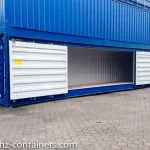
Side Opening container
A side opening container is an ISO-compliant intermodal shipping container engineered with full-length bi-fold doors along one of its long side walls, in addition to the standard cargo doors at one end. Unlike conventional containers that restrict access to a single set of rear doors, a side opening container — also widely called an open side container, open-sided shipping container, or side door container — provides unobstructed lateral access across the entire 20-foot or 40-foot length of the unit. This design transforms the container from a narrow tunnel into a wide-open space that forklifts can enter from the side, multiple workers can load simultaneously, and oversized cargo that would never fit through standard end doors can be placed without struggle.
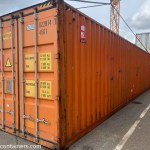
40 Foot High Cube container cost
A 40 foot high cube container — often abbreviated as 40ft HC, 40′ HC, or 40-foot high cube — is one of the most common shipping container sizes sold on the secondary market. But if you are researching what a 40 foot high cube container costs, you have almost certainly noticed that prices are all over the map. One seller quotes $1,500. Another quotes $7,000. Both could be legitimate.
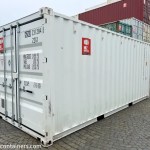
20 Foot container cost
If you have ever searched for a shipping container, you have almost certainly asked one question first: how much does a 20 foot container cost? The answer is not a single number. It is a range that spans from under $1,000 for a weathered, as-is unit to over $5,000 for a pristine, one-trip container — and that is before delivery, site preparation, or modifications enter the picture.