
What changes will the end of 2024 bring?
Container Transport Dynamics: Challenges and Opportunities
Container shipping faces changing challenges in 2024 that fundamentally affect global logistics. During the COVID-19 pandemic, the industry has had to deal with dramatic changes – from a surplus of containers in some places to acute shortages elsewhere. Although the global economy has recovered, problems associated with congested ports and labour shortages persist. New problems are now emerging with a surplus of containers, causing them to be stored in inappropriate locations. Some companies are even offering containers for free to free up storage space. This situation is having an impact on transport costs and efficiency, forcing logistics companies to consider new strategies.
Port congestion and geopolitical tensions
Port congestion is still a serious problem, especially in Shanghai and Los Angeles, where delays range from two to 25 days. This complicates global supply chains, forcing companies to look for alternative ports and invest in digital tools for better coordination. Another factor affecting shipping is geopolitical tensions, particularly in the Hormuz Strait, South China Sea and Suez Canal regions. These areas are key points for global trade and their instability can cause huge delays and cost increases.
New environmental regulations and their impact
Europe has introduced an Emission Trading Scheme (EU ETS) from the beginning of 2024, forcing shipping operators to buy carbon credits. While this helps to reduce emissions, it also increases operating costs. Similar efforts are occurring in Asia, where shipping companies are being forced to invest in alternative fuels such as LNG and in advanced technologies. These changes are increasing the cost of transport, which may have long-term implications for global trade.
Impact of the strike and tariff changes
In early 2025, a strike is looming at ports on the US East and South coasts, which could cause significant disruption to supply chains. Discussions between the International Longshoremen’s Association (ILA) and the U.S. Ports Alliance (USMX) have yet to come to fruition. Meanwhile, strikes are planned in India over wage disputes, which could negatively affect ports there and global shipping. On the other hand, tariff changes in the US are targeting Chinese shipping operators, which brings additional challenges.
Development of freight rates
Transpacific routes saw a 12% decrease in rates due to a 17% increase in capacity. Although freight volumes were up 15% compared to the previous year, excess capacity is pushing rates down. On routes between Asia and Europe, rates remain relatively high but are expected to stabilise by January 2025. These changes are the result of efforts to balance supply and demand, as well as the impact of the strike at Canadian ports.
Adapting to change
Global shipping companies face the need to adapt to new conditions. This includes optimising supply chains, using less congested ports, investing in green technologies and working with experienced logistics partners. Although environmental regulation and geopolitical tensions are proving to be key challenges, there is room for innovation and growth.
Looking back and outlook
The year 2024 was a time of both challenges and opportunities for freight and maritime transport. Although challenges such as port congestion and geopolitical instability persist, the sector retains its resilience and adaptability. As we approach 2025, innovation and strategies to overcome current challenges and ensure sustainable growth will be key.

 Czech Republic, Litvínov
  FREE SHIPPING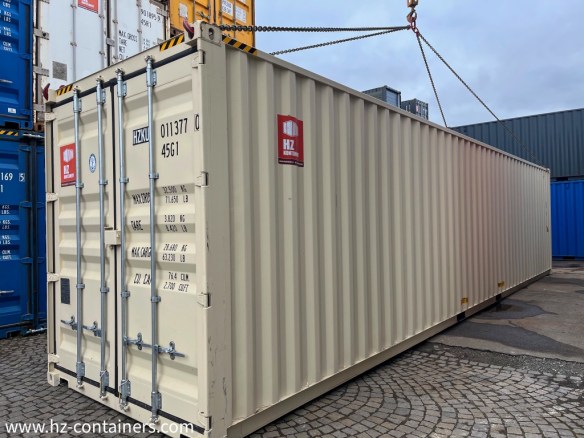


Other container news...

20 Foot shipping container cost
If you are researching the cost of a 20 foot shipping container, you have likely already encountered wildly different prices — from $999 listings online to quotes exceeding $5,500. That range is not a sign of inconsistency. It reflects real differences in container condition, location, delivery logistics, and the seller you are dealing with.
Side Opening container
A side opening container is an ISO-compliant intermodal shipping container engineered with full-length bi-fold doors along one of its long side walls, in addition to the standard cargo doors at one end. Unlike conventional containers that restrict access to a single set of rear doors, a side opening container — also widely called an open side container, open-sided shipping container, or side door container — provides unobstructed lateral access across the entire 20-foot or 40-foot length of the unit. This design transforms the container from a narrow tunnel into a wide-open space that forklifts can enter from the side, multiple workers can load simultaneously, and oversized cargo that would never fit through standard end doors can be placed without struggle.
40 Foot High Cube container cost
A 40 foot high cube container — often abbreviated as 40ft HC, 40′ HC, or 40-foot high cube — is one of the most common shipping container sizes sold on the secondary market. But if you are researching what a 40 foot high cube container costs, you have almost certainly noticed that prices are all over the map. One seller quotes $1,500. Another quotes $7,000. Both could be legitimate.
20 Foot container cost
If you have ever searched for a shipping container, you have almost certainly asked one question first: how much does a 20 foot container cost? The answer is not a single number. It is a range that spans from under $1,000 for a weathered, as-is unit to over $5,000 for a pristine, one-trip container — and that is before delivery, site preparation, or modifications enter the picture.