
Is It Suitable to Mine Cryptocurrency in a Shipping Container?

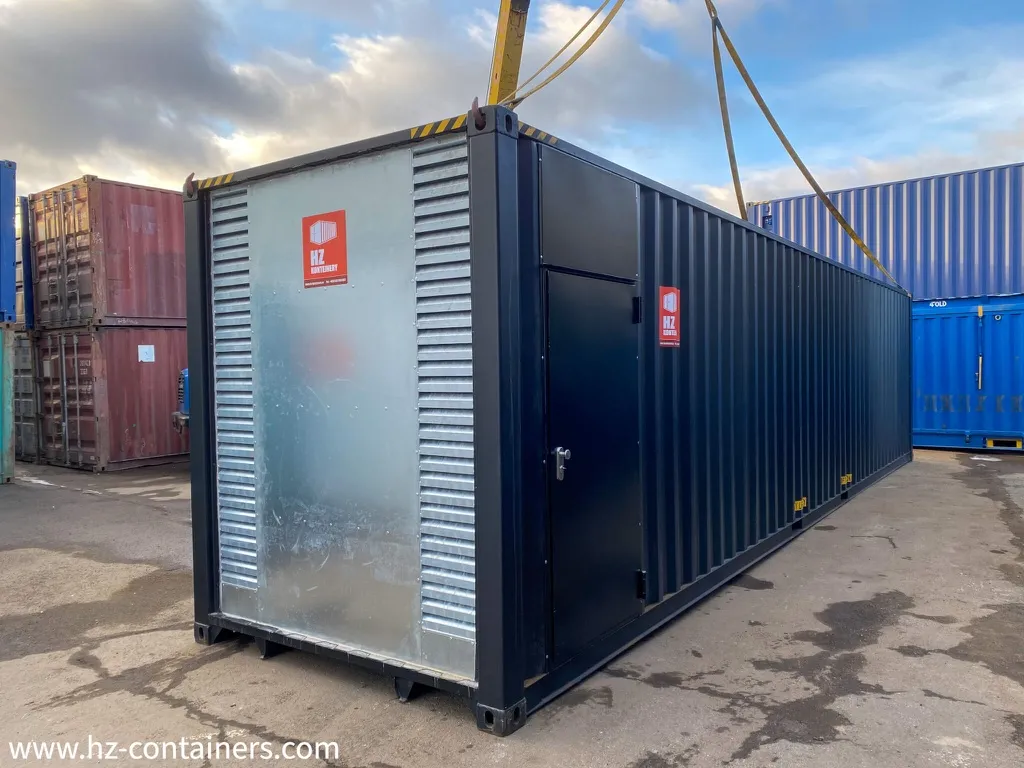
Cryptocurrency mining in a shipping container is an innovative method that uses standardized transport containers (most often ISO 20’ or 40’ High Cube) to create a mobile, scalable and extremely efficient data centre for cryptocurrency mining. This modular system makes it possible to place hundreds to thousands of mining devices (ASIC or GPU) into a single robust and secure crypto mining container, equipped with advanced cooling, power, monitoring and connectivity systems.
The advantages of this solution are clear: fast installation, high power density, the option to move to cheaper energy sources, minimization of construction costs and easy expansion of the mining operation. The crypto containers are designed so they can be used in extreme climatic conditions (from arctic regions to the tropics) while at the same time optimizing electrical energy consumption.
What Does a Mining Container Look Like and How Does It Work?
Key Components and Infrastructure
| Component | Description and technical details |
|---|---|
| Container structure | Standard ISO steel container 20’ or 40’ HC. The interior is divided into sections – production zone (racks with miners), electrical switch room, cooling section, monitoring area. Strength, tightness and security are crucial. |
| Mining hardware | ASIC miners (e.g. Bitmain Antminer S21, Whatsminer M60), or GPU rigs. Arranged in racks for maximum density (up to 700+ miners in a 40’ container with immersion cooling). |
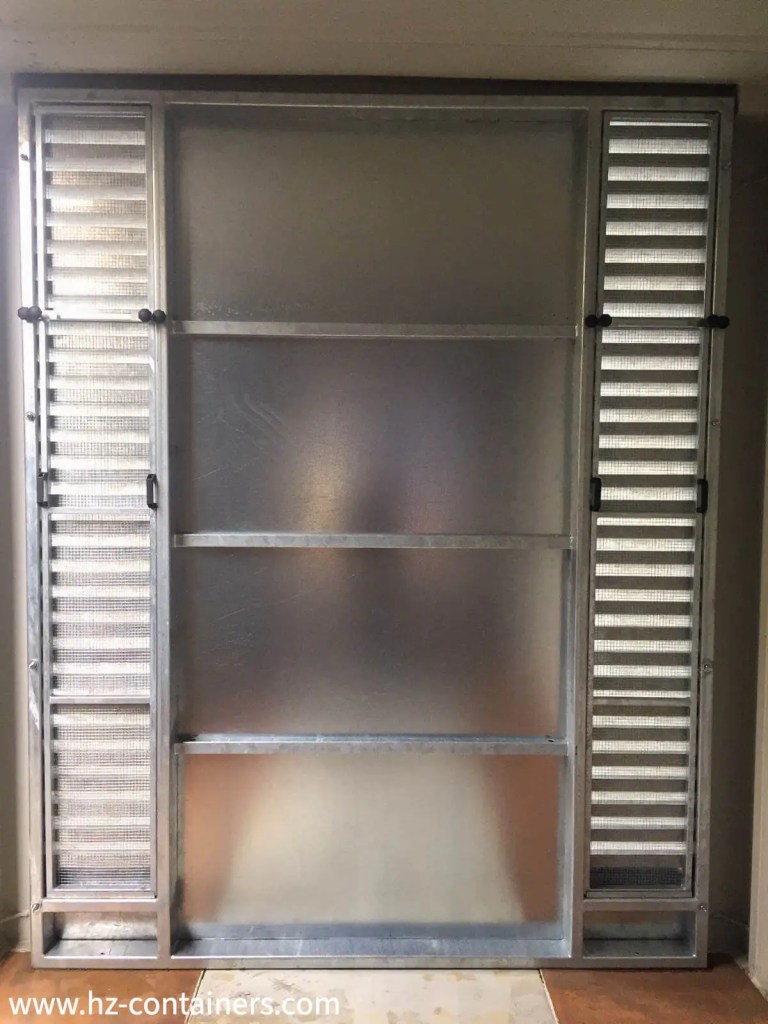
| Cooling systems | Air cooling (powerful industrial fans, filters), hydro cooling (water circuits), advanced immersion cooling (immersion – the miner is directly submerged in dielectric fluid). |
| Power infrastructure | Transformers (voltage 400–230 V), switchboards, PDU (Power Distribution Units), breakers, surge protection. Designed for efficient power distribution of up to 1–3 MW per container. |
| Network connectivity | Redundant Ethernet connection, industrial switches, backup LTE/5G/SAT. All integrated with remote monitoring and control (PLC, SCADA, web interface). |
| Security | Physical lock, camera systems, alarms, environmental monitoring (temperature, humidity, smoke detectors). |
Types of Cooling Technologies
| System | Advantages | Disadvantages | Typical use |
|---|---|---|---|
| Air | Low investment, simplicity, easy maintenance | Noise, lower density, sensitive to climate | Cold and mild regions |
| Hydro cooling | Higher efficiency, lower noise, possibility of higher output | Requires quality water, more complex service | Warm regions, higher outputs |
| Immersion | Maximum density (up to 2–3x more miners), extreme efficiency, quiet operation, longer lifespan | High cost, higher service demands | Industrial farms, extreme climate |
| Evaporative | Low operating costs, suitable for dry climate | Requires water, humidity control | Deserts, steppe regions |
Comparison: Air vs. Immersion Cooling
- Air cooling: Lowest investment, but limited in the ability to increase performance and sensitive to outdoor temperature. Unsuitable for hot regions, generates noise (up to 85 dB).
- Immersion cooling: Allows up to 60% overclocking of miners, reduces energy consumption for cooling by 20–30%, extends miners’ lifespan and enables extremely high density per area. High purchase price, but fast payback for large operations.
Advantages of Cryptocurrency Mining in a Shipping Container
- Mobility & flexibility: Crypto containers can be easily moved to where energy is cheapest in the world (including direct connection to renewable sources, hydropower plants, wind and solar farms).
- Fast installation: Commissioning takes a few weeks, while a traditional data centre requires months to years.
- Scalability: The operation can be expanded container by container depending on current energy prices and market conditions.
- Low construction costs: No need for building permits, long approval processes, or high infrastructure investments.
- Operational optimization: Operating close to the energy source minimizes transmission losses and reduces costs per MWh.
- Ecology: Possibility to use surplus renewable energy (so‑called stranded energy), reduced carbon footprint, lower CO₂ emissions.
Disadvantages and Operational Challenges
- Higher initial investment: A modern immersion‑ready crypto mining shipping container with 1–3 MW capacity costs hundreds of thousands of USD/EUR including full equipment.
- Logistics: Need to find a location with robust electrical infrastructure and permission for mining.
- Thermal management: In hot regions it may be necessary to invest in expensive cooling solutions (immersion, hydro).
- Regulation and legislation: Some countries ban mining, others require special permits or focus on environmental limits.
- Noise: Especially air‑cooled containers are not suitable near residential areas (noise levels up to 90 dB).
State‑of‑the‑Art Trends and Technologies (2024/2025)
- Vertical integration: The largest players (Cormint, BitFury, Upstream Data) manufacture their own crypto mining containers tailored for specific climatic conditions and miner types.
- AI optimization: Systems automatically control performance, load distribution, cooling and power in real time (predictive maintenance, reduced consumption).
- Heat recovery: Waste heat from miners is used for heating greenhouses, pools or industrial premises.
- Integration with renewables: Crypto mining containers are placed directly next to solar, wind or hydro power plants (e.g. in Texas, Scandinavia, Canada).
- Modular design: 20’ and 40’ containers can be combined, with different types of cooling deployed as needed (including hybrid systems).
Real Figures and Operational Data
| Parameter | Typical value (40′ HC container) |
|---|---|
| Power capacity | 1–3 MW |
| Number of ASIC miners (air) | 200–350 |
| Number of ASIC miners (immersion) | 500–700+ |
| Energy consumption (at 1 MW) | approx. 24,000 kWh/day |
| Cooling costs | 5–20% of total consumption (air), 2–8% (immersion) |
| Power density | up to 75 kW/m² (immersion technology) |
| Average container lifetime | 15–20 years (steel structure) |
| Average miner lifetime | 3–5 years (air), up to 6+ years (immersion) |
| Installation costs (without miners) | 100,000–300,000 USD |
Comparison of Top Global Manufacturers (2025)
| Manufacturer | Specialization | Advantages | Note |
|---|---|---|---|
| Cormint | Modular containers, Texas | Integrated transformer, optimized for hot climate | Own mining and sales |
| Upstream Data | Off‑grid, mobile solutions | Connection to oilfields, high mobility | Cooperation with oil producers |
| HashCore | Immersion ready, Europe | Extreme power density, quiet operation | Suitable for the EU market |
| MiningStore | 20′ and 40′ containers | Wide range, air and immersion | Global presence |
| Bitfury | Industrial farms | Complete turnkey solutions | Large‑scale deployments |
Frequently Asked Questions (FAQ)
Why is container mining more advantageous than a traditional data centre?
- Answer: Lower capital and operating costs, faster payback, extreme flexibility and scalability. Standardized containers can be moved as needed and new modules can be easily added.
How many miners can be placed in one container?
- Answer: Air cooling allows 200–350 miners (40’), immersion up to 700+ miners. It depends on the type of equipment and chosen cooling method.
What are the main operating costs?
- Answer: The dominant item is the price of electricity (up to 90% of operating costs). Then service, cooling, land rental and possible grid connection fees.
Is it possible to mine purely on renewable energy?
- Answer: Yes, but only if the PV/wind plant is sufficiently powerful (for example, a 1 MW container requires a solar farm of 1.5–2.5 hectares and a robust battery storage system for continuous operation).
What is the payback period for a container farm investment?
- Answer: It depends on energy prices, miner performance and market conditions. Under ideal conditions (cheap energy, modern hardware) it can reach 12–24 months.
Related Terms and Metrics
| Term | Definition |
|---|---|
| ASIC | Specialized chip for cryptocurrency mining (e.g. Bitcoin, Litecoin). |
| Hash rate | Computing power of a mining device/network (TH/s, PH/s). |
| PUE (Power Usage Effectiveness) | Ratio of total power consumption to IT equipment output. Ideal value close to 1.0. |
| Immersion cooling | Immersion cooling – hardware submerged in dielectric fluid. |
| PoW (Proof‑of‑Work) | Consensus mining algorithm (Bitcoin, Litecoin, Zcash). |
| Stranded energy | Surplus (otherwise unusable) energy in the grid, often used precisely for containerized mining. |
The Future of Container Mining
- Automation and robotization: Greater deployment of AI for performance optimization, monitoring and predictive maintenance.
- Advanced ecological cooling: New types of dielectric fluids, hybrid systems, waste heat recovery.
- Integration with power grids: Crypto containers as flexible loads stabilizing the grid, using surpluses from renewables.
- Regulation and compliance: Emergence of new standards for safety, reporting and environmental impact.

 Czech Republic, Třebíč
  WITHOUT SHIPPING


Other container news...

Shipping Containers Bologna Italy
Shipping containers are the backbone of modern global trade. Every day, thousands of these standardized metal shipping units pass through Italian ports and logistics centers, including one of Europe’s most important intermodal hubs — Interporto Bologna. If you’re curious about how shipping works in Italy, what types of containers exist, or how goods get to and from Bologna, you’ve come to the right place. This guide will give you everything you need to know about shipping containers, Bologna, and its key role in European logistics.

What C5 Corrosion Resistance Do Shipping Containers Have?
C5 corrosion resistance is a critical specification for shipping containers, ensuring they will last for decades in the world’s most aggressive environments. Although it is a higher initial investment compared to lower grades, the long-term benefits — longer life, lower maintenance costs and better cargo protection — make it essential for professional operations in maritime transport and offshore industrial zones.

The Difference Between a Container Port, Terminal and Depot
Container port, terminal or depot. Are they the same thing? Many people think that they are the same, but they are not. Each of these places has its own specifics and primarily serves a different purpose. You will learn how to finally be clear about this in this article.

Shipping Containers Arquata Italy
Shipping containers are the backbone of modern global logistics. Arquata, Italy is home to one of Europe’s most important logistics centres, handling thousands of containers a year. This guide will tell you everything you need to know about Arquata Italy shipping containers — from their technical specifications to the practicalities of transport and storage.