
Is it advisable to bury a shipping container underground?
Burying a shipping container underground means placing a steel shipping container below ground level, where it serves as an underground storage, cellar, shelter, or even a living space. This method of use is attractive primarily for its speed and the appealingly low price of the “shell” itself, but in practice, it is a demanding construction project. Extensive modifications are necessary to ensure safety, long lifespan, and resistance to external influences – especially to soil pressure, moisture, corrosion, and lack of air.
Main uses of buried containers:
- Underground storage and cellars for food, wine, equipment
- Storm shelters
- Bunkers and emergency shelters
- Home workshops, studios, utility rooms

Key Aspects and Terminology
Structural Integrity
Definition:
The ability of a container to safely withstand the pressure of the external environment, especially soil and groundwater, without the risk of deformation or collapse.
Technical details:
- Shipping containers are designed for vertical loads at the corners (for stacking), not for horizontal pressure on the walls and roof.
- Walls and roof often have a sheet thickness of only 1.6–2 mm, which is insufficient to withstand soil pressure acting across the entire surface.
- Practical example:
In some implementations, the container roof is reinforced with massive railway sleepers that distribute the soil load and prevent it from caving in.
Table: Estimated load on container walls and roof
| Depth above container | Pressure (kN/m²) | Risk without reinforcement |
|---|---|---|
| 1 m | 18–20 | High |
| 2 m | 36–40 | Critical |
| 3 m | 54–60 | Collapse |
| Source: Construction standards EN 1991, experience from implementations |
Reinforcing the Container
Definition:
The process of adding structural elements that absorb and distribute soil and water pressure, preventing deformation of both walls and ceiling.
Most common reinforcement methods:
- Internal steel reinforcements: Welded I-beams, U-channels, or hollow sections to the walls and ceiling. Recommended especially in the absence of external concrete encasement.
- External concrete encasement (so-called sarcophagus): A concrete shell at least 20–30 cm thick around the container. Concrete absorbs most of the pressure.
- Use of railway sleepers: Practice from Canada and the USA – massive wooden sleepers (impregnated, rot-resistant) placed tightly next to each other on the roof and sides of the container.
- Gabion baskets: Stone infill in rigid cages between the container and the soil disperses pressure and improves drainage.
Important:
- Reinforcements must be designed by a structural engineer according to soil type and burial depth.
- The roof is the weakest point, therefore requiring the strongest reinforcements.
- The entrance opening should always be protected by retaining walls or a classic concrete frame.
Soil Pressure and Hydrostatic Pressure
Definition:
The pressure of soil and water on the walls and roof of the underground container. It is crucial to correctly dimension reinforcements according to these values.
Technical notes:
- Pressure increases linearly with depth and depends on the soil type (clayey soil = higher pressure than sandy soil).
- Groundwater can exert additional significant pressure (hydrostatic) and create a risk of buoyancy, i.e., the container “floating up”.
- Recommended procedure: Geological survey of the site before implementation, determination of the groundwater level.
Waterproofing and Drainage
Definition:
A system of measures that protects the container from moisture penetration and accelerated corrosion.
Proven procedures:
- Removal of original paint (often contains toxic substances, unsuitable for permanent contact with soil).
- Anti-corrosion coating – epoxy primers, special coatings for Corten.
- Waterproofing layers:
- Asphalt membranes (IPA)
- Liquid membranes (polyurethane, rubber)
- Bituminous coatings
- Drainage system:
- Gravel bed under the container (min. 20 cm)
- Drainage pipes around the foundations with an outlet to a downspout
- Geotextile between gravel and soil
Note from practice:
In the “Underground Seacan Emergency Quarters” project, 5 cm thick polystyrene boards were used on the walls and ceiling, which also serve as thermal and partial waterproofing.
Ventilation and Air Quality
Definition:
Ensuring a safe and healthy indoor environment, air exchange, moisture removal, and elimination of potential pollutants.
Recommended solution:
- Forced ventilation – a fan connected to an external outlet (ideally with a filter and a backdraft damper against moisture).
- Passive ventilation – two pipes in opposite corners (one inlet, one outlet).
- Radon protection – especially in areas with radon occurrence, it is necessary to use radon insulation and continuous ventilation.
- Condensation:
The internal surface of the container is prone to condensation – insulation and regular ventilation are key to preventing mold and corrosion.
Uses and Applications of Buried Shipping Containers
Practical examples of use:
| Type of use | Key advantages | Construction specifics |
|---|---|---|
| Underground cellar | Stable temperature, protection against thieves | Emphasis on ventilation and insulation |
| Storm shelter | Quick implementation, durability | Reinforcements, emergency exit |
| Bunker/prepper shelter | Discretion, possibility of equipment (EMP, supplies) | Energy self-sufficiency, HVAC |
| Home workshop | Does not disturb surroundings, minimal noise | Access ramp, electricity |
Comparison with Traditional Construction
| Criterion | Buried container | Concrete underground structure |
|---|---|---|
| Acquisition cost | Low container cost, high modification costs | Higher material cost, lower modification requirements |
| Installation speed | Fast, if modifications are prepared | Slower, time-consuming |
| Structural integrity | Requires significant reinforcement | Natural durability |
| Lifespan | Limited by waterproofing quality | Usually decades |
| Legal complexity | Requires building permit, atypical construction | Standard permitting process |
Container Burial Process – Detailed Steps
- Planning
- Geological survey, structural assessment
- Selection of suitable container type (min. damage, no corrosion)
- Design of reinforcements and insulation
- Excavation
- Pit at least 1 m wider on each side
- Bottom with min. 20–30 cm of crushed gravel
- Container Reinforcement and Modifications
- Welding of internal/external reinforcements (steel profiles, railway sleepers)
- Preparation of entrance opening, penetrations for ventilation, cabling, drainage
- Waterproofing
- Complete removal of rust and dirt
- Anti-corrosion coatings, asphalt membranes, insulation boards
- Drainage
- Drainage pipes around the container, gravel backfill
- Placement
- Careful placement of the container into the pit (crane, winch)
- Level check, connection of water drainage
- Insulation and Backfill
- Completion of Entrance and Ventilation
- Retaining walls, staircase
- Installation of ventilation pipes, or a fan
- Interior Equipment
- Flooring, shelves, electrical installation, heating, emergency equipment (according to purpose)
Frequently Asked Questions (FAQ)
How long does a buried shipping container last?
A properly constructed and fully insulated one can last 20–30 years. If waterproofing fails, complete corrosion can occur within a few years.
Is it safe to bury a container without reinforcements?
Never! Burying without reinforcements risks collapse and burying people – see real-world examples.
How deep can I bury a container?
The recommended maximum soil layer above the roof is 2 meters (with massive reinforcement). Greater depth means extreme pressure and risk.
Do I need a building permit?
Yes, an underground structure always requires a permit and project documentation, including a structural assessment.
Practical Tips and Experience from Implementations
- Use quality reinforcements: Railway sleepers or I-beams on both the roof and sides are proven in practice.
- Insulation = lifespan: Every breach of insulation means rapid corrosion.
- Do not underestimate drainage: Water is the greatest enemy of underground structures.
- Ventilate: Without ventilation, mold will form within a few weeks.
- Regularly check the condition: At least once a year, check the condition of insulation, reinforcements, and internal humidity.

 Czech Republic, Znojmo
  FREE SHIPPING

Other container news...

20 Foot shipping container cost
If you are researching the cost of a 20 foot shipping container, you have likely already encountered wildly different prices — from $999 listings online to quotes exceeding $5,500. That range is not a sign of inconsistency. It reflects real differences in container condition, location, delivery logistics, and the seller you are dealing with.
Side Opening container
A side opening container is an ISO-compliant intermodal shipping container engineered with full-length bi-fold doors along one of its long side walls, in addition to the standard cargo doors at one end. Unlike conventional containers that restrict access to a single set of rear doors, a side opening container — also widely called an open side container, open-sided shipping container, or side door container — provides unobstructed lateral access across the entire 20-foot or 40-foot length of the unit. This design transforms the container from a narrow tunnel into a wide-open space that forklifts can enter from the side, multiple workers can load simultaneously, and oversized cargo that would never fit through standard end doors can be placed without struggle.
40 Foot High Cube container cost
A 40 foot high cube container — often abbreviated as 40ft HC, 40′ HC, or 40-foot high cube — is one of the most common shipping container sizes sold on the secondary market. But if you are researching what a 40 foot high cube container costs, you have almost certainly noticed that prices are all over the map. One seller quotes $1,500. Another quotes $7,000. Both could be legitimate.
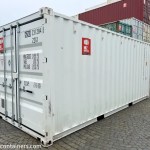
20 Foot container cost
If you have ever searched for a shipping container, you have almost certainly asked one question first: how much does a 20 foot container cost? The answer is not a single number. It is a range that spans from under $1,000 for a weathered, as-is unit to over $5,000 for a pristine, one-trip container — and that is before delivery, site preparation, or modifications enter the picture.