
Invoice for Shipping Containers by Bank Transfer or Cash Payment
Invoice for shipping containers is a key legal and accounting document used in maritime and container transport of goods within international and domestic trade. It serves as a formal request for payment for transported goods and related services. At the same time, it is the basis for customs proceedings, accounting, tax obligations (especially VAT), logistics and cargo insurance.
Payment by bank transfer (bank transfer, wire transfer) and payment “in cash” (in practice especially in the form of advance payment, CAD, etc.) are the two most commonly used methods that define the risks, speed and reliability of transactions between the exporter (seller), importer (buyer) and carrier.
In-depth analysis: Role and importance of invoices in container transport
An invoice in container transport serves several essential functions:
| Function | Description |
|---|---|
| Proof of commercial transaction | Formal document of sale between exporter and importer, containing detailed information about goods, price and conditions. |
| Basis for customs clearance | Key document for customs authorities, on the basis of which duties, VAT are assessed and the origin and nature of goods are verified. |
| Basis for insurance | States the value of goods and description, which is essential for insurers when resolving insurance claims. |
| Logistics document | Enables carriers and freight forwarders to properly plan handling, storage and delivery of shipments. |
Commercial invoice vs. other shipping documents
| Document | Purpose and importance |
|---|---|
| Commercial invoice | Financial and legal document – request for payment, basis for duty and VAT, accounting. |
| Proforma invoice | Preliminary document, price offer in invoice format, used e.g. for letter of credit or import license, not a binding request for payment. |
| Bill of Lading (B/L) | Shipping document – confirms receipt of goods by carrier, contract of carriage, document of ownership enabling receipt of goods. |
| Packing List | Describes in detail the physical contents of the shipment (quantity, dimensions, packing method), without prices. Customs officers compare it with the invoice and B/L. |
| Certificates of origin, quality | Specific documents for certain commodities, important for preferential treatment in customs or for hygiene requirements (e.g. for food, chemicals). |
Key requirements of an invoice for shipping containers
An invoice must contain accurate, complete and truthful information – absence or error can mean shipment detention, fines and inability to deduct VAT.
Mandatory items (according to Czech, European and international practice):
- Identification of parties:
- Name, address, ID number, tax ID of seller (exporter)
- Name, address, ID number, tax ID of buyer (importer)
- Consignee, if different from buyer
- Basic invoice information:
- Invoice number (unique, traceable)
- Date of issue and due date
- Reference to order, contract, etc.
- Description of goods:
- Exact trade name (not generic names such as “spare parts”)
- Quantity, units, weight, packaging
- Unit price and total price
- Currency of transaction (USD, EUR, CZK, etc.)
- Classification:
- HS code (Harmonized System) – for customs purposes
- Country of origin – affects duties and trade measures
- Incoterms® – determines who bears costs and risks (EXW, FOB, CIF, DDP, etc.)
- Payment terms:
- Method of payment (bank transfer, CAD, advance payment, etc.)
- Exporter’s bank details
- Due date and possible penalties for late payment
- Shipping information:
- Port of loading and discharge
- Name of ship, container number, seal number
- Reference to shipping contracts and documents
- Declarations and signature:
- Declaration of accuracy and truthfulness of information
- Name and signature of authorized person
Practical TIP:
Use an invoice template recommended by, for example, the Czech Chamber of Commerce, or templates available on the websites of freight forwarding companies or customs authorities.
VAT and invoicing within the EU and outside the EU (third countries)
Transport between EU member states:
- Place of performance (according to § 9 of the VAT Act) is in the country of the service recipient, if they are an entrepreneur (VAT payer).
- Invoicing without VAT – so-called reverse charge (transfer of tax obligation to recipient).
- Must be stated on the invoice “tax to be paid by customer” or “reverse charge” and recipient’s tax ID.
- Report in control statement and summary statement – see lines 21, 25 of Czech VAT return.
Transport from/to third countries:
- Import transport – if transport is related to import of goods, it is exempt from VAT (see § 69 para. 1 of the VAT Act).
- Export transport – transport related to export is also exempt from VAT (see § 69 para. 2 of the VAT Act).
- Invoice issued without VAT – necessary to document the link to import/export (for example, copy of customs document, B/L).
Practical examples:
- Transport of container from Hamburg to Czech Republic: if the recipient is a Czech VAT payer, the invoice will be without VAT, place of performance is in the Czech Republic.
- Transport within the Czech Republic for a Czech VAT payer – normally subject to 21%25 VAT, unless the condition for exemption is met (connection with import/export).
Payment methods: bank transfer vs. cash – detailed analysis
Payment by bank transfer (bank transfer, wire transfer)
Description: Standard and secure method of payment, especially for B2B (between companies).
| Advantages | Disadvantages |
|---|---|
| Traceability | Time delay (2–5 days) |
| Suitable for high amounts | Bank fees (especially for SWIFT payments) |
| Standardization | Risk of exchange rate differences (for foreign currencies) |
Options:
- Payment after delivery of goods
- Payment after submission of shipping documents (B/L, invoice)
- Payment with due date (e.g. Net 30, Net 60)
Payment “in cash” (in international transport)
In practice, this is not about physical transfer of banknotes, but about payment mechanisms that minimize risk for the seller.
| Type | Description and use |
|---|---|
| Advance payment (Cash in Advance) | Buyer pays everything before goods are sent, maximum certainty for exporter, minimum for importer. |
| Payment against documents (CAD) | Documents for receipt of goods are obtained by buyer only after payment – common in container transport. |
| Immediate transfer/E-checks | Fast electronic payments, considered “cash” due to irrevocability after approval. |
Warning: Cash on delivery (COD) is extremely rare in container transport.
Example of a properly issued invoice for shipping containers
| Field | Sample entry |
|---|---|
| Invoice number | 2024-INV-0075 |
| Date of issue | 21. 06. 2024 |
| Seller | ABC Shipping, s.r.o., Prague, ID: 12345678, Tax ID: CZ12345678 |
| Buyer | XYZ Import GmbH, Hamburg, DE123456789 |
| Consignee | XYZ Warehouse, Ostrava, CZ |
| Description of goods | Steel shipping container 40′ HC, blue color, new, carrying capacity 30t |
| Quantity | 2 pcs |
| Unit price | 124,000 CZK |
| Total amount | 248,000 CZK |
| Currency | CZK |
| HS code | 8609 00 90 |
| Country of origin | China |
| Incoterms | CIF Ostrava |
| Payment terms | Payment by bank transfer within 14 days of delivery (Net 14), account: CZ65 0100 0000 1234 5678 9012 |
| Shipping information | Ship: MV BlueSea, Container: ABCU1234567, Seal: 789456 |
| Declaration | “We declare that all information is true. For ABC Shipping, s.r.o., Jan Novák, director” |
| Signature | (manually or electronically) |
Specifics of invoicing when importing/exporting containers
- Always verify the correctness of the HS code – incorrect classification is the most common reason for shipment detention at customs.
- Provide detailed description of goods – especially for technical equipment, machinery, etc.
- Incoterms® must be precise – they determine who pays for transport, insurance, duty, etc.
- Bank details and payment terms clearly, unambiguously and in accordance with the contract.
- Attach all related documents – packing list, bill of lading, certificates of origin, if necessary others depending on the nature of goods.
Recommended procedures for small and medium-sized enterprises (SMEs)
- Use verified invoice templates (e.g. from freight forwarding companies, chambers of commerce, customs authorities).
- Check each piece of information several times (HS code, tax ID, Incoterms, prices, currency).
- Consult with a VAT expert (especially if you invoice to/from third countries).
- Digitalize invoicing – use software for document management, automation of checks, electronic signature.
- Work with an experienced freight forwarder – can help with document preparation and negotiations with customs authorities.
- Always get confirmation of payment receipt (for both transfers and CAD) before releasing goods.
Dictionary of related terms
| Term | Meaning |
|---|---|
| Commercial invoice | Basic invoice for international trade, basis for duty, VAT, accounting and insurance. |
| Bill of Lading (B/L) | Bill of lading, document of ownership of goods and shipping contract. |
| Customs Clearance | Customs clearance, process of approval of import/export of goods. |
| Freight Shipping | Freight transport, especially in container or pallet form. |
| HS Code | Harmonized System of numerical classification of goods for customs purposes. |
| Incoterms® | International commercial terms defining responsibility for costs and risks in transport. |
| Invoice Number | Unique invoice number, important for traceability and accounting. |
| Payment Terms | Agreed payment conditions (method, due date, penalties, etc.). |
| Supply Chain | Supply chain, complex network of companies and processes in the path of goods from manufacturer to buyer. |
 Czech Republic, Jesenice
  FREE SHIPPING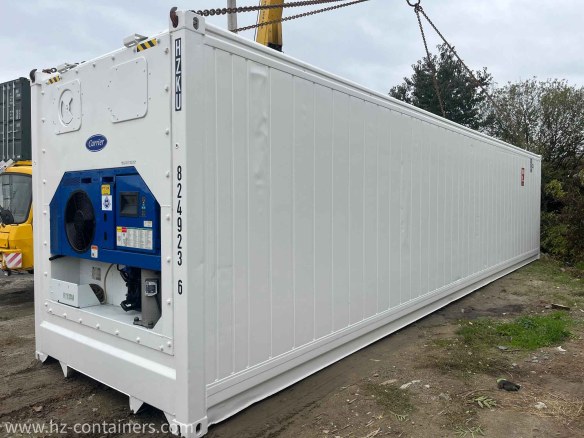

Other container news...

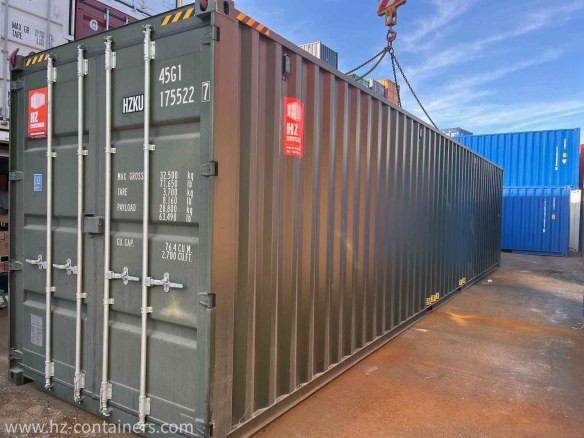
New shipping containers
If you are currently considering purchasing a new shipping container, you are not alone. While just twenty years ago containers were used almost exclusively for maritime transport, today they have found their way into construction, storage, business, and even housing. This growing popularity brings with it a host of questions: Which type should you choose? How much does it cost? How do you recognize quality? How can you avoid falling victim to scammers?
New sea shipping containers
If you are currently considering purchasing a new shipping container, you are not alone. While just twenty years ago containers were used almost exclusively for maritime transport, today they have found their way into construction, storage, business, and even housing. This growing popularity brings with it a host of questions: Which type should you choose? How much does it cost? How do you recognize quality? How can you avoid falling victim to scammers?

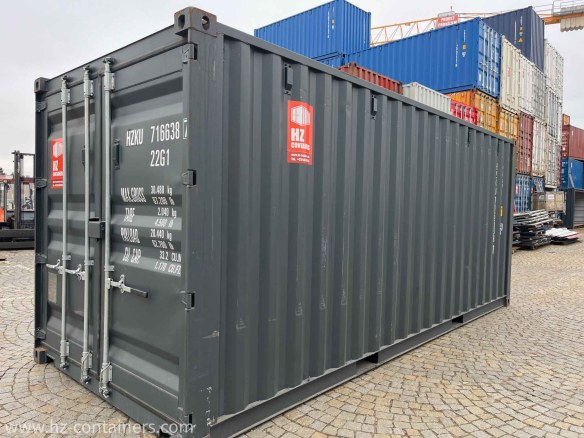
6m shipping container
Are you thinking about buying a 6-meter shipping container but aren’t sure what to look for? You are not alone—this 20-foot container is the best-selling size on the Czech market, and the differences between various types, conditions, and prices can be significant. In this guide, you will find everything you need to know: from exact dimensions and a comparison of categories (such as “one-way,” refurbished, and “Cargo Worthy”) to current prices and shipping advice.

Corner casting steel vs aluminum
Every shipping container in the world — all 40 million of them — rests on eight critical components. Corner castings are the load-bearing blocks at each corner of an ISO shipping container, and they are the universal interface between the container and every crane, twistlock, spreader, and chassis on the planet. When you lift a container, stack it nine high on a ship, or lock it to a truck trailer, every ton of force flows through these fittings.