
How much oxygen is needed to survive in a shipping container?
The question “How much oxygen do I need to survive in a shipping container?” combines human physiology, technical characteristics of shipping containers, air chemistry and safety engineering. Shipping containers, primarily designed for cargo transport, are built as almost airtight boxes. This property can become a deadly trap if a person is trapped inside. The key factor is not only how quickly a person consumes oxygen, but especially how fast carbon dioxide accumulates in the closed space, which is produced with each exhalation.
Basic concepts and physical laws
Composition of atmospheric air
| Gas | Typical concentration |
|---|---|
| Nitrogen (N₂) | ~78.1 % |
| Oxygen (O₂) | ~20.9 % |
| Argon (Ar) | ~0.93 % |
| Carbon dioxide (CO₂) | ~0.04 % (400 ppm) |
| Other (neon, helium…) | remainder |
- For life, oxygen is essential as it enables cellular metabolism.
- Carbon dioxide is a product of respiration and its concentration in air is normally very low.
Shipping container – technical specifications
| Container type | Internal dimensions (m) | Volume (m³) | Note |
|---|---|---|---|
| 20‑foot (TEU) | 5.9 × 2.35 × 2.39 | ~33 | most common type |
| 40‑foot (FEU) | 12.03 × 2.35 × 2.39 | ~67 | for large shipments |
- All data are indicative; the actual internal volume may be reduced by internal fittings and construction.
- Containers are designed to be almost hermetically sealed. Air infiltration is very small, typically insufficient to sustain life.
Physiological terms: Hypoxia and hypercapnia
Hypoxia
- A condition where there is a deficiency of oxygen in the blood and tissues.
- Critical threshold is oxygen concentration dropping below 19.5 % (mild hypoxia), below 16 % (severe hypoxia).
- Symptoms: fatigue, concentration disorders, bluish lips, loss of consciousness.
Hypercapnia
- Increased CO₂ concentration in the blood.
- At levels of 1 000–2 000 ppm (0.1–0.2 %) noticeable concentration impairment occurs; at 5 000 ppm (0.5 %) headache and drowsiness; above 30 000 ppm (3 %) serious health complications begin.
- CO₂ is the primary trigger of the respiratory reflex.
Oxygen vs. carbon dioxide: Two main survival factors
Oxygen consumption
- Average oxygen consumption of an adult at rest: 0.84 kg/day (approximately 25 L/h).
- During normal resting breathing, a person consumes 21 % of the inhaled air volume per hour, but only about 5 % of that oxygen is actually absorbed.
- Oxygen consumption sharply increases with physical activity (up to 3–5 times).
Production and accumulation of CO₂
- CO₂ production at resting metabolism: 18–20 L/h (approximately 1 kg/day).
- Under normal conditions, CO₂ in air is present only in trace amounts (400 ppm = 0.04 %).
- CO₂ accumulation is a critical issue in enclosed spaces without ventilation.
Model calculation – How long can one survive in a sealed container?
Model parameters
- Container: 20‑foot (volume 33 000 L of air)
- Initial O₂ concentration: 20.9 % (6 897 L)
- Initial CO₂ concentration: 0.04 % (13.2 L)
- O₂ consumption: 25 L/h
- CO₂ production: 20 L/h
Critical limits
| Substance | Critical concentration | Notes |
|---|---|---|
| O₂ | 15 % | Dizziness, confusion, loss of consciousness |
| CO₂ | 5 % (50 000 ppm) | Acute risk of death, seizures, respiratory failure |
| CO₂ | 1–2 % (10–20 k ppm) | Drowsiness, headache, performance decline |
Calculations
- Reaching 15 % O₂: (6 % of 33 000 L = 1 980 L) → 1 980 L / 25 L/h ≈ 79 hours (3.3 days)
- Reaching 5 % CO₂: (4.96 % of 33 000 L = 1 637 L) → 1 637 L / 20 L/h ≈ 82 hours (3.4 days)
- Reaching 3 % CO₂: (2.96 % of 33 000 L = 977 L) → 977 L / 20 L/h ≈ 49 hours (2 days)
The real limit is CO₂ concentration, because its rise occurs faster and CO₂ poisoning symptoms (drowsiness, confusion, panic) appear long before critical oxygen deficiency is reached.
Physical and physiological details – table for clarity
| Phase | O₂ concentration | CO₂ concentration | Time to reach | Physical symptoms |
|---|---|---|---|---|
| Initial state | 20.9 % | 0.04 % | 0 h | Normal condition |
| After 24 hours | ~20 % | ~1.5 % | 24 h | Slight headache, mild fatigue |
| After 48 hours | ~18 % | ~3 % | 48 h | Drowsiness, confusion, headache |
| After 72 hours | ~16 % | ~4.5 % | 72 h | Dizziness, panic, impaired judgment |
| After 80 hours | ~15 % | ~5 % | 80 h | Loss of consciousness, lethal risk |
Additional factors affecting survival
Number of persons
- Each additional person multiplies O₂ consumption and CO₂ production.
- For two people, survivable time in the container is halved; for three, reduced to a third.
- In practice, lethal CO₂ concentration can be reached within 24 hours if three people are in the container.
Physical activity and stress
- Panic, attempts to escape, shouting or movement consume more oxygen and lead to faster CO₂ rise.
- Recommended strategy is to stay calm and minimize movement.
Temperature and humidity
- Overheating (in summer container temperature exceeding 50 °C) dramatically raises metabolism and risk of collapse.
- High humidity hampers breathing, contributes to faster fatigue and dehydration.
Container tightness
- Although containers are not perfectly hermetic, typical infiltration is on the order of tens of liters per day – insufficient for survival.
- It is not advisable to rely on small leaks – they are unpredictable and do not meet safety standards.
Safety standards and practice
Limits for work in enclosed spaces (according to occupational safety standards)
- Minimum O₂ concentration: 19.5 %
- Maximum permissible CO₂ concentration for long‑term stay: 0.5 % (5 000 ppm)
- Short‑term (15 minutes): up to 3 % (30 000 ppm); higher values are immediately dangerous!
- When working in containers, it is recommended to use O₂ and CO₂ detectors, ensure ventilation, and never enter an enclosed space without backup and a rescue plan.
Real incidents
- Fatal accidents in containers and tanks are recorded annually.
- The most common cause is a combination of hypoxia and hypercapnia, often aggravated by lack of ventilation, high temperature, and absence of gas monitoring.
Options to extend survival
Natural and technical means
| Method | Effectiveness | Note |
|---|---|---|
| Minimize movement | High | Reduces O₂ consumption and CO₂ production |
| CO₂ scrubber | Very high | Used in submarines and spacecraft; LiOH, Ca(OH)₂ |
| Artificial ventilation | Maximum | Requires equipment, cannot operate without external assistance |
| Supplemental oxygen | Insufficient | Adding O₂ is barely effective without CO₂ removal |
Illustration – CO₂ absorption technologies
- LiOH filters: Chemically bind CO₂ and are used in the space industry.
- Soda lime (Ca(OH)₂): Used in anesthesiology, rebreathers and submarines.
- Industrial fans and filters: For containers they can be used temporarily only with structural modification and external power.
Final summary and safety recommendations
- The primary survival limit in a container is the rise of carbon dioxide, not oxygen deficiency.
- Lethal CO₂ concentrations can be reached in 1–2 days depending on the number of persons and physical activity.
- Oxygen depletion occurs later, but its decline also contributes to rapid condition deterioration.
- Safety standards require atmospheric monitoring, never entering enclosed spaces without rescue measures and backup.
- Shipping containers are unsuitable for survival without ventilation and any entrapment in them is extremely dangerous.
Overview table: Survival time in a sealed container
| Number of persons | Survival to 3 % CO₂ (approx.) | Survival to 5 % CO₂ (approx.) |
|---|---|---|
| 1 | 48 hours | 80 hours |
| 2 | 24 hours | 40 hours |
| 3 | 16 hours | 27 hours |
Values are indicative and may be affected by physical activity, temperature and container tightness.
Related phenomena and risks
- Asphyxia by inert gases (sudden loss of consciousness without feeling of suffocation)
- Shallow water blackout (diver hypoxia without warning signs)
- Industrial accidents in confined spaces (silo, cellar, sewer)

 Czech Republic, Vysoké Mýto
  FREE SHIPPING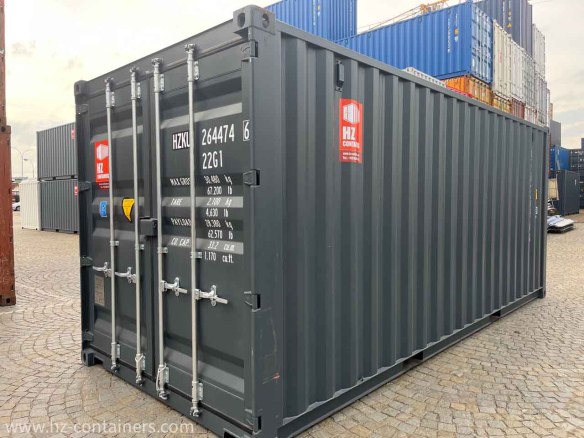

Other container news...

Obligation to Check Tightness When Selling a Reefer Container
Who is responsible for the refrigerant leak check when selling a refrigerated container? Find out what obligations the seller has at the time of handover and why they must provide a PTI report along with the technical data plate. Learn which regulatory requirements and F-gas record-keeping duties become the sole responsibility of the new owner.

New shipping containers
If you are currently considering purchasing a new shipping container, you are not alone. While just twenty years ago containers were used almost exclusively for maritime transport, today they have found their way into construction, storage, business, and even housing. This growing popularity brings with it a host of questions: Which type should you choose? How much does it cost? How do you recognize quality? How can you avoid falling victim to scammers?
New sea shipping containers
If you are currently considering purchasing a new shipping container, you are not alone. While just twenty years ago containers were used almost exclusively for maritime transport, today they have found their way into construction, storage, business, and even housing. This growing popularity brings with it a host of questions: Which type should you choose? How much does it cost? How do you recognize quality? How can you avoid falling victim to scammers?

6m shipping container
Are you thinking about buying a 6-meter shipping container but aren’t sure what to look for? You are not alone—this 20-foot container is the best-selling size on the Czech market, and the differences between various types, conditions, and prices can be significant. In this guide, you will find everything you need to know: from exact dimensions and a comparison of categories (such as “one-way,” refurbished, and “Cargo Worthy”) to current prices and shipping advice.