
Do shipping containers have C4 corrosion resistance?
In logistics, construction and alternative housing, a crucial question is:
Do shipping containers have C4 corrosion resistance?
The answer is not a simple yes or no – it depends on a deep understanding of materials, international standards, types of coating systems and construction specifics of containers.
This article is a comprehensive glossary that explains all key terms in detail and provides expert answers to this essential question.
What Is Corrosion? Definition, Impacts and Mechanism
Corrosion is a natural degradation process of materials, most often metals, caused by chemical (e.g., oxidative) or electro‑chemical reactions with the surrounding environment. For steel, the basic construction material of shipping containers, corrosion mainly means rusting – the oxidation of iron to iron oxides (Fe₂O₃). Corrosion is the material’s attempt to return to a stable, energetically favorable form. The process is accelerated by:
| Factor | Description |
|---|---|
| Moisture | Water acts as an electrolyte, increasing ion mobility and facilitating electro‑chemical reactions |
| Salinity | Chlorides (especially from marine environments) break down passive protective layers |
| Industrial pollution | Sulphur and nitrogen oxides create acidic conditions that markedly increase corrosion rate |
| Temperature | Higher temperatures accelerate all chemical reactions, including corrosion |
| Mechanical influences | Scratches, impacts, abrasion – damage to the protective layer |
Practical significance:
Shipping containers are exposed for decades to extreme conditions: high humidity, temperature fluctuations, salty air, alternating wet and dry cycles, and mechanical stresses during transport and handling. Without protection their service life would be measured in months – with quality protection it can last 20–30 years or more (source: HZ CONTAINERS, ISO‑12944 glossary).
ISO 12944 Standard: Key International Standard for Structural Protection
ISO 12944, introduced in 1998 and updated in 2018, is the globally recognized standard “Coatings – Protection of steel structures against corrosion by protective paint systems”. It is the primary document for determining how to protect steel constructions in various environments.
Main principles of ISO 12944:
- Environment categorisation by corrosion aggressiveness (C1 to CX)
- Recommendations for coating types and minimum dry film thickness (DFT) according to environment and required service life
- Definition of expected protection life (short < 7 yr, medium 7–15 yr, long 15–25 yr, very long > 25 yr)
- Testing and inspection methods to verify protection effectiveness
The standard allows objective comparison of protection levels for different structures and sets clear criteria for selecting the appropriate coating system.
Corrosion Classes According to ISO 12944 and Their Relevance for Containers
ISO 12944‑2 defines atmospheric corrosion classes based on annual steel loss (µm) and typical environment:
| Class | Typical Environment | Annual Steel Loss | Note for Containers |
|---|---|---|---|
| C1 | Interiors, clean offices | < 1.3 µm | Negligible |
| C2 | Rural, warehouse spaces | 1.3–25 µm | Negligible |
| C3 | Urban, mildly industrial, laundries, breweries | 25–50 µm | Common inland |
| C4 | Industrial and coastal with mild salinity | 50–80 µm | Typical for containers |
| C5‑I | Industrial, high humidity, aggressive atmosphere | 80–200 µm | Extreme industry |
| C5‑M | Marine, high salinity | 80–200 µm | Ship/port container |
| CX | Offshore, extreme conditions | > 200 µm | Offshore wind turbines |
Containers are designed for at least C4, often approaching C5‑M. This means they can endure long‑term exposure to aggressive coastal and marine environments.
Coating Systems: Corrosion Protection Technologies
Composition of the Protective System
Protection of steel containers relies on a multi‑layer coating system, often combined with weather‑resistant steel.
| Layer | Function and Coating Types | Technical Notes |
|---|---|---|
| Surface preparation | Shot blasting to Sa 2.5 | Removal of scale, rust, oil – essential for adhesion |
| Primer | Epoxy / zinc‑rich primer | Zinc provides cathodic protection, “sacrifices” itself for the steel |
| Intermediate coat | High‑solids epoxy | Builds thickness, barrier against moisture/oxygen |
| Topcoat | Polyurethane, acrylic | UV, abrasion resistance, aesthetics (RAL colour) |
Dry Film Thickness (DFT)
- For C4 and a service life of 15‑25 years: 200–300 µm (source: ISO 12944).
- Greater thickness gives better protection but also higher cost and application requirements.
Additional Protection Methods
- Material selection: Weather‑resistant steels (see below); in extreme cases stainless steel.
- Cathodic protection: Zinc‑rich paints or, in shipbuilding, separate anodes (not used on containers).
- Regular maintenance: Local repairs of damaged areas, repainting, inspections.
Material of Shipping Containers: Corten Steel and Its Significance
Most containers are made of Corten steel (e.g., A/B – S355J2W, S355J0WP), a special weather‑resistant alloy containing copper, chromium, nickel and phosphorus.
How Corten Works
- When exposed to the atmosphere, a tight, compact rust patina forms.
- This patina blocks further moisture and oxygen ingress, dramatically slowing subsequent corrosion.
- Corten provides passive protection even when the coating is locally damaged – ideal for containers that often suffer scratches during handling.
Advantages and Limits
- Much longer service life compared with ordinary structural steel.
- Reduces maintenance needs, but for extreme environments a high‑quality coating system is still required.
Container Life Cycle and Maintenance in Corrosive Environments
New Containers (“One‑Trip”)
- Equipped with an undamaged factory‑applied multi‑layer coating and Corten steel.
- Fully meet, often exceed, C4/C5‑M requirements of ISO 12944.
- Expected service life under normal use: 20–30 years (with regular maintenance).
Used Containers (“Cargo Worthy”, “WWT”)
- Base structure remains protected by Corten, but the coating is often worn.
- Still suitable for C4 environments, but repair, inspection and coating renewal are recommended.
- Older containers with extensive corrosion may not meet original specifications, yet remain safe for less demanding conditions.
Importance of Colour and Maintenance
- Colour is not only aesthetic – it reflects UV radiation, influencing coating degradation and overall lifespan.
- Regular inspection and localized repairs significantly extend service life.
Answer: Do Shipping Containers Have C4 Corrosion Resistance?
YES – standard shipping containers (new, well‑maintained) are designed and manufactured for long‑term durability in environments corresponding to class C4 (industrial, coastal areas with mild salinity) and often even higher (C5‑M, high‑salinity marine environments).
- The combination of Corten steel and a robust multi‑layer coating system per ISO 12944 provides a high level of protection.
- Used containers may have reduced protective performance due to coating wear – they are still suitable for C4 but should be inspected and recoated for demanding applications.
Conclusion
A shipping container is the result of a thoughtful blend of material science (Corten), advanced coating systems and strict international standards. When properly maintained, it meets and even exceeds the requirements for C4 corrosion resistance.
Key Terms at a Glance
| Term | Meaning and Use |
|---|---|
| Corten steel | Weather‑resistant alloy that forms a protective patina, ideal for containers |
| Dry film thickness (DFT) | Total cured coating thickness; for C4, 200–300 µm is recommended |
| Cathodic protection | Zinc in the primer “sacrifices” itself to protect the steel |
| Coating service life | Expected time to first major maintenance per ISO 12944: short < 7 yr, medium 7–15 yr, long 15–25 yr |
| RAL colour system | International standard for coating colours, important for maintenance, branding and durability |
| ISO 12944 | International standard defining corrosion protection of steel structures with coatings in various environments |

 Czech Republic, Třebíč
  WITHOUT SHIPPING


Other container news...

New shipping containers
If you are currently considering purchasing a new shipping container, you are not alone. While just twenty years ago containers were used almost exclusively for maritime transport, today they have found their way into construction, storage, business, and even housing. This growing popularity brings with it a host of questions: Which type should you choose? How much does it cost? How do you recognize quality? How can you avoid falling victim to scammers?

6m shipping container
Are you thinking about buying a 6-meter shipping container but aren’t sure what to look for? You are not alone—this 20-foot container is the best-selling size on the Czech market, and the differences between various types, conditions, and prices can be significant. In this guide, you will find everything you need to know: from exact dimensions and a comparison of categories (such as “one-way,” refurbished, and “Cargo Worthy”) to current prices and shipping advice.
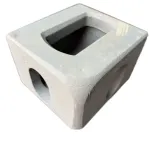
Corner casting steel vs aluminum
Every shipping container in the world — all 40 million of them — rests on eight critical components. Corner castings are the load-bearing blocks at each corner of an ISO shipping container, and they are the universal interface between the container and every crane, twistlock, spreader, and chassis on the planet. When you lift a container, stack it nine high on a ship, or lock it to a truck trailer, every ton of force flows through these fittings.

Construction cabin – selection, tips, dimensions and prices
Every construction project – whether a family house, a development project or a reconstruction – starts with the infrastructure. No construction manager, craftsman or investor who needs an on-site office, a changing room for workers or a safe storage for tools can do without a quality construction cell. But navigating the offer is not easy: residential containers, sanitary cells, storage modules, rental, purchase, refurbished pieces… This guide will give you answers to all the essential questions in one place.