
Disasters and shipping containers
Shipping containers are an essential part of global trade, but their use carries risks. Incidents such as the breaking up of the Rena remind us of the importance of taking precautions and constantly improving safety standards. Minimising the risks associated with shipping containers is crucial not only for the economy, but also for protecting our environment.
Shipping containers play a key role in global logistics and trade. Without them, it would be impossible to transport vast quantities of goods efficiently across oceans. However, like any other technology, shipping containers face risks and can be involved in accidents and disasters. This situation can have serious consequences for both the environment and the economy.
How many containers are lost per year?
According to 2020 data, it is estimated that on average about 1 382 containers are lost per year. This number can fluctuate significantly depending on weather conditions, the volume of maritime traffic and other factors. In some years, when storms are more frequent and severe, for example, the number of lost containers may increase.
Causes of losses and disasters
There are several main causes that lead to the loss of shipping containers:
- Bad weather: severe storms, high waves and hurricanes can cause containers to fall off the deck of ships. This situation is particularly common in areas with unpredictable and dangerous sea conditions.
- Technical faults: faults on ships, such as problems with engines or navigation systems, can lead to accidents and the subsequent loss of containers.
- The human factor: errors in loading and unloading containers, inadequate cargo security or navigation errors can lead to accidents and loss of containers.
The case of the Rena
One of the most significant disasters associated with shipping containers was the case of the Rena. In October 2011, the ship broke up off the coast of New Zealand and hundreds of containers spilled into the sea. This accident had serious environmental consequences, as many of the containers contained dangerous chemicals that entered the marine environment. In addition, the wreck of the Rena caused widespread pollution of the coastline with oil products.
Consequences of container losses
The loss of shipping containers has a number of serious consequences:
- Ecological damage: containers often contain hazardous substances that can pollute the marine environment and damage ecosystems. In addition, when containers break down, they release plastic and other materials that contribute to plastic pollution in the oceans.
- Economic losses: companies lose goods, which can have serious economic consequences. In addition, the costs of rescue operations and clean-up after accidents can be very high.
- Risk to shipping: Lost containers pose a danger to other ships that may hit these floating obstacles.
Prevention and safety measures
To minimise the risks associated with shipping containers, a number of preventive and safety measures need to be taken:
- Improving container design: developing more durable and secure containers can reduce the risk of damage and loss.
- Better cargo security: The use of modern technologies and procedures to secure containers on board ships can significantly reduce the risk of them falling into the sea.
- Crew training: good training and education of ship crews can help prevent mistakes that could lead to accidents.
- Monitoring and tracking: the use of GPS and other tracking technologies can help to quickly locate and rescue lost containers.
Other container news...
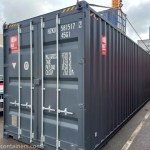
Shipping container 12m (40 ft)
A 12m shipping container is an investment that, if properly selected and cared for, will pay off in decades of trouble-free use. Whether you plan to use it as a warehouse, workshop, garage or the basis for a residential module — the key is careful selection of the condition, a thorough inspection before purchase and high-quality preparation of the base for placement. Take the time to compare offers, check the seller’s references and do not hesitate to personally inspect the container before buying. A properly selected 40-foot container will serve you reliably for many years.

Construction container
A construction container is an investment in safety, order and comfort — whether it is protecting tools from thieves or providing a dignified environment for workers. There are three key decisions: type (storage, residential, sanitary, rubble), form of acquisition (rent vs. purchase) and legislative provision (occupation, building code).

Construction cabin – selection, tips, dimensions and prices
Every construction project – whether a family house, a development project or a reconstruction – starts with the infrastructure. No construction manager, craftsman or investor who needs an on-site office, a changing room for workers or a safe storage for tools can do without a quality construction cell. But navigating the offer is not easy: residential containers, sanitary cells, storage modules, rental, purchase, refurbished pieces… This guide will give you answers to all the essential questions in one place.
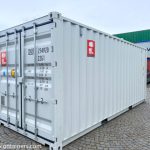
Storage container
A storage container is a lockable steel box designed for the safe and dry storage of materials, tools, goods or equipment. Originally created as a shipping container for maritime transport, its durability and versatility have found their way onto construction sites, corporate premises and private land.