
Containers for Scouts in Stock

Containers for Scouts represent a practical and flexible solution that can keep scout equipment safe, dry, and easily accessible. Scouts often need to store a diverse range of supplies, from uniforms and badges to provisions for long-term camps. Conventional storage spaces often fall short or are not sufficiently protected against damage and moisture. A container minimizes these difficulties and creates reliable facilities, thanks to which all necessary items find their place.
Why Choose a Shipping Container for Storage?
A classic shipping container is durable and provides a perfect foundation for storage. The metal construction of the container withstands adverse weather conditions and mechanical stress. This is useful not only during winter, when snow and frost present higher loads on storage spaces, but also in spring and summer, when rainy periods arrive. Thanks to sealing and a robust hull, moisture does not penetrate inside the container and scout equipment, such as chronicles, unit shirts or leaflets and posters can remain protected.
How the Container Helps with Organization
The container facilitates clear sorting of all scout equipment, from small gift items to larger components such as tents or collapsible benches for camp dining halls. It is enough to use shelves, racks or hanging systems that divide the interior of the container into functional sections. In one part, Scouts can store dishes, for example mess kits, bowls, travel spices and accessories or thermoses. In another section, badges, methodologies and program ideas will be stored, while in another zone they will find uniforms, shirts and caps.
By having everything predetermined in place, preparation for meetings and expeditions is accelerated. Leaders and unit members can quickly get back to the program and do not have to search complicatedly for where someone put badges, recruitment materials or scarves and turbans. Each item returns to the same place, which increases efficiency and saves time for all involved in the long term.
Practical Tips for Storing Scout Equipment
For the container to serve as well as possible, it is worthwhile to focus on several simple principles. Start with appropriate placement of shelves and hooks that allow you to store items vertically and save space. You can also use hanging shelf racks designed specifically for shipping containers. At the same time, use labeling of boxes and racks so you can easily identify where to look for hats, caps, badges or stickers.
Also think about protecting materials from specific influences. If you are storing, for example, chronicles, notebooks or methodological manuals, it is good to place them in sturdy boxes with thicker lids. Place such boxes on upper shelves so that any moisture from the floor does not penetrate them. At the same time, you ensure that paper prints do not absorb odors from outside. If you place metal items in the container, such as knives, cutlery or mess kits, treat them before storage so that corrosion does not occur during longer storage.
For classic scout storage, we recommend these maritime containers:
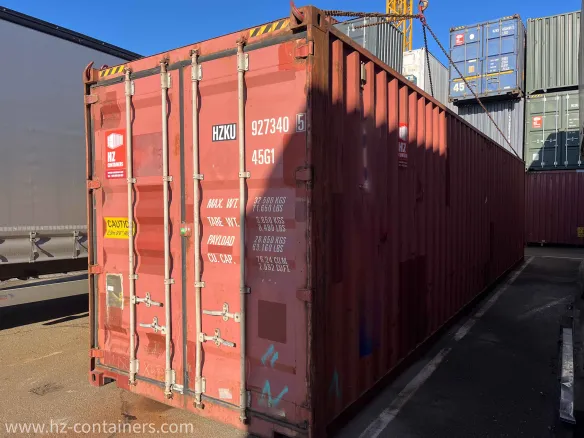
 Czech Republic, Havlíčkův Brod
  FREE SHIPPING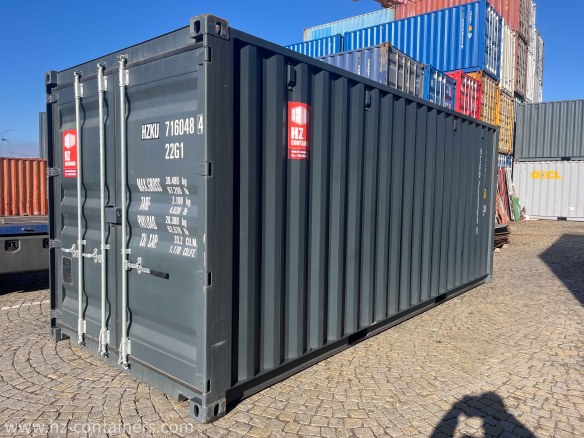

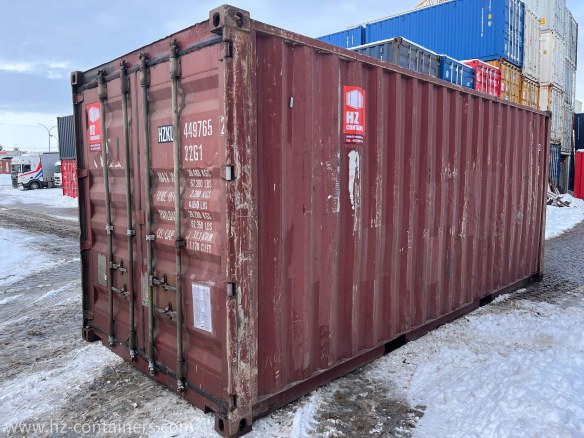
Use of Containers at Events and Camps
Containers often serve as field storage during large scout projects, camps or gatherings. You can store large quantities of supplies that you do not need to have on hand every day, but at the same time you can pull them out in time whenever the need arises. These are tent poles, bases, notice boards, recruitment banners or supplies of gift items for participants in special events.
In addition to storage, you can use the container under certain conditions as a temporary clubhouse or facilities for camp management. Of course, it is necessary to solve adequate ventilation, lighting and safety regulations. The space inside can be divided so that a small workshop is created. In it, Scouts can then repair minor damage to uniforms or make wooden accessories that they will subsequently use in the unit program.
Other Possibilities for Using Shipping Containers for Scouts
Shipping containers offer scout units a wide range of options for quickly and efficiently obtaining facilities for various activities. The container appears inconspicuous, but in reality hides great potential: it can serve as a mobile clubhouse, storage space or temporary place for workshops and educational programs. Thanks to the traditional values of Scouts, whose history dates back in some centers to 1912, the container can be transformed into a modern interpretive element that does not disrupt the legacy of long-standing history, but is able to creatively build upon it.
When planning specific modifications, it is appropriate to keep in mind that Scouts have always relied on cooperation, sharing and the ability to adapt to various conditions so that scouts could continue the tradition of friendly meetings, camps and expeditions. In the 21st century, the container can serve the same purpose: to provide shelter for all those who like to explore, learn and help others. At the same time, it builds on the spirit of old camps that Scouts once built, for example by rivers, in forests or in picturesque valleys.
Scout Experience and the Legacy of the Past
Scout experience in Třebechovice p.O. stems from a rich past in which scouts repeatedly built camps from 1912 onwards and sought places ideal for meetings and educational programs. In periods when the organization was active, it was able to quickly utilize all possible resources to offer members solid facilities – whether it was simple wooden structures or practical tent solutions with bases. Today it is no longer necessary to rely solely on traditional log cabins, base tents or classic houses. The container can become a symbol of the connection between long-standing scout ingenuity and contemporary, progressive ideas.
From historical sources, it is clear that Scouts attached great importance to economical and clever solutions. During the interwar period, several camps took place in Třebechovice that thoroughly drew on local sources of wood and water. In the post-war period, or in another attempt at renewal, scouts made do with a minimum of material to preserve and develop programs for children and youth. It is precisely this creative approach, which was not subject only to period limitations, but also took advantage of every opportunity to improve facilities, that forms the basis for today’s container modifications.
Space for Storage and Equipment
The container first and foremost solves one of the eternal problems of all scout units: where to store supplies and equipment? Tents, pots, ropes, tools, equipment and much more material take up a lot of space. Traditional wooden sheds deteriorate over time, and moreover they need to be constantly maintained. A container, on the other hand, can be purchased once and easily improved with additional modifications that ensure suitable microclimate and safety of stored items.
Scouts can divide the container into sections according to the type of equipment: a separate section for kitchen and dining supplies, another for technical tools, and a special sector for children’s personal items. Handy shelves, hanging hooks or lockable cabinets are usually available to keep order in the container even during demanding operations. Thanks to the metal construction, there is also less risk of damage from mold, insects or rodents.
Whether you decide to use the shipping container for storage in any way, you can certainly be sure that it will last for decades without needing any repairs.
Other container news...

New sea shipping containers
If you are currently considering purchasing a new shipping container, you are not alone. While just twenty years ago containers were used almost exclusively for maritime transport, today they have found their way into construction, storage, business, and even housing. This growing popularity brings with it a host of questions: Which type should you choose? How much does it cost? How do you recognize quality? How can you avoid falling victim to scammers?
New shipping containers
If you are currently considering purchasing a new shipping container, you are not alone. While just twenty years ago containers were used almost exclusively for maritime transport, today they have found their way into construction, storage, business, and even housing. This growing popularity brings with it a host of questions: Which type should you choose? How much does it cost? How do you recognize quality? How can you avoid falling victim to scammers?

6m shipping container
Are you thinking about buying a 6-meter shipping container but aren’t sure what to look for? You are not alone—this 20-foot container is the best-selling size on the Czech market, and the differences between various types, conditions, and prices can be significant. In this guide, you will find everything you need to know: from exact dimensions and a comparison of categories (such as “one-way,” refurbished, and “Cargo Worthy”) to current prices and shipping advice.
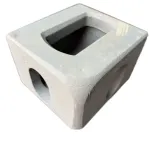
Corner casting steel vs aluminum
Every shipping container in the world — all 40 million of them — rests on eight critical components. Corner castings are the load-bearing blocks at each corner of an ISO shipping container, and they are the universal interface between the container and every crane, twistlock, spreader, and chassis on the planet. When you lift a container, stack it nine high on a ship, or lock it to a truck trailer, every ton of force flows through these fittings.