
Challenges and opportunities: the future of container and maritime transport in 2025
1. Current situation in container transport
Container and maritime transport has been facing various challenges affecting global logistics in recent days. From the Red Sea region, there are reports of ongoing security problems that are forcing shipping companies to change routes and increase transit times. At the same time, the US East Coast is facing the consequences of labour disputes that are worsening port operating conditions. Despite these complications, demand for container shipping remains strong, demonstrating the resilience of the industry. However, manufacturers and shipping companies are facing unpredictable geopolitical and economic influences that are changing the game.
2. Geopolitical tensions and their impact on shipping
Geopolitical uncertainty significantly affects global shipping routes. Sanctions, trade wars and high tariffs are pushing companies to find new logistics strategies. For example, Chinese goods bound for the US are now often shipped via Mexico to avoid customs duties. This phenomenon illustrates the increasing complexity of world trade. India’s role in global shipping is expected to grow as manufacturing diversifies outside China. These changes highlight the need for robust and flexible supply chains.
3. Environmental requirements and innovation
New environmental regulations and technological innovations are changing the way shipping is organised. For example, the introduction of high-tech sails on cargo ships promises to reduce emissions. These sails could be installed on thousands of ships, significantly reducing the carbon footprint of shipping. Testing and implementation of these technologies is currently underway, indicating a shift towards a more sustainable future.
4. Developments in the container market
Global container shipping demand is forecast to grow by 25-30% in 2024, indicating continued expansion in this sector. However, port congestion and equipment shortages in Asia are causing problems in supply chains. New network alliances, which will start operating in 2025, are expected to bring changes in market rules. These alliances use direct connection and hub-and-spoke models, increasing variability and adaptability in the market.
5. Impact of labour disputes on maritime transport
Tensions between port workers and employers persist on the US East Coast. Labor disputes over automation have caused delays at ports and disrupted logistics. If these issues cannot be resolved, they could have long-term impacts on global shipping lanes. As the date for new contracts approaches in early 2025, concerns about further conflicts are growing.
6. Adaptability as the key to success
Adaptability is becoming a key factor for survival in shipping. Investing in resilient supply chains and improving infrastructure is essential to cope with unexpected crises such as problems in the Red Sea or port disputes. Companies that are willing to invest in these areas during periods of stability gain a significant competitive advantage.
7. Outlook for the future
The outlook for 2025 indicates continued challenges and opportunities in maritime transport. The cost of shipping is likely to fluctuate due to geopolitical changes, new environmental regulations and changing trade patterns. Companies that actively embrace and adapt to these changes will have a major advantage in the future. Innovation, flexibility and responsiveness to changing market conditions will be key to success.

 Czech Republic, Písek
  WITHOUT SHIPPING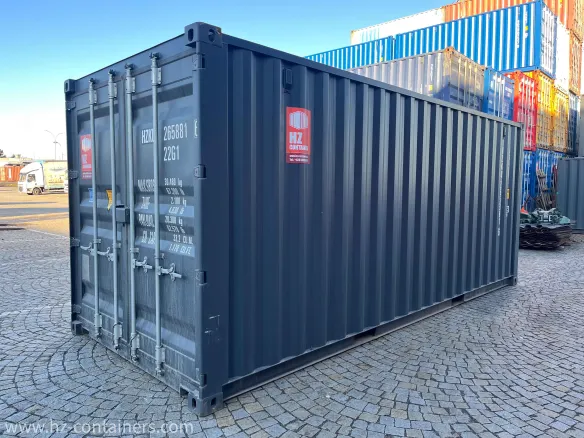


Other container news...

20 Foot shipping container cost
If you are researching the cost of a 20 foot shipping container, you have likely already encountered wildly different prices — from $999 listings online to quotes exceeding $5,500. That range is not a sign of inconsistency. It reflects real differences in container condition, location, delivery logistics, and the seller you are dealing with.
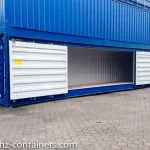
Side Opening container
A side opening container is an ISO-compliant intermodal shipping container engineered with full-length bi-fold doors along one of its long side walls, in addition to the standard cargo doors at one end. Unlike conventional containers that restrict access to a single set of rear doors, a side opening container — also widely called an open side container, open-sided shipping container, or side door container — provides unobstructed lateral access across the entire 20-foot or 40-foot length of the unit. This design transforms the container from a narrow tunnel into a wide-open space that forklifts can enter from the side, multiple workers can load simultaneously, and oversized cargo that would never fit through standard end doors can be placed without struggle.
40 Foot High Cube container cost
A 40 foot high cube container — often abbreviated as 40ft HC, 40′ HC, or 40-foot high cube — is one of the most common shipping container sizes sold on the secondary market. But if you are researching what a 40 foot high cube container costs, you have almost certainly noticed that prices are all over the map. One seller quotes $1,500. Another quotes $7,000. Both could be legitimate.
20 Foot container cost
If you have ever searched for a shipping container, you have almost certainly asked one question first: how much does a 20 foot container cost? The answer is not a single number. It is a range that spans from under $1,000 for a weathered, as-is unit to over $5,000 for a pristine, one-trip container — and that is before delivery, site preparation, or modifications enter the picture.