
Volume of a Shipping Container
Shipping containers are a key element in global trade, as they enable efficient and secure transportation of goods worldwide. When selecting the right container for your needs, the container volume plays a very crucial role. Below we take a detailed look at the volume specifications of shipping containers so you can better understand their capacity and use, what volume is and what impact it has in logistics.
What is shipping container volume?
Shipping container volume refers to the space available for storing goods inside the container. This space is measured in cubic meters (m³) or cubic feet (ft³) and is a key factor in planning logistics and goods distribution. Container volume determines how much goods will fit in one container, which has a direct impact on the efficiency and cost of transportation.
Shipping container volume plays a key role in international goods transportation. Proper understanding and use of container volume and specifications can significantly affect the efficiency and costs of logistics operations. When planning transportation, it is important to consider all relevant factors, such as container type, its volume and other specifications, to achieve the best possible results.
Container specifications include several key data that are important for proper handling and transportation of goods. These data include:
- TARE: Weight of an empty container, which is important for calculating the total weight of a loaded container.
- NET: Weight of the goods themselves without packaging and container.
- MAX.GR: Maximum weight that a container can carry, including its own weight and cargo weight.
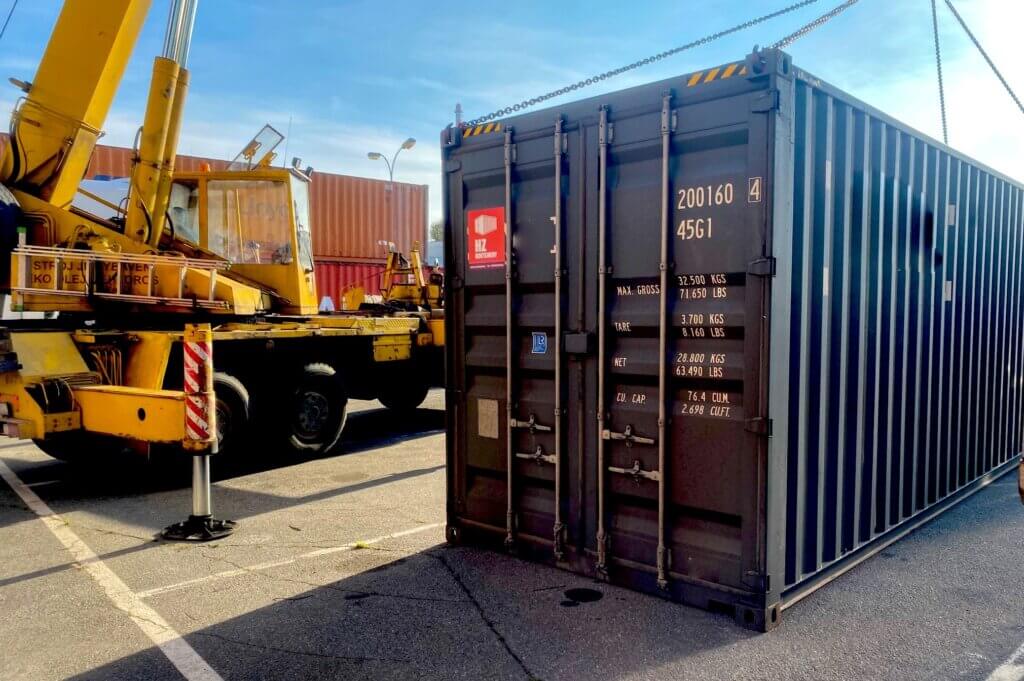
Basic container volume data
Each type of container has specific dimensions that determine its volume. The most commonly used standard containers come in sizes of 20 feet and 40 feet. These containers differ in their length, which affects their total internal volume. For example, a 20-foot container typically has an internal volume of approximately 33 m³, while a 40-foot container offers a volume of around 67 m³. However, it is important to realize that the actual usable volume may be smaller depending on the shape and packing of the goods.
How to maximize container volume
Using the right type of container can help maximize volume and transportation efficiency. For example, High Cube containers offer greater height than standard containers, allowing for the transportation of larger quantities of goods, especially light and bulky cargo. High Cube containers have a height of 9’6″ compared to standard 8’6″, adding additional space for goods without increasing the base area.
Benefits of knowing container volume
Knowledge of container volume and its specifications allows for more efficient logistics planning and optimization of transportation costs. Proper selection of a container according to volume ensures that goods will be transported safely and efficiently. Additionally, it helps prevent exceeding weight limits and minimizes the risk of cargo damage during transportation.
Impact of volume in logistics and cost optimization
It is important to fully understand the volume specifications of containers, as this plays a crucial role in efficient logistics planning and cost optimization. Proper selection of a container with appropriate volume will allow you to maximize space utilization and minimize unused volume. This can achieve an increase in the amount of goods transported while reducing the number of required shipments, which ultimately leads to savings in transportation costs.
Diverse volume specifications of containers provide wide possibilities for use in various industrial sectors. Regardless of the industry, whether it is the automotive industry, electronics, food or textiles, containers are flexible and easily adaptable to diverse needs. With knowledge of the volumes of individual container types, you can better plan transportation according to your specific cargo requirements and achieve more efficient logistics solutions.
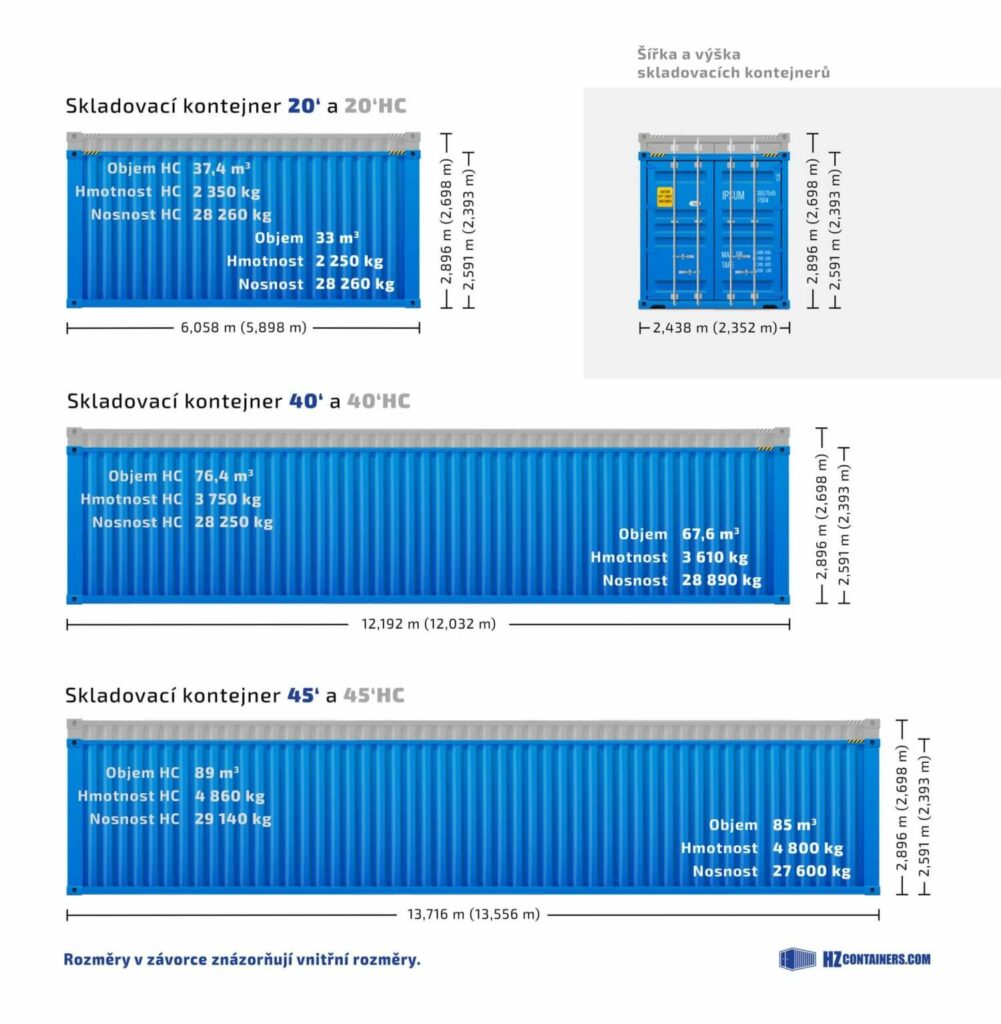
Most commonly used container types and their volume characteristics
20-foot Standard Containers
The most common and basic type of container is the standard 20-foot container, also known as TEU (Twenty-foot Equivalent Unit). This type of container offers an internal volume of approximately 33 cubic meters. Standard dimensions include a length of around 5.9 meters, width of 2.35 meters and height of 2.39 meters, providing sufficient space for diverse cargo.
20-foot High Cube (HC) Containers
For needs requiring greater height, there are 20-foot containers designated as High Cube (HC), which have increased internal height, achieving a total volume of around 37 cubic meters. The HC variant is characterized by a greater internal height of up to 2.695 meters, providing a suitable solution for cargo with non-standard height requirements.
40-foot Standard Containers
For transporting larger quantities of goods, 40-foot standard containers are ideal, providing more than double the volume compared to 20-foot variants. With an internal volume of around 67 cubic meters and a length of approximately 11.98 meters, width of 2.33 meters and height of 2.32 meters, these containers are suitable for larger cargo. They are often used for transporting bulky or heavy goods.
40-foot High Cube (HC) Containers
For even greater capacity and higher volumes, there are 40-foot HC containers, which due to their increased height offer a volume of approximately 70 cubic meters. With an internal height of up to 2.655 meters, they are an ideal solution for cargo requiring greater height and maximum space utilization. This variant is suitable for situations where you need to optimize transportation efficiency and container utilization.