
Modified Shipping Containers
Modified Shipping Containers represent a modern solution that leverages the natural durability, versatility, and cost-effectiveness of traditional shipping containers. These robust metal boxes, originally designed for the demanding task of transporting goods across oceans, have evolved into modular, reusable structures that meet a wide spectrum of modern needs. From offices and container homes to retail spaces, industrial shelters, and emergency shelters – modified shipping containers have become a cornerstone of sustainable construction and innovative design.
This glossary addresses the fundamental concepts, processes, and applications of modified shipping containers, while answering the basic question: What exactly is it?
What is a Modified Shipping Container?
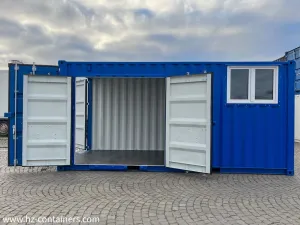
A modified shipping container is a standard shipping container that has been reworked and adapted to fulfill a specific function beyond its original purpose of transporting goods. These containers, typically made of 16-millimeter Corten steel, are known for their exceptional strength, weather resistance, and portability. Through precision engineering and modifications, shipping containers are transformed into highly functional structures suitable for various applications.
Key characteristics of shipping containers:
- Durability: Designed to withstand extreme weather conditions and heavy loads. Shipping containers are fireproof, waterproof, and highly secure. Their Corten steel is corrosion-resistant, ensuring longevity even in extreme environments.
- Portability: Thanks to forklift pockets and corner lifting points for cranes, containers can be easily relocated, making them popular for projects requiring mobility.
- Modularity: Containers can be used as standalone units or configured into multi-unit structures, offering unlimited flexibility in design.

 Czech Republic, Třebíč
  WITHOUT SHIPPING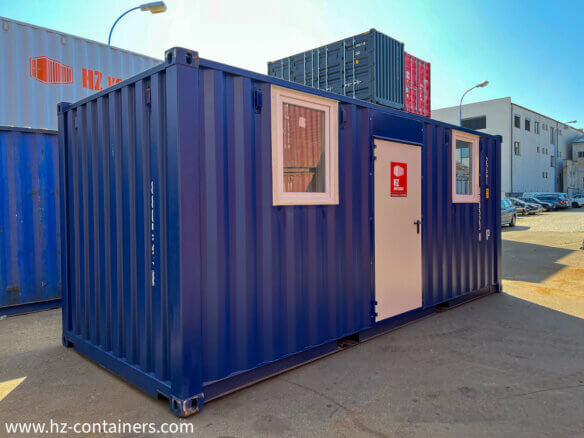

Common Modifications and Features
The modification process is tailored to the specific needs of various industries, combining functionality and aesthetics. Below are the most common customization options and features:
- Windows and Doors:
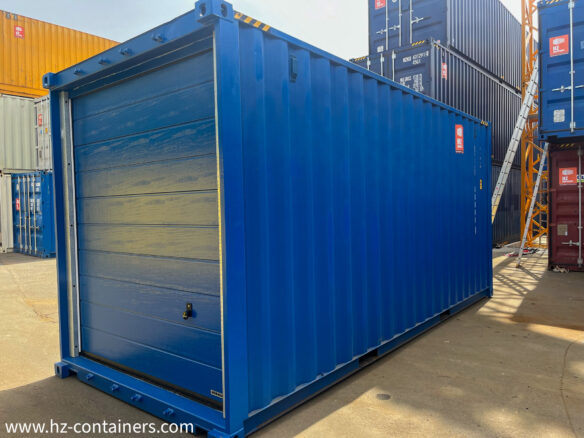
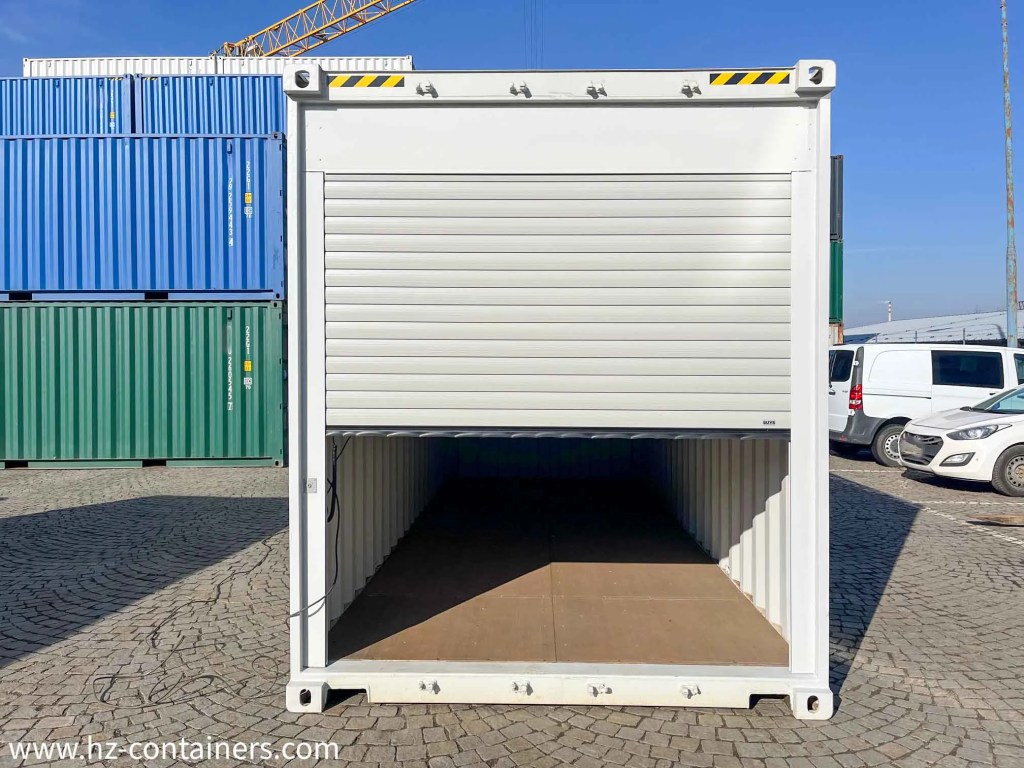
- Essential for ventilation, natural lighting, and accessibility. Options include sliding glass doors, rolling doors, or reinforced steel doors.
- Customization Tip: Adding roof windows or full-glass walls can improve natural lighting and create a more open space.
- Insulation:
- Proper insulation is crucial for temperature regulation and comfort. Common options include spray foam, rigid foam panels, or mineral insulation.
- Advanced Solutions: For extreme climates, thermal insulating coatings and advanced HVAC systems can improve energy efficiency.
- HVAC Systems:
- Heating, ventilation, and air conditioning systems enable climate control, making containers habitable and functional year-round.
- Electrical and Plumbing Systems:
- Modern standards are met by installing electrical outlets, wiring, lighting, and plumbing systems. Some designs even include bathrooms and kitchens.
- Flooring and Walls:
- Flooring options include industrial vinyl flooring, wooden floors, or even tile surfaces. Walls can be finished with drywall, plywood, or metal panels for both functionality and aesthetics.
- Partitions and Layout:
- Containers can be divided into sections for various purposes, such as private offices, meeting rooms, or storage areas.
- Security Features:
- Reinforced doors, advanced locking mechanisms, and camera systems make containers highly secure for storing valuable items.
- Coatings and Surface Finishes:
- Anti-corrosion coatings and custom colors not only protect the container but also match brand or thematic design.
Applications of Modified Shipping Containers
Modified shipping containers find use across a wide spectrum of industries due to their adaptability and environmental friendliness. Popular applications include:
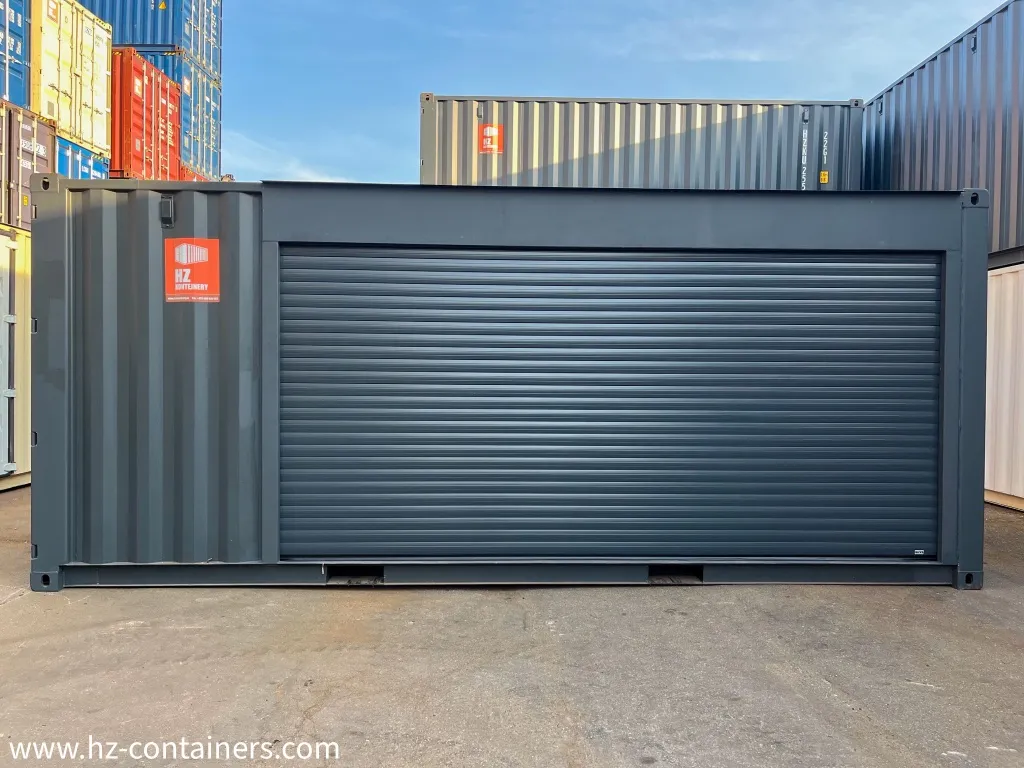
1. Office Spaces
- Mobile Offices: Affordable, customizable, and quickly deployable, ideal for construction sites, startups, and temporary projects.
- Multi-Container Configurations: Larger office complexes can be created by combining multiple containers with passageways and shared facilities.
2. Residential Spaces
- Conversion into small shipping container homes, apartments, dormitories, or even luxury villas. They offer affordable housing in areas with limited infrastructure or high real estate costs.
3. Retail and Hospitality
- Pop-up Stores: Stylish and portable, modified containers are often used for retail shops, cafes, and restaurants.
4. Storage Units
- Secure storage of tools, equipment, and supplies is a common application, particularly on construction sites or in industrial facilities.
5. Emergency Shelters and Disaster Relief
- Containers can be quickly deployed as temporary shelters, first aid stations, or disaster relief centers in crisis areas.
6. Educational and Training Facilities
- Schools, training simulators, and military training exercises (MOUT) are built using shipping containers.
7. Industrial Shelters and Data Centers
- With proper climate control and security, containers are used to protect industrial equipment, server rooms, and data centers.
Advantages of Modified Shipping Containers

Modified shipping containers offer several advantages over traditional construction methods:
- Cost-Effectiveness: Reduced construction time and material consumption lead to significant financial savings.
- Durability: Steel construction ensures long lifespan with minimal maintenance.
- Mobility: Easily relocatable and suitable for temporary or remote applications.
- Customizability: Tailored to specific requirements for unique needs.
- Environmental Friendliness: Reusing containers supports sustainability by reducing waste.
- Construction Speed: Projects can be completed within weeks instead of months.
- Flexibility: Containers can be stacked or arranged into complex multi-story structures.
Challenges and Considerations
Despite their advantages, some challenges must be considered:
- Regulations and Permits:
- Local building codes and zoning regulations may impose restrictions.
- Structural Integrity:
- Modifications, such as cutting for windows or doors, must be performed carefully to maintain strength.
- Insulation Requirements:
- Steel can overheat or become too cold without proper insulation.
- Foundation Requirements:
- Some installations may require stable foundations for long-term use.
The Future of Modified Shipping Containers
With growing demand for sustainable construction, expanded use of shipping containers is expected. Emerging trends include:
- Green Building: Solar panels, rainwater harvesting, and energy-efficient systems are increasingly integrated into designs.
- Advanced Customization: Modern design software and manufacturing techniques enable more complex modifications.
- Urban Applications: Containers are used for vertical farming, urban housing, and mixed-use projects in densely populated areas.
Modified shipping containers, or modified shipping containers, demonstrate incredible potential for transforming industrial materials for modern applications. Whether used for offices, shipping container homes, or emergency shelters, these versatile structures combine practicality, sustainability, and innovation. They are not just steel boxes – they are the building blocks of the future.
For companies and individuals considering container modifications, consulting with experienced professionals is key to achieving optimal results. The possibilities are unlimited, proving that modified shipping containers are a testament to human ingenuity and progress in sustainability.