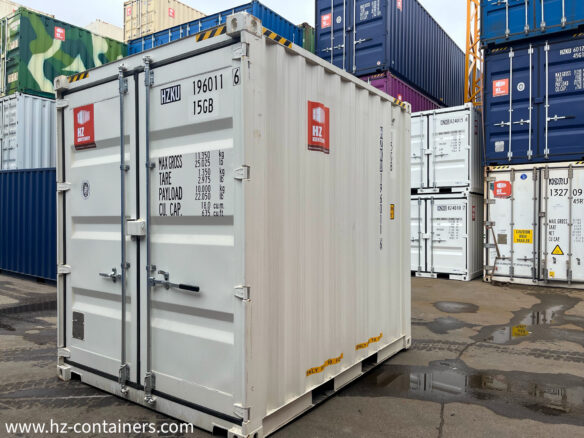
FAK – Freight All Kinds
Freight All Kinds (FAK) is a key concept in logistics and the transportation industry. It represents a pricing strategy that allows the transportation of various types of goods at a unified rate. This method simplifies the complex process of determining individual tariff classifications for each item in a shipment. The result is a simpler and often more cost-effective solution for shippers. FAK is particularly advantageous when managing mixed shipments containing various types of goods, which enables easier handling, reduced administrative burden, and more predictable transportation costs.
Freight All Kinds (FAK) is a valuable tool in the logistics industry that offers shippers simplified and cost-effective solutions for transporting mixed cargo. By providing a single rate for shipments containing multiple commodities, FAK reduces the complexity and administrative burden associated with traditional cargo pricing methods. However, shippers should carefully consider specific exclusions and limitations associated with FAK to ensure they align with their logistics needs and objectives.
What is FAK?
Definition
FAK, or Freight All Kinds, is a term in logistics that refers to the practice of assigning a single tariff classification to a shipment encompassing various commodities. This strategy is widely used in less than truckload (LTL) transportation, ocean freight, and other logistics services where shipments contain multiple types of commodities. By adopting FAK classification, shippers can mitigate the complexity and costs associated with handling and transporting mixed cargo.
Application
FAK pricing is applied in various modes of transportation, including:
- Ocean Freight: In ocean freight, FAK rates are determined according to the size and type of container, not according to the specific contents. This approach enables a unified rate, thereby simplifying the pricing structure for shippers.
- Less Than Truckload (LTL) Transportation: LTL carriers utilize FAK by averaging the transportation classes of various commodities and offering a unified rate that typically reduces overall transportation costs.
- Rail Transportation: Similarly to ocean and LTL transportation, FAK in rail transportation involves the use of a single rate for shipments containing multiple commodities, based on standardized classifications, such as Standard Transportation Commodity Codes (STCC).
Advantages of FAK
FAK offers several advantages that make it an attractive option for shippers and freight forwarders:
- Simplified Pricing: By using a single rate per shipment, FAK eliminates the need for detailed commodity classifications, which simplifies the billing process.
- Administrative Efficiency: FAK reduces the complexity of managing multiple tariff classifications and negotiations, allowing shippers to focus on other logistics operations.
- Cost Savings: Shippers can achieve economies of scale by consolidating various types of goods under a single rate, which potentially reduces overall transportation costs.
- Predictable Budgeting: With FAK, shippers can better predict their logistics expenses, as costs are not tied to the specific characteristics of each item in the shipment.
- Flexibility: FAK provides flexibility to mix various types of cargo within a single shipment without affecting transportation costs, which optimizes space utilization in containers.
FAK in Various Modes of Transportation
Ocean Freight
In ocean freight, FAK rates simplify the transportation process by offering a unified rate for containers, regardless of the nature of the cargo. This system contrasts with traditional cargo pricing methods, which typically consider the type of goods, their density, handling requirements, and stackability when determining rates.
- Setting a Unified Rate: Carriers establish a single FAK rate for a specific trade route or region, which is applicable to all types of cargo.
- All-Inclusive Pricing Structure: The FAK rate covers basic transportation costs plus all applicable ancillary fees.
- Simplified Billing: Shippers are charged a single, all-inclusive FAK rate per container, which eliminates the need to calculate additional fees for various types of cargo in the same container.
Less Than Truckload (LTL) Transportation
LTL carriers often use FAK to simplify pricing by averaging the transportation classes of various commodities. This approach mitigates the need for detailed classifications and negotiations for each type of cargo, simplifying the transportation process.
- Unified Tariff Classification: LTL carriers assign a single National Motor Freight Classification (NMFC) code to a shipment, which simplifies transportation and billing processes.
- Cost Effectiveness: By consolidating various types of cargo under a single rate, shippers can achieve cost savings through economies of scale.
Rail Transportation
In rail transportation, FAK is used to apply a single rate to shipments containing multiple commodities, based on standardized classifications, such as Standard Transportation Commodity Codes (STCC).
- Simplified Pricing: FAK rates provide a unified rate for various types of cargo, which simplifies the billing process.
- Operational Efficiency: By reducing the need for detailed cargo classification, FAK rates streamline operations and reduce administrative burden.
Limitations and Considerations
While FAK offers many advantages, there are certain limitations and considerations that shippers should be aware of:
- Exclusions: Not all types of cargo qualify for FAK rates. Hazardous materials, valuable items, and cargo requiring special handling may be excluded from FAK pricing.
- Inspection Risks: FAK shipments may face increased inspection risks, as carriers must ensure compliance with regulations for all included commodities.
- Limited Claims Options: In case of damage or loss, claims options may be limited to the agreed FAK rate, which may reduce coverage for more expensive items.
- Carrier-Specific Policies: FAK classification and rates are determined by individual carriers, which means that policies and eligibility criteria may vary significantly.

 Czech Republic, Třebíč
 FREE SHIPPING