
La Spezia – Italy Container Depot
The La Spezia depot in Italy, known internationally as Porto di La Spezia or Port of La Spezia, is one of the most important and busiest ports on the Italian coast of the Mediterranean Sea. Located in northwestern Italy in the Liguria region, this port represents a critical hub for international maritime trade, passenger transport, and logistics. The La Spezia depot in Italy is not merely an industrial facility — it is a living part of Italian maritime tradition, which stretches thousands of years into the past, and at the same time modern port infrastructure that serves millions of passengers and thousands of tons of cargo annually.
Where is the La Spezia Depot Located and What is Its Geographic Position?
Geographic Location and Position in Liguria
The La Spezia depot in Italy lies in the La Spezia bay (Golfo della Spezia) in the northwestern part of Italy, in the Liguria region. The city of La Spezia stretches along the coast of the Tyrrhenian Sea, more precisely on the shore of the Ligurian Sea, which is part of the Mediterranean Sea. The port is located between two important Italian ports: to the north lies the famous port of Genoa (Genova), which is approximately 100 kilometers away, and to the south lies the port of Livorno, approximately 120 kilometers away.
The geographic coordinates of the La Spezia port are 44°5’36.095″N and 9°48’13.051″E. The location in the bay provides natural protection from stormy conditions and makes it an ideal port for maritime transport. The city of La Spezia has approximately 94,000 inhabitants and is the capital of the La Spezia province.
For travelers from the Czech Republic, the distance from Prague is approximately 1,100 kilometers, from Brno also around 1,100 kilometers, and from Ostrava approximately 1,300 kilometers. The La Spezia depot in Italy is thus accessible to Central European travelers during one long day of driving by car or within a few hours by plane.
| Distance from Major Cities | Distance (km) | Approximate Travel Time |
|---|---|---|
| Prague | 1,100 | 11–12 hours |
| Brno | 1,100 | 11–12 hours |
| Ostrava | 1,300 | 13–14 hours |
| Genoa (Genova) | 100 | 1.5–2 hours |
| Livorno | 120 | 2–2.5 hours |
| Turin | 180 | 2.5–3 hours |
| Milan | 200 | 2.5–3 hours |
Access to the Port (by Car, Train, Bus)
The La Spezia depot in Italy is easily accessible from various directions and there are multiple ways to reach the port. For those traveling from the Czech Republic, the most common choice is a personal automobile or car rental on site.
Arrival by Car from the North:
If you are traveling from northern Europe (for example from Austria or Germany), you drive on the A1 motorway towards Bologna and Florence. If you want to avoid Florence, you can choose a detour on the A1 motorway towards “Ovest” (West). At the exit marked “La Spezia/Parma Ovest” you exit onto the A15 motorway, which will take you directly to La Spezia. The A15 motorway smoothly transforms into the city street Via Giosué Carducci in La Spezia. You continue on this road until you turn left onto Viale Italia, and then turn left again onto Largo Michele Fiorillo, where the cruise ship terminal is located.
Arrival by Car from the South:
If you are arriving from Florence, Rome, or southern Italy, you drive on the A12 motorway towards La Spezia. At the exit “La Spezia/S. Stefano M.” you exit onto the A15 motorway. From there you proceed the same way as in the previous case — Via Giosué Carducci, Viale Italia, Largo Michele Fiorillo.
Arrival by Train:
La Spezia is an important railway hub. From the Czech Republic, you typically travel via Linz, Salzburg, Innsbruck, the Brenner Pass to Bolzano and Milan, and from there you continue to La Spezia. The line is electrified and connects La Spezia with all major Italian cities. The train station in La Spezia is located in the city center and is only 5 minutes’ walk from the cruise ship terminal. If you are traveling on a cruise ship, you can easily get from the station directly to the ship.
Arrival by Bus:
La Spezia is a junction of several bus lines that connect it with surrounding cities and regions. There are direct bus connections to Milan, Florence, and other cities. Bus stations are located near the city center.
Parking:
If you are arriving by car, there are parking areas near the port terminal. It is recommended to reserve a spot in advance, especially during the summer season when the port is very busy with cruise ships.
What is the Rich History of the La Spezia Depot from Ancient Times to the Present?
Ancient and Medieval Beginnings
The history of the La Spezia depot in Italy reaches deep into the past — back to the Bronze Age and Iron Age. Archaeological finds prove that the area was inhabited in these ancient times, when local inhabitants used the natural port for fishing and trade. The La Spezia bay, with its deep and protected waters, was a natural refuge for small settlements and ships.
During the Roman era (1st to 5th century AD), the La Spezia bay was used for maritime activities, although it had not yet become a significant port on the scale of major Roman ports like Ostia. The Romans built small commercial and military facilities here that served to protect the coast and control trade in the Ligurian Sea.
In the Byzantine period (6th to 8th century), La Spezia became an important fortress against pirate and Norman raids that threatened Mediterranean trade. The city was fortified and served as a military base to protect the Ligurian coast.
By the 13th century, La Spezia had become a significant Ligurian commercial center. The construction and fortification of Castello di San Giorgio (Castle of St. George) during this period was key to the defense of the city and control of trade. The castle stands on a hill above the city to this day and offers a magnificent view of the bay and surrounding landscape.
Transformation in the 19th Century and the Emergence of the Military Arsenal
Under the rule of the Genoese Republic (from the 12th to 18th century), La Spezia flourished as a Mediterranean commercial center. Despite adverse circumstances, such as sieges and epidemics, the port remained an important commercial hub. At the end of the 18th century, the port underwent transformation under French control. Napoleon in 1808 strategically designated the La Spezia port as military, thereby initiating its dual role — commercial and military.
The real breakthrough in the history of the La Spezia depot in Italy came after the unification of Italy in 1861. The new Italian kingdom needed a strong military navy, and La Spezia was chosen as the ideal location for a large military arsenal. Between 1862 and 1869, a monumental naval arsenal (Arsenale Militare) was built, which became one of the largest in Europe. This construction completely transformed the city — from a small port town it became an important industrial center.
The construction of the arsenal brought massive economic growth. The city expanded, new workers and residents arrived, and new infrastructure was built. The arsenal itself was surrounded by walls with defensive elements and in 1880 a similarly designed “nucleus” (fortress core) was completed in the form of a wall with gun emplacements and casemates, supplemented by artillery batteries. Due to the importance of the port, several dozen forts and coastal batteries were built in the 1870s and 1880s, distributed along the coast and high in the hills of the rugged interior.
The coastal fortifications had extraordinarily powerful armament. In the category of guns of 24 cm caliber and higher, there were 76 cannons, one of which was even a 450 mm caliber cannon — one of the largest of its time. The most expensive object became the armored battery Umberto I on Palmaria island for 400 mm caliber cannons, completed in 1889. The monstrous tower of hardened cast iron had sides as thick as 125 cm and its armor alone weighed nearly 2,300 tons.
20th Century: World Wars and Modernization
During the First World War (1914–1918), the La Spezia depot in Italy served as a strategic military base. The arsenal produced war material and the port served as a base for Italian military ships. Although La Spezia was not a direct target of enemy attacks, it was an important part of Italian war infrastructure.
The Second World War (1939–1945) was much more destructive for La Spezia. As one of Italy’s most important military ports, it became a target of Allied bombing. The city suffered serious damage — buildings, infrastructure, and industrial facilities were destroyed. The port was partially destroyed and its military capability was significantly weakened. Before the Second World War, the port’s armament was reduced and old weapons decommissioned, but the port was still protected by considerable weapons. In the category of heavy weapons, there were eight 305mm howitzers with a range of 16.9 kilometers in the Cascino and Cavour batteries and twelve 280mm howitzers in the Bramapan and Domenico Chiodo batteries. They were supplemented by 152mm cannons, which had a range of 20 kilometers.
After the end of the Second World War, La Spezia was carefully restored. The port was rebuilt and modernized. The city also became an important point in post-war migration, when ships with Jewish refugees bound for then-Palestine sailed from its port. Due to this historical role, La Spezia earned the nickname “Gate to Zion” (Porta di Sion).
In the 1950s and 1960s, the La Spezia depot in Italy underwent further significant transformations. The port was modernized with regard to new technologies in maritime transport. New terminals and cargo handling facilities were built. Gradually, the port became not only a military base but also an important commercial port.
Modern Port: From the 21st Century to the Present
Today, the La Spezia depot in Italy is an extensive, modern complex with multipurpose terminals and robust infrastructure. It handles millions of tons of cargo annually and is one of Italy’s second busiest container ports. The port is the main gateway for cruise ship passengers who venture to explore northern Italy and surrounding countries. Its efficient road and rail connections make it a critical hub between Italy and Central Europe.
Modern La Spezia combines its historical military function with developing commercial and tourism. The port continues to serve the Italian navy, but also hosts dozens of large cruise ships annually. The city has become a popular destination for travelers who want to visit the famous Cinque Terre National Park and other beauties of Liguria.
| Historical Period | Key Events | Economic/Military Impact |
|---|---|---|
| Bronze Age–Iron Age | Early settlements, fishing | Small local commercial activities |
| Roman Era (1st–5th century) | Small military and commercial facilities | Limited role in Roman network |
| Byzantine Era (6th–8th century) | Fortress against pirates | Coastal defense |
| 13th century | Construction of Castello di San Giorgio | Trade control, defense |
| Genoese Period (12th–18th century) | Commercial center | Significant commercial activities |
| 1808 | Napoleon’s designation as military port | Beginning of military transformation |
| 1861–1869 | Construction of large naval arsenal | Industrial revolution in La Spezia |
| 1870–1900 | Construction of forts and batteries | Military state-of-the-art fortress |
| 1914–1918 | First World War | Military base |
| 1939–1945 | Second World War, bombing | Devastating damage, reconstruction |
| 1945–1970 | Post-war reconstruction and modernization | Development of trade and tourism |
| 1970–2000 | Containerization, technological innovations | Development as modern commercial port |
| 2000–present | Tourism boom, sustainability | Italy’s second largest container port |
What are the Main Functions and Infrastructure of the La Spezia Depot?
Military Port and Naval Base
The La Spezia depot in Italy remains one of Italy’s most important military ports. The Italian Navy (Marina Militare Italiana) has a permanent presence here and maintains a significant portion of its fleet here. The port serves as a base for various types of military ships, from frigates and destroyers to auxiliary ships. The military port is separate from the civilian port and has its own infrastructure, facilities, and security measures.
The historical fortifications of the port, which were built in the 19th century, partially remain and serve as a reminder of La Spezia’s military importance. Some of these forts and batteries are now protected as historical monuments and are accessible to the public. La Spezia’s military role remains strategically important for Italian defense policy and for NATO, of which Italy is a member.
Civil and Cargo Terminals
In addition to its military function, the La Spezia depot in Italy is a significant commercial port. The port has several civilian terminals that specialize in handling various types of cargo. The largest of these is the container terminal, which handles millions of containers annually. The port is equipped with modern cranes, handling equipment, and storage spaces.
Types of cargo handled in La Spezia include:
- Containers — standard 20 and 40 foot containers with various goods
- General cargo — various types of goods, from automobiles to machinery
- Liquids — oil and petroleum products
- Raw materials — iron ore, coal, and other minerals
- Automobiles — the port is an important center for exporting Italian automobiles
The La Spezia port is one of Italy’s second largest container ports (after the Genoa port) and handles millions of tons of cargo annually. Exact figures vary from year to year, but in the last decade the port has processed approximately 3–4 million tons of cargo annually.
Cruise Terminal for Cruise Ships
The La Spezia depot in Italy is also an important destination for cruise ship passengers. The port has a dedicated cruise terminal located at Molo Garibaldi (Garibaldi Pier). The terminal is equipped with modern facilities for passengers, including waiting areas, information centers, and passenger services.
The address of the cruise terminal is:
Porto La Spezia Cruise Facility
Molo Garibaldi
Viale San Bartolomeo 109
19126 La Spezia, Italy
The terminal is located just 5 minutes’ walk from La Spezia’s main train station, making it convenient for passengers arriving by train. Near the terminal there is a taxi stand, bus stops, and parking areas for personal vehicles.
The La Spezia port hosts dozens of large cruise ships annually, especially during the summer season (March to November). Some of the largest ships that dock here are among the world’s largest cruise ships, with a capacity of over 5,000 passengers.
What Ship Voyages and Travel Options Depart from the La Spezia Depot?
Mediterranean Cruises from La Spezia
The La Spezia depot in Italy is one of the main departure points for Mediterranean cruises. Many large travel companies, such as Costa Crociere, MSC Cruises, Royal Caribbean, and others, offer cruises from La Spezia. Typical itineraries include visits to various Mediterranean ports, such as:
- Portovenere — picturesque town near La Spezia
- Cinque Terre — UNESCO World Heritage Site
- Greek Islands — Mykonos, Santorini, Rhodes
- Croatian Coast — Dubrovnik, Split
- France — Marseille, Cannes, Nice
- Spain — Barcelona, Palma de Mallorca
- Italy — Rome (Civitavecchia), Naples, Messina
Cruises typically range from 7 to 14 days and are designed for various types of travelers — from families with children to couples and groups of friends. Prices range from several thousand euros per person for simple cruises to tens of thousands of euros for luxury cruises.
Local Shipping Routes and Excursion Boats
In addition to large cruise ships, there are also local shipping routes from La Spezia for shorter distances. The most popular are cruises to Cinque Terre and Portovenere, which are ideal for day trips.
Cruises to Cinque Terre:
From La Spezia, shipping routes are available to individual villages of Cinque Terre — Monterosso, Vernazza, Corniglia, Manarola, and Riomaggiore. These cruises typically last 30 minutes to 1.5 hours depending on the destination. Passengers can purchase day tickets that allow them to travel unlimited between villages and La Spezia.
Cruises to Portovenere:
Portovenere is a picturesque town about 12 kilometers from La Spezia. Shipping routes there take approximately 30 minutes and offer beautiful views of the coast.
Sunset Cruises:
During the summer season, special sunset cruises are held that combine beautiful scenery with dinner or drinks.
| Type of Cruise | Destination | Duration | Price (approximately) | Season |
|---|---|---|---|---|
| Cinque Terre Day Trip | Monterosso, Vernazza, Corniglia | 30 min – 1.5 h | 25–45 EUR | March–November |
| Portovenere | Portovenere | 30 min | 12–20 EUR | March–November |
| Sunset Cruise | Bay of Poets | 2–3 hours | 35–60 EUR | May–September |
| 7-Day Mediterranean Cruise | Various Mediterranean ports | 7 days | 800–3000 EUR | March–November |
| 14-Day Mediterranean Cruise | Various Mediterranean ports | 14 days | 1500–6000 EUR | March–November |
How Does the La Spezia Depot in Italy Differ from Other Italian Ports?
Comparison with the Port of Genoa (Genova)
Genoa (Genova) is Italy’s largest port and one of Europe’s largest. It is located only 100 kilometers north of La Spezia. Both ports have long histories and both are important to the Italian economy, but they differ in several key aspects.
Size and Capacity:
Genoa is substantially larger than La Spezia. It handles approximately 2.6–3 million TEU (twenty-foot equivalent units) annually, while La Spezia handles approximately 1.8–2 million TEU. Genoa is thus Italy’s largest port.
Historical Role:
Genoa has an even longer history than La Spezia — it was a significant Mediterranean commercial port as early as the 12th century during the height of the Genoese Republic. La Spezia became important only in the 19th century with the construction of the naval arsenal.
Military Function:
While La Spezia remains an important military base, Genoa is primarily a commercial port. Genoa has a smaller military presence compared to La Spezia.
Tourism:
Genoa is a larger tourist center with more historical monuments and museums. La Spezia is less well-known but offers easier access to Cinque Terre.
Infrastructure:
Both ports have modern infrastructure, but Genoa is older and has more complex historical development. La Spezia is newer and was built with more modern planning.
Comparison with the Port of Livorno
Livorno is another important Italian port, located approximately 120 kilometers south of La Spezia. Livorno is also a significant commercial and military port, but differs from La Spezia in several respects.
Geographic Location:
Livorno is located in Tuscany, while La Spezia is in Liguria. This geographic difference means that both cities serve partially different hinterlands — Livorno serves more Tuscany and central Italy, while La Spezia serves more northern Italy and Central Europe.
Type of Cargo:
Livorno traditionally specializes in general cargo and specific types of goods, while La Spezia is more focused on containers.
Military Presence:
Both ports have military presences, but La Spezia is strategically more important for the Italian navy.
Tourism:
Livorno is closer to Pisa and Florence, making it more attractive to some travelers. La Spezia offers proximity to Cinque Terre, which is its main tourist advantage.
What are the Main Attractions and Points of Interest in La Spezia?
Historical Monuments and Museums
The La Spezia depot in Italy is part of a city with a rich history and cultural heritage. The main attractions include:
Castello di San Giorgio (Castle of St. George):
This medieval fortress is located on a hill above the city and offers a magnificent view of the La Spezia bay. The castle was built in the 13th century and served as a defensive facility. Today it is open to the public and contains archaeological collections and exhibits objects from various historical periods. Admission to the castle is free and it is an ideal place for photography.
Museo Tecnico Navale (Naval Technical Museum):
This unique museum documents the military and technical history of La Spezia. It contains ship models, naval weapons, uniforms, and other exhibits related to the Italian navy. The museum is located in a building near the port terminal and is very popular with visitors interested in naval history.
Museo Civico Amedeo Lia (Civic Museum):
This museum contains a collection of art from the Middle Ages to the 18th century. Paintings, sculptures, ceramics, and other works of art are displayed. The museum is named after local collector Amedeo Lia, who donated his collection to the city.
Doria Castle:
Another historical fortress located near La Spezia that offers insights into 16th-century military architecture.
Proximity to UNESCO Sites
One of the main advantages of the La Spezia depot in Italy is its proximity to some of the most beautiful places in Italy that are listed as UNESCO World Heritage Sites.
Cinque Terre:
This is a collection of five picturesque villages (Monterosso, Vernazzo, Corniglia, Manarola, and Riomaggiore) on the Ligurian coast. The villages are known for their colorful houses, terraced vineyards, and beautiful sea views. Cinque Terre is only 10–15 kilometers from La Spezia and is accessible by ship, train, or car. The Cinque Terre National Park is one of Italy’s most popular destinations and visitors can take hiking trails between villages that offer beautiful scenery.
Portovenere:
This is another picturesque town about 12 kilometers from La Spezia. Portovenere is known for its medieval fortress, the Church of St. Peter (which stands directly on a rock above the sea), and beautiful views of the bay. Portovenere is also part of UNESCO World Heritage and is an ideal destination for a day trip from La Spezia.
Hiking Trails:
Various hiking trails are available between Cinque Terre and Portovenere that offer beautiful views of the coast and surrounding landscape. Some trails are easy, while others are more challenging. All trails are well-marked and safe.
Nature and Landscape
The La Spezia depot in Italy is located in one of Italy’s most beautiful natural environments. The surrounding landscape is characterized by:
Apuan Alps:
A mountain range located north of La Spezia and part of the Apennines. The highest peak is called Monte Pisanino (1,947 meters above sea level). The Apuan Alps are known for marble quarrying and offer beautiful scenery for hiking and photography.
Coastal Scenery:
The Ligurian coast around La Spezia is one of Italy’s most beautiful. It combines high cliffs, picturesque villages, and clear sea. The coastal road provides unique views of the Cinque Terre villages and the sea.
Accessibility:
La Spezia is an ideal starting point for exploring the Ligurian coast. Travelers can rent a car, bicycle, or go hiking. Local bus lines also offer access to various locations in the area.
How to Prepare for a Visit to the La Spezia Depot?
Practical Information for Travelers
Best Time to Visit:
La Spezia is accessible year-round, but the best time to visit is from March to November, when the weather is pleasant and warm. Summer months (July and August) are the busiest but also the most expensive. Spring (March to May) and fall (September to November) offer pleasant weather without extreme crowds.
Weather:
La Spezia has a Mediterranean climate. Summer is warm and dry, with average temperatures of 25–30°C. Winter is mild, with average temperatures of 8–12°C. Rain is most common in fall and winter months.
What to Bring:
It is recommended to bring sunscreen, sunglasses, a hat, and comfortable shoes. If you plan to hike, bring appropriate trekking boots and a backpack. In summer, light clothing is appropriate, in winter a warmer jacket.
Safety:
La Spezia is a safe city and the port is well-secured. As everywhere, travelers should be careful with their belongings and avoid walking alone at night in unfamiliar areas.
Accommodation and Dining
Hotels:
La Spezia offers various accommodation options, from luxury hotels to inexpensive guesthouses. The best hotels are located in the city center and near the port terminal. A popular choice is The Poet Hotel (formerly Astoria), which is located in the city center and is 5 minutes from the train station.
Restaurants:
La Spezia is known for its local cuisine, which is based on seafood. Popular dishes include:
- Pesto Genovese — traditional Genoese sauce
- Trofie al pesto — pasta with pesto
- Branzino — sea bass
- Mussels and oysters — local specialties
- Focaccia — Ligurian bread
Restaurants range from simple pizzerias to fine dining. The local market (Mercato Ortonale) offers fresh fruits, vegetables, and fish at reasonable prices.
Contact Information and Useful Links
La Spezia Port — Official Website:
http://www.porto.laspezia.it/it
La Spezia Information Center:
Piazza Brin, 1 — 19124 La Spezia
Tel: +39 0187 770900
Emergency:
112 (Carabinieri — police), 118 (Emergency Medical Service)
Airports:
The nearest airport is Pisa International Airport (Aeroporto Internazionale di Pisa), approximately 80 kilometers from La Spezia. Travel time by car is approximately 1.5 hours. Other options are the airport in Genoa (Aeroporto di Genova-Cristoforo Colombo) and Milan (Aeroporto di Milano-Malpensa).
Frequently Asked Questions About the La Spezia Depot
Where exactly is the La Spezia port located?
The La Spezia port is located in northwestern Italy in the Liguria region, in the La Spezia bay (Golfo della Spezia) on the Ligurian Sea coast. The city of La Spezia is 100 kilometers south of Genoa and 120 kilometers north of Livorno. The exact coordinates of the port are 44°5’36.095″N and 9°48’13.051″E.
What is the distance from the Czech Republic to La Spezia?
The distance from Prague to La Spezia is approximately 1,100 kilometers, from Brno also around 1,100 kilometers, and from Ostrava approximately 1,300 kilometers. Travel time by car is usually 11–14 hours depending on the route and number of stops. Air travel is faster — a flight from Prague to Pisa takes approximately 2 hours, and then it is 1.5 hours by car to La Spezia.
What are the main functions of the La Spezia port?
The La Spezia port has three main functions: (1) military base for the Italian navy, (2) commercial port for cargo handling (especially containers), and (3) cruise terminal for cruise ships. The port is one of Italy’s second largest container ports and hosts dozens of large cruise ships annually.
How do I get from the airport to the La Spezia port?
The nearest airport is Pisa International Airport, approximately 80 kilometers from La Spezia. From the airport you can rent a car (travel time approximately 1.5 hours) or take a train. Direct train connections from Pisa to La Spezia take approximately 2–2.5 hours. From Genoa airport (Genova) it is approximately 100 kilometers and 2 hours by car or train.
What cruises depart from La Spezia?
Mediterranean cruises depart from La Spezia to various destinations, including Greece, Croatia, France, and Spain. Typical cruises last 7–14 days. In addition, there are local shipping routes to Cinque Terre and Portovenere, which take 30 minutes to 1.5 hours.
What is the best time to visit La Spezia?
The best time to visit is March to November, when the weather is pleasant. Summer months (July and August) are the busiest and most expensive. Spring and fall offer pleasant weather without extreme crowds and are ideal for hiking.
Is La Spezia a safe city?
Yes, La Spezia is a safe city. The port is well-secured and the city has a low crime rate. As everywhere, travelers should be careful with their belongings and avoid walking alone at night in unfamiliar areas.
What are the main attractions in La Spezia?
The main attractions in La Spezia include Castello di San Giorgio (medieval castle with a view of the bay), Museo Tecnico Navale (naval museum), Museo Civico Amedeo Lia (art gallery), and proximity to UNESCO sites Cinque Terre and Portovenere.
How does La Spezia differ from Genoa?
La Spezia is smaller and less well-known than Genoa, but offers easier access to Cinque Terre. Genoa is a larger commercial port, while La Spezia remains an important military base. Both are important to the Italian economy, but La Spezia is more focused on military and tourism.
Can I get from La Spezia to Cinque Terre?
Yes, Cinque Terre is accessible from La Spezia by ship (30 minutes to 1.5 hours), train (approximately 30 minutes), or car (approximately 30–45 minutes). Shipping routes are the most popular and offer beautiful views of the coast.
What are the local specialties and dishes?
Local cuisine is based on seafood and includes: Pesto Genovese (traditional sauce), Trofie al pesto (pasta with pesto), Branzino (sea bass), local mussels and oysters, and Focaccia (Ligurian bread).
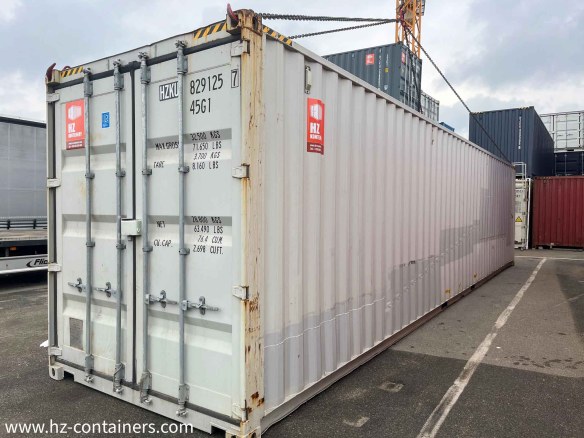
 Italy, La Spezia
  WITHOUT SHIPPING

