
What Length, Width and Height Does a Truck Have?
Definition and Importance of Dimensions:
Truck dimensions – namely their length, width and height – are fundamental technical parameters that determine transport capacity, legal suitability for road traffic, and appropriateness for specific logistics tasks. The term “truck” refers to a wide range of vehicles, from smaller vans to large articulated combinations. Each category has its own specifics that are important for transport companies, freight forwarders and customers.
This glossary article explains in detail what truck dimensions mean, describes standard sizes and capacities for individual vehicle types, contains legal limits applicable in the Czech Republic and EU, and offers practical advice for selecting the right type of truck according to transport needs.
Contents
- Basic concepts and dimension definitions
- Overview of truck types, their standard dimensions and capacities (tables)
- Legal restrictions and regulations in the Czech Republic and EU
- Selecting the right truck size – decision factors and examples
- Answers to frequently asked questions
Basic Concepts and Dimension Definitions
External vs. Internal Dimensions
- External dimensions: Indicate the actual length, width and height of the vehicle including the cabin, wheels, mirrors and structural elements. These dimensions are important, for example, when passing under bridges, entering tunnels, boarding ferries, or parking in confined spaces.
- Internal dimensions (cargo space): Refer to the “net” space for cargo inside the vehicle or trailer – i.e. the length, width and height of the loading area. These values are always smaller due to wall thickness, insulation (for example in refrigerated vehicles) or technical structures.
Weight-Related Concepts
- Gross Vehicle Weight Rating (GVWR): The maximum permitted weight of a loaded vehicle according to the technical certificate and legislation. Includes the vehicle itself, cargo, fuel, crew and any accessories.
- Useful Load Capacity (Payload): The weight of cargo that a truck can safely and legally transport. It is calculated as the difference between the total permitted weight and the unladen weight of the vehicle.
Volume and Capacity in EUR-pallets
- Cargo Space Volume: Measured in cubic meters (m³). Calculated as the product of the internal length, width and height of the loading area.
- EUR-pallet Capacity: A standard EUR-pallet measures 120×80 cm. The number of EUR-pallets that can be loaded is a key planning figure, especially in logistics processes of large companies and e-shops.
Overview of Truck Types and Their Standard Dimensions and Capacities
Below you will find a table of the most common categories of commercial vehicles, their typical dimensions, volumes, maximum load capacity and pallet capacity. The data is based on current standards used in international and Czech road transport.
Overview Table of Vehicle Types
| Vehicle Type | Length (m) | Width (m) | Height (m) | Volume (m³) | Load Capacity (t) | Pallet Capacity | Note |
|---|---|---|---|---|---|---|---|
| Box Van | 3–4.5 | 1.7–1.8 | 1.8–2.0 | 10–18 | 1.0–1.5 | 4–6 | Urban logistics |
| Small Cargo Vehicle | 6.0–7.2 | 2.45 | 2.4–2.7 | 35–45 | 2.5–3.2 | 15–18 | Regional distribution |
| Solo Truck (Medium) | 5.0–7.2 | 2.45 | 2.4–2.6 | 30–45 | 3–7 | 12–18 | Moving, supply |
| Solo Truck (Large) | 7.5–8.5 | 2.48 | 2.5–2.7 | 45–55 | 6–10 | 18–21 | Large moving, bulk cargo |
| Curtain Trailer | 13.6 | 2.45–2.5 | 2.7–3.0 | 90–100 | 24 | 33–34 | Tautliner, Curtainsider |
| Mega Trailer | 13.6 | 2.5 | 3.0 | 100 | 24 | 33–34 | Increased internal height |
| Refrigerated Trailer | 13.3–13.6 | 2.42–2.45 | 2.5–2.65 | 85–90 | 22–23 | 33 | Insulation reduces volume |
| Flatbed Trailer | 13.6 | 2.5 | – | – | 24 | – | For oversized cargo |
| Tandem Combination | 7.7+7.7 | 2.45 | 3.0 | 110–120 | 22 | 38 | Bulk goods, road-train |
Notes:
- Dimensions may vary depending on manufacturer, model and technical design.
- Mega trailers have a lowered floor and higher internal height (up to 3 m), which is appreciated for bulky but lighter cargo.
- Refrigerated trailers have less internal space due to insulation.
- Flatbed (open) trailers allow transport of atypical and oversized cargo.
Legal Restrictions and Regulations in the EU
All truck dimensions are under strict legislative oversight – particularly due to traffic safety, infrastructure load and international compatibility. In the the EU, Directive 96/53/ES applies.
Maximum Permitted Dimensions in Road Traffic
| Parameter | Limit in the EU |
|---|---|
| Maximum Width | 2.55 m (2.60 m for isothermal vehicles) |
| Maximum Height | 4.00 m |
| Maximum Length of Solo Vehicle | 12.00 m |
| Maximum Length of Combination | 16.50 m (tractor + trailer) |
| Maximum Length of Road-Train | 18.75 m |
| Maximum Weight of Combination | 40 t (up to 48 t for combined transport) |
Additional Legal Aspects:
- Exceptions for oversized/overweight cargo are possible only with permission.
- A Class C driving license is required for vehicles over 3.5 t, and C+E for tractor + trailer combinations.
- Dimension and weight checks are common especially at border crossings and on main routes.
Overview of Trailer Types and Specifications
Standard Curtain Trailer (Tautliner/Curtainsider)
- Use: Versatile, suitable for palletized and loose cargo.
- Internal dimensions: Length 13.6 m, width 2.45–2.5 m, height 2.7–3.0 m.
- Volume: up to 100 m³ (standard 90–95 m³ depending on height).
- Capacity: 33–34 EUR-pallets.
- Load capacity: up to 24 tons.
- Advantage: Possibility of side and top loading.
Mega Trailer
- Specificity: Lowered floor, internal height up to 3.0 m.
- Volume: up to 100 m³.
- Use: Bulky and lighter goods, automotive industry.
Refrigerated/Freezer Trailer (Reefer)
- Internal dimensions: length 13.3–13.6 m, width 2.42–2.45 m, height 2.5–2.65 m.
- Capacity: 33 EUR-pallets.
- Load capacity: 22–23 tons.
- Use: Temperature-sensitive goods, food, medicines.
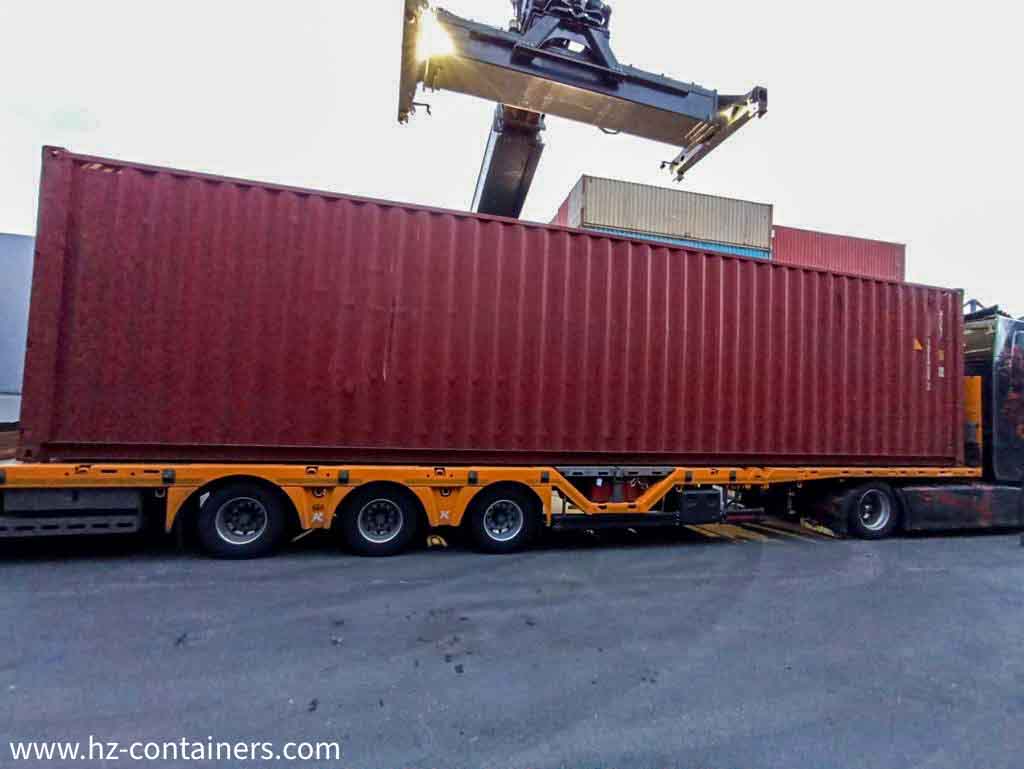
Container Trailer
- Use: For transport of standardized maritime containers (20’/40’/45′).
- Dimensions: Adapted to container size.
Flatbed (Open) Trailer
- Use: Oversized, atypical and heavy cargo, construction machinery, steel materials.
- Advantage: Access from side and top, possibility of transporting cargo outside legal dimensions with permission.
Selecting the Right Truck Size
Factors to consider when choosing the right type of truck:
| Factor | Recommendation or Example |
|---|---|
| Cargo Weight | Choose a vehicle with adequate load capacity; never exceed legal limits! |
| Cargo Volume | For bulky, light goods, prefer a mega trailer or tandem combination. |
| Type of Goods | Refrigerated trailer for food, curtain trailer for pallets, open trailer for machinery. |
| Access Routes | For narrow streets, use a van or small cargo vehicle instead. |
| Transport Distance | For longer routes, optimize capacity and fully utilize a large trailer. |
| Loading Method | Do you need side loading? Choose a curtain trailer. |
Practical Scenarios
- Moving a 1-room apartment: Box van (approx. 12 m³).
- Moving a house: Large solo truck or smaller trailer combination.
- Transport of 30 pallets: Standard 13.6 m curtain trailer.
- Transport of frozen food: Refrigerated trailer.
Frequently Asked Questions (FAQ)
What is the most common type of truck in Europe?
You will most often encounter an articulated combination (tractor + curtain trailer) with a length of 13.6 m.
How many EUR-pallets fit in a standard truck?
A standard 13.6 m curtain trailer holds 33–34 EUR-pallets.
What is the maximum permitted height and width of a truck in the Czech Republic?
Height 4.0 m, width 2.55 m (2.60 m for refrigerated vehicles).
What driving license do I need for a truck?
Class C for vehicles over 3.5 t, C+E for tractor + trailer combinations.
What does a “Mega” trailer mean?
A trailer with an internal height of 3 m, volume up to 100 m³, suitable for bulky goods.
Is it possible to transport oversized cargo?
Yes, but only with permission and subject to special conditions.
Technical Details – Additional Extended Information
- GPS Tracking: Modern vehicle fleets (e.g. DSV) are equipped with GPS for monitoring location and cargo security.
- Types of Axles and Suspension: For heavy and special transport, various axle configurations (dual, triple, four-axle combinations), air suspension, etc. are used.
- Environmental Legislation: Euro emission standards, restrictions on city access, AdBlue requirement for new engines.

 Czech Republic, Pardubice
  WITHOUT SHIPPING

