
Container Door Security
Container door security refers to a set of techniques, mechanisms, and best practices designed to ensure the safety, protection, and proper functioning of shipping container doors. Container doors are key access points for loading and unloading goods, and their security is essential for protecting cargo, preventing theft, and reducing risks during transport or storage.
This glossary explores key components, mechanisms, and strategies for securing shipping container doors and provides a comprehensive view of their importance in logistics, commerce, and storage operations.
Key Terms and Definitions
1. Shipping Container Doors
Shipping container doors are robust access points located on one or more sides of a container. They are made from durable materials, such as steel or Corten steel, to withstand environmental influences, unauthorized access, and demanding transport conditions. There are two standard types of doors:

- Cargo doors: Double-leaf doors located at the rear of the container, providing access to its interior.
- Side doors: Additional access points on the sides of the container, allowing flexible loading and unloading.
Why are shipping container doors important?
These doors not only facilitate efficient cargo handling but also serve as the first line of defense against theft, environmental damage, and unauthorized access. Quality doors ensure smooth operations, cargo protection, and preservation of the structural integrity of the container. A variant is also rolling doors, often used for frequent loading and unloading, which provide quick access.
2. Shipping Container Security
Shipping container security includes a range of measures to protect the contents of the container from theft, damage, or unauthorized access. This includes physical mechanisms (locks, lock covers, and reinforced doors) and advanced technological solutions, such as sensors and alarms.
Key components:
- High-security locks: Durable locks, such as padlocks, screw locks, and crossbar locks, ensure robust protection. The best locks are resistant to weather conditions, made from hardened steel, and designed to withstand breaking attempts.
- Lock covers: Metal covers welded to the doors that protect locks from tampering, bolt cutters, or saws.
- Alarm systems: Motion sensors and alarms provide immediate alerts to unauthorized access.
- Surveillance systems: Cameras and motion sensors increase overall security. Adding motion lights around the container further deters potential threats.
3. Container Door Mechanisms
Container door mechanisms refer to the functional components that enable safe opening, closing, and locking of doors. Properly functioning mechanisms are essential for safe and efficient operations.
Common mechanisms:
- Hinges and pins: Allow smooth door rotation. Regular lubrication is essential to prevent rust and corrosion, especially in marine environments.
- Locking bars and handles: Vertical steel bars used to firmly secure doors. They are often paired with locking brackets that hold them in place.
- Gaskets (seals): Rubber seals around the door edges ensure water-tightness and prevent moisture penetration. Damaged seals can compromise the container’s weather resistance.
- Reinforced frames: Provide structural integrity and protect against impacts or deformations, especially when stacking containers or using handling equipment.
4. Types of Locks for Shipping Containers
Locks are a fundamental element of container security. Different types of locks serve different purposes depending on the container’s use and security requirements.
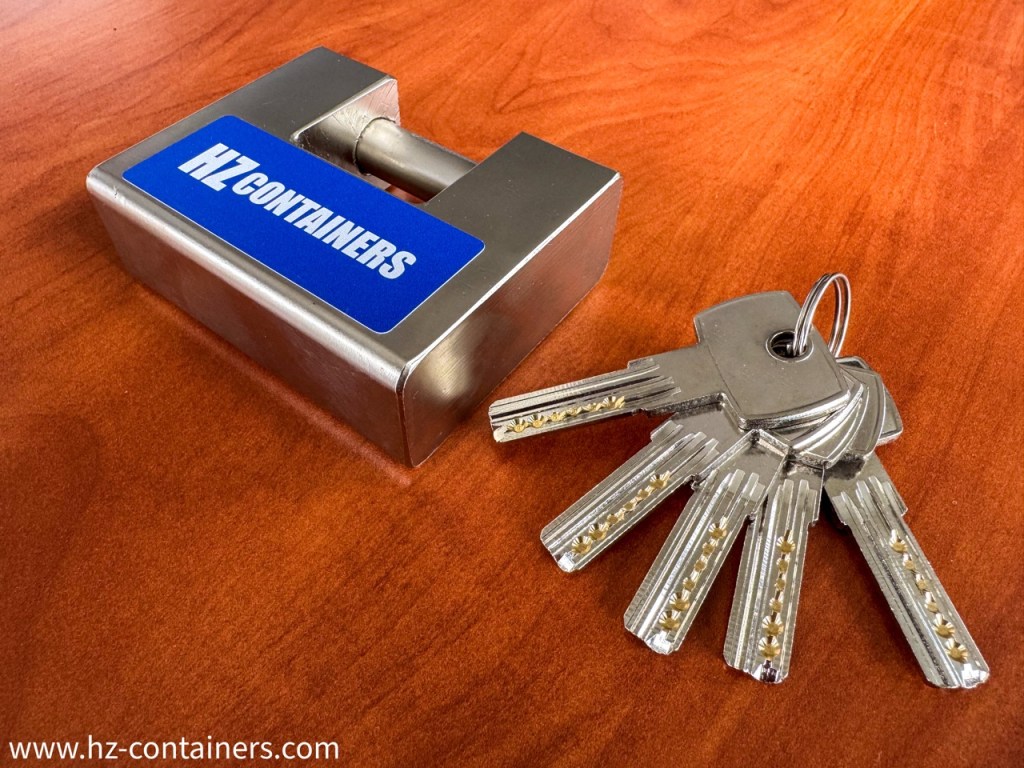
Common types of locks:
- Padlocks: Simple, effective, and cost-efficient. Use hardened steel for weather resistance and protection against cutting.
- Internal screw locks: Installed inside the doors, providing an additional layer of security and making it virtually impossible to open without internal access.
- Lock covers: Protect the padlock from cutting, ideal for high-risk environments.
- Crossbar locks: Steel tubular clamps that secure door handles and offer robust protection.
- Keypad locks: Allow access via numeric code, often used in container offices or storage units. This digital type is becoming increasingly popular due to its convenience.
- Alarm screw locks: Equipped with motion sensors and alarms to deter theft.
5. Container Door Security Features
Modern container doors include advanced security features that prevent theft and ensure cargo safety. These features include:
- Tamper-resistant seals: Indicate whether the container has been opened during transport.
- Reinforced hinges: Designed to withstand cutting or prying.
- Smart locks: Offer app-based control and real-time monitoring. Some smart systems include GPS tracking and send alerts when moved or tampered with.
- Anti-drill plates: Prevent drilling or tampering with locks.
6. Unauthorized Access
Unauthorized access refers to any attempt to open or tamper with a container without proper authorization. This is a critical issue in the shipping industry, as it can lead to cargo theft, smuggling, or vandalism.
Preventive measures:
- Install high-security locks and lock covers.
- Monitor containers using camera systems.
- Implement access control systems, such as PIN codes or biometric technologies.
- Conduct routine inspections to identify vulnerabilities.
7. Best Practices for Container Door Security
To ensure the security and functionality of container doors, follow these best practices:
- Regular inspections: Check for rust, dents, or inconsistencies on doors, hinges, and locking bars.
- Lubrication: Apply lubricant to hinges, pins, and locking mechanisms to prevent corrosion.
- Weight distribution: Ensure even distribution of cargo to prevent frame or door deformation.
- Proper locking: Carefully check all locks and seals after closing the container.
- Safe placement: Place containers on level surfaces to prevent stress on doors and frames.
- Use of PPE: Wear gloves and steel-toed shoes when handling container doors to prevent injury.
- Door securing devices: Use props or securing devices to keep doors open during loading/unloading.
Container door security is a complex topic involving understanding locks, mechanisms, and best practices. By implementing the right strategies and investing in quality security features, companies can protect their cargo, reduce risks, and ensure smooth operations. Whether you use containers for transport, storage, or modifications (such as offices), door security is a priority for their effective use.

 Czech Republic
  WITHOUT SHIPPING


