
REEFER CONTAINER
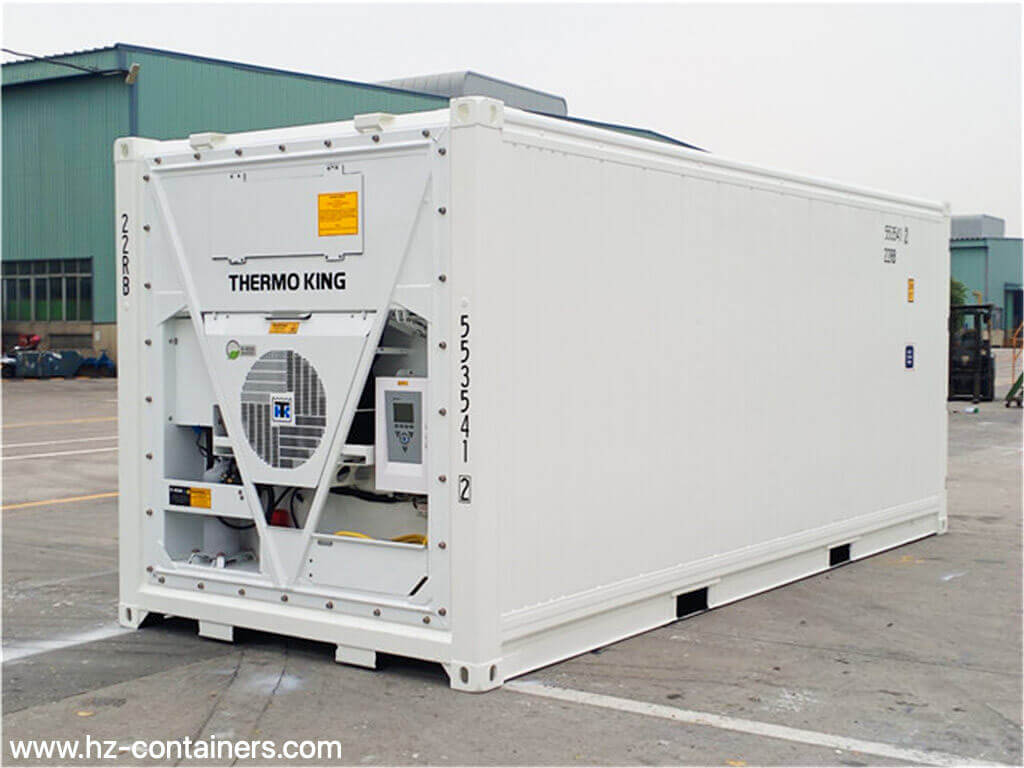
Freezer container, also known as a reefer container or refrigerated container, is a specially designed container that allows maintaining an exact internal temperature for the transportation of goods that require cooling or temperature control.

These containers are equipped with cooling units that allow maintaining a constant temperature. Standard basic units cool or freeze within the range of -25°C to +25°C, depending on the cargo requirements. These containers are crucial for transporting goods that require temperature control, such as food, pharmaceutical products, flowers, or cosmetics. Freezer containers “Thermo king” have a temperature range of -30°C to +35°C. There are also “Super freezer” containers that have a thermal range down to -60°C. This temperature control is ensured by compressors, condensers, fans, and insulation that prevent thermal exchanges with the external environment.
What are freezer containers used for?
Freezer containers (reefer containers) typically have standard dimensions of 20′ RF or 40′ refrigerated container, just like other types of shipping containers. They are equipped with internal lashing points for securing cargo and ventilation holes for air circulation inside the container. Reefer containers have a wide range of uses. They are essential for transporting goods that require specific temperature conditions.
The food industry is one of the largest users of these containers because they allow the transportation of fresh and frozen food over long distances without the risk of spoilage. Pharmaceutical products, which often require precise temperature control, are another important segment. Flowers and plants, which need specific climatic conditions, are another category of goods that are often transported using reefer containers. These containers are widely used for the transport of sensitive goods that need to maintain a constant temperature during transit.
They are also often used as short-term or long-term storage for these products, for example, during promotional events or during the growth period of plants when it is necessary to maintain a constant temperature. Some companies use these containers as mobile coolers or freezers that can be placed anywhere in the world. Renting a reefer container – freezer or refrigerated – is a great option in this case.
However, it is important to realize that reefer containers require access to electricity for the operation of the cooling unit. In ports, transport trucks, or other facilities, a connection is needed to link the container to the electrical grid. During road transport, a generator or portable cooling units are often used to maintain the temperature.
FREEZER CONTAINERS FOR SALE – COMPLETE OFFER HERE
Composition of the refrigerated container
The container consists of two parts – the cargo space for the goods / container and the unit.
The container is made of a sturdy steel structure with a sandwich type thermally insulated wall (polyurethane foam). The walls are 10 – 12 cm thick. Voltage CEE 380V / 50 Hz, power consumption 6 – 10 kW/h, refrigerant R134a. Double-leaf doors with rubber sealing and 4-bar closure. Valid CSC plate. 5-pole socket. Built-in 32A socket – according to the manufacturer, these data may always vary. Therefore, it is important to inquire about the equipment of each container before purchasing it.
Before delivery, the container is always tested, and the cooling functionality is checked.
Shipping containers offer great variability in sizes and designs. You can see their detailed overview in the classification of shipping containers.
What is the energy consumption of a freezer container (also refrigerated)?
It is important to always consider the conditions in which you will store the goods in the container and what the surrounding outdoor temperatures will be. In the summer months, for example, it depends on whether the container will be in constant sunlight or will be placed in a darker, shaded spot. It also depends on what you are storing in the container and how demanding the goods are to be cooled or frozen. Additionally, it depends on whether a specific cooling temperature will be maintained or if the goods will be frozen, how often the container will be opened during the day, how many employees will be moving inside, whether the doors will be constantly opening and closing, or if the container will only be opened once a week.
Also important is whether you will open only one side of the doors when passing through or if you need to enter with a forklift and thus need to open both doors fully. The door entry for frequent use can be equipped with PVC strips, which will also help maintain a more stable temperature than if the container is left wide open. All these factors will affect the daily consumption, so it is not possible to give a definitive figure to follow.
How does a freezer container work?
Freezer containers are equipped with a sophisticated cooling system that includes compressors, condensers, fans, and insulation. This system ensures a constant temperature inside the container, regardless of external conditions. The compressor compresses the refrigerant, which then expands and absorbs heat from the interior of the container. The condenser then expels this heat outside. Fans ensure uniform air circulation inside the container, which is crucial for maintaining a constant temperature. Insulation prevents thermal exchanges with the surrounding environment, ensuring efficient operation of the cooling system.
FREEZER CONTAINER, which is also a refrigerated container, is available in the following sizes:
 | REEFER CONTAINER – Cooling and Freezing Container | ||||||||||
| External Dimensions (m) | Internal Dimensions (m) | Door Dimensions (m) | Weight (kg) | Volume | |||||||
| Container Type | Length | Width | Height | Length | Width | Height | Width | Height | Container Weight | Max Load | m3 |
| 10’HC | 3,01 | 2,438 | 2,889 | 2,42 | 2,28 | 2,5 | 2,29 | 2,565 | 2000 | 8000 | 13,8 |
| 20′ | 6,058 | 2,438 | 2,591 | 5,454 | 2,29 | 2,263 | 2,29 | 2,252 | 2840 | 27640 | 28,3 |
| 40’HC | 12,192 | 2,438 | 2,896 | 11,588 | 2,29 | 2,545 | 2,29 | 2,557 | 4420 | 29580 | 67,5 |
Types of Freezing Containers
There are several types of freezing containers, which differ in size and technical specifications. The most commonly used are the 20-foot (20′ RF) and 40-foot (40′ HC RF) containers, as described above. These containers have standard dimensions, ensuring their compatibility with common handling and transportation systems.
Freezing containers play a key role in the logistics and food transportation world. These special containers allow for the transportation of goods at controlled temperatures, which is essential for maintaining the quality and freshness of food, medicines, and other sensitive products. What are the most commonly used and requested types of freezing containers and their specific aggregates?
The most commonly used types of freezing containers include:
- 20′ Standard Freezing Container – This type of container is ideal for smaller volumes of goods. It is compact and easy to handle, making it a popular choice for small businesses and short-term shipments.
- 40′ High Cube Freezing Container – A larger version of the standard container, offering more space for goods. High cube containers are taller than standard containers, allowing for better use of vertical space.
- 45′ Freezing Container – This type of container provides even greater capacity and is ideal for transporting large volumes of goods. It is popular among large logistics companies and for long-term shipments.

Aggregates of Freezing Containers
The quality and reliability of a freezing container depend not only on its construction but also on the aggregate used. Here are the two most commonly used aggregates:
- Carrier – This aggregate is known for its reliability and energy efficiency. Carrier offers a wide range of models that can maintain a constant temperature even in extreme conditions.
- Thermo King – Another very popular aggregate, known for its robustness and ability to quickly reach the desired temperature. Thermo King is often chosen for transporting highly sensitive products, such as medicines.
Advantages of Using Specific Aggregates
Using high-quality aggregates offers several advantages:
- Reliability: High-quality aggregates ensure that goods are always transported at the correct temperature.
- Energy Efficiency: Modern aggregates are designed to minimize energy consumption, which reduces operating costs.
- Flexibility: Various models and types of aggregates allow customization for specific transportation needs.
Advantages of Using Reefer Containers
The use of refrigerated containers offers several benefits. In addition to maintaining a constant temperature, they also provide a high level of protection against moisture and dirt. Thanks to their robust construction, they can withstand demanding conditions during sea or road transport. Another advantage is their flexibility – they can be used not only for transportation but also for on-site storage of goods.
Refrigerated containers also help preserve the quality of the transported goods. With precise temperature control, the risk of spoilage is minimized, which is crucial for the food and pharmaceutical industries. This means customers can receive their products in optimal condition, increasing their satisfaction and loyalty.
Refrigerated containers, which are also cooling containers, are essential for transporting and storing goods that require precise temperature control. With their sophisticated cooling and insulation systems, they ensure a constant temperature inside the container, which is key to maintaining the quality of the transported goods. Reefer containers are used in the food and pharmaceutical industries, as well as for transporting flowers and cosmetics. With their flexibility and ability to withstand demanding conditions, they are the ideal choice for a wide range of transport and storage needs.
After learning about reefer containers, you might be interested in exploring our used shipping containers available for sale. These containers are in stock worldwide, ensuring you can find one that suits your needs. If you're curious about tank containers, find out what a tank container is used for. You'll discover how they're made and the various sizes you can purchase. For those dealing with bulk materials, check out our bulk containers. They're perfect for transporting loose goods safely and efficiently. If you're looking into shipping options, learn more about the uses of shipping containers. Understand their role in global trade and the different types available. Need flexibility? Consider our containers for rent. Renting can be a cost-effective solution for temporary storage or transport. Lastly, explore our range of special containers. These can be customized with special modifications to meet unique requirements.