
Pirates and shipping containers
How attacks affect global trade
Pirate attacks on ships pose a serious threat to international trade and logistics. Particularly in areas such as the Suez Canal, where much of the global cargo is transhipped, these attacks can have far-reaching consequences. In this article, we look at how pirates are affecting shipping containers and what this means for global trade.
Pirate attacks and their consequences
Pirates, particularly in areas such as the Somali Peninsula and the Strait of Malacca, regularly attack cargo ships. These attacks can include the theft of cargo, kidnapping of crew for ransom or even the destruction of the ship. Cases of attacks by Houthi rebels in the Suez Canal area are another example of where political and military conflicts can escalate into attacks on shipping.
Shipping companies such as MSC, Hapag-Lloyd and Maersk have already started rerouting their ships around South Africa instead of the canal, which increases shipping times by several weeks and increases fuel costs. These measures may result in delays in deliveries and higher prices for end consumers.
Security measures
Shipping companies take various measures to improve the safety of their vessels. Among the most common are hiring armed security guards, installing security cameras and other surveillance devices, or using special containers with security locks. These measures can significantly reduce the risk of pirate attacks, but they also increase operating costs.
Euronav, a company specialising in oil transportation, now requires its customers to explicitly accept the possibility of alternative routes for oil deliveries by its supertankers. In this way, it seeks to minimise the risk of attacks, even if it means higher transport costs.
Impact on global trade
Every third container transported by sea passes through the Suez Canal. Any disruption in this area can have a dramatic impact on global supply chains. Extended routes mean not only higher fuel costs, but also the need for additional container ships to meet delivery schedules and frequencies.
For example, when ships have to sail around South Africa, the journey is extended by 6,000 nautical miles, requiring more fuel and increasing insurance premiums for ships and their expensive cargo. This route extension means shipping companies have to adapt to new conditions, which can lead to further delays and higher costs.
Future outlook
While pirate attacks pose an immediate threat, shipping companies and international organisations are working on long-term solutions. These include international cooperation to secure shipping lanes, investing in new technologies to track and secure ships and containers, or negotiating with local governments and communities to minimise the causes of piracy.
The International Maritime Organization (IMO) and other institutions are implementing various initiatives, including patrols in high-risk areas and information sharing between shipping companies and governments. These steps can significantly reduce the risk of attacks and ensure the continuity of global trade.
Other container news...
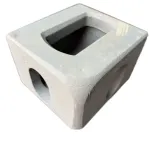
Corner casting steel vs aluminum
Every shipping container in the world — all 40 million of them — rests on eight critical components. Corner castings are the load-bearing blocks at each corner of an ISO shipping container, and they are the universal interface between the container and every crane, twistlock, spreader, and chassis on the planet. When you lift a container, stack it nine high on a ship, or lock it to a truck trailer, every ton of force flows through these fittings.

Construction cabin – selection, tips, dimensions and prices
Every construction project – whether a family house, a development project or a reconstruction – starts with the infrastructure. No construction manager, craftsman or investor who needs an on-site office, a changing room for workers or a safe storage for tools can do without a quality construction cell. But navigating the offer is not easy: residential containers, sanitary cells, storage modules, rental, purchase, refurbished pieces… This guide will give you answers to all the essential questions in one place.
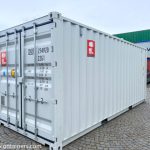
Storage container
A storage container is a lockable steel box designed for the safe and dry storage of materials, tools, goods or equipment. Originally created as a shipping container for maritime transport, its durability and versatility have found their way onto construction sites, corporate premises and private land.
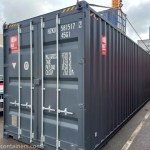
Shipping container 12m (40 ft)
A 12m shipping container is an investment that, if properly selected and cared for, will pay off in decades of trouble-free use. Whether you plan to use it as a warehouse, workshop, garage or the basis for a residential module — the key is careful selection of the condition, a thorough inspection before purchase and high-quality preparation of the base for placement. Take the time to compare offers, check the seller’s references and do not hesitate to personally inspect the container before buying. A properly selected 40-foot container will serve you reliably for many years.