
Maritime Security: Key Challenges and Solutions
Maritime security encompasses a wide range of challenges and strategies aimed at ensuring the safety of vessels, ports, maritime routes, marine ecosystems, and coastal communities. It is a key component of global trade, environmental protection, and geopolitical stability. Below we address the fundamental terminology, concepts, and challenges associated with maritime security to provide a comprehensive insight into this complex field.
Key Terms and Concepts
1. Maritime Security
Maritime security refers to comprehensive protection of the maritime domain, which includes oceans, seas, and coastal areas, against diverse threats such as piracy, terrorism, illegal fishing, smuggling, and environmental crimes. It also includes the protection of maritime trade routes, critical infrastructure, and ensuring the smooth operation of global trade. This concept has evolved significantly since the events of September 11, leading to the establishment of international standards and organizations that strengthen security at sea.
2. Maritime Domain Awareness (MDA)
MDA represents an effective understanding of all activities, threats, and challenges in the maritime domain. Through technologies such as radar, satellite monitoring, and data analysis, MDA systems integrate information from various sources to provide a comprehensive overview of maritime activities. This enables proactive responses to suspicious activities or threats.
3. UNCLOS (United Nations Convention on the Law of the Sea)
UNCLOS is an international treaty that defines the legal framework for maritime activities. It specifies the rights and obligations of states regarding navigation, resource management, protection of the seas, and environmental protection. Exclusive Economic Zones (EEZ) established under UNCLOS provide states with special rights to marine resources up to 200 nautical miles from their coast.
4. Piracy
Piracy includes criminal acts such as hijacking, armed robbery, and kidnapping at sea. Modern piracy is characterized by the use of advanced technologies and organized networks. Areas such as the Gulf of Guinea, Southeast Asia, and the Gulf of Aden are hotspots of piracy, where ships carrying valuable cargo are targeted.
5. Illegal, Unreported, and Unregulated (IUU) Fishing
IUU fishing disrupts marine ecosystems, depletes fish populations, and threatens the livelihoods of communities dependent on fishing. It is estimated that IUU fishing costs coastal states billions of dollars annually and undermines global food security.
6. Human Trafficking and Illegal Migration
The maritime domain is often exploited by criminal networks for human trafficking and illegal migration. These illegal activities not only violate human rights but also complicate maritime law enforcement and strain international relations.
7. Environmental Security
Environmental security in the maritime domain includes the prevention and mitigation of environmental damage caused by activities such as oil spills, illegal dumping, overfishing, and climate change. Rising sea levels and extreme weather events resulting from global warming further exacerbate these challenges.
8. Cybersecurity in the Maritime Domain
With the digitalization of maritime operations, cybersecurity has become a key aspect of maritime security. Protecting navigation systems, cargo data, and communication networks from cyber attacks is essential for maintaining operational integrity and preventing economic losses.
9. International Maritime Organization (IMO)
IMO is a specialized agency of the United Nations that develops and enforces regulations to improve maritime safety, protection, and the environment. Its oversight includes, for example, the International Code for the Safety of Ships and Port Facilities (ISPS).
10. Shipping Industry
The global shipping industry transports approximately 90% of the world’s goods, making maritime security essential for economic stability and international trade.
Challenges in Maritime Security
1. Piracy and Armed Robbery
Despite international efforts, piracy remains a significant threat. Modern pirates often use sophisticated tactics and advanced weapons to target ships for ransom or cargo theft.
2. Terrorism and Maritime Infrastructure
Terrorist groups exploit vulnerabilities in maritime infrastructure to disrupt trade and spread fear. Attacks on oil tankers and port facilities highlight the need for robust security measures.
3. Illegal Fishing
IUU fishing not only depletes marine biodiversity but also causes significant economic losses for coastal states.
4. Climate Change
Rising sea levels, extreme weather events, and ocean acidification pose risks to maritime security, threatening coastal communities, ecosystems, and infrastructure.
5. Human Trafficking
Maritime routes are often used for migrant smuggling and human trafficking under inhumane conditions, further straining law enforcement capabilities.
6. Cyber Threats
Dependence on digital systems in maritime transport increases vulnerability to cyber attacks, which can cause significant operational disruption.
Solutions and Strategies
1. Advanced Monitoring and Surveillance
Modern technologies such as satellite monitoring, drones, and Automatic Identification Systems (AIS) enable real-time monitoring of maritime activities.
2. International Cooperation
Joint initiatives such as Combined Maritime Forces (CMF) and Maritime Security Centre – Horn of Africa (MSCHOA) support cooperation between states in combating maritime threats.
3. Legal Frameworks and Enforcement
Strengthening and enforcing legal frameworks such as UNCLOS is key to mitigating challenges such as piracy, illegal fishing, and environmental crimes.
4. Cybersecurity Measures
Implementation of robust cybersecurity protocols and crew training in best practices ensures the security of maritime operations against cyber threats.
5. Capacity Building
Providing training, resources, and knowledge-sharing programs improves the capabilities of developing countries to address maritime security challenges.
6. Sustainability Initiatives
Adoption of sustainable fishing practices, reduction of greenhouse gas emissions, and protection of marine biodiversity are essential for long-term maritime security.
Role of Technology
1. Artificial Intelligence (AI)
AI systems analyze large datasets to predict and mitigate risks, such as detecting unusual vessel movements.
2. Autonomous Vessels
Unmanned ships and drones increase surveillance capabilities and reduce risks to human lives, particularly in high-risk areas.
3. Maritime Domain Awareness (MDA) Systems
MDA systems provide comprehensive insight into maritime activities, enabling coordinated responses to threats.
4. Environmental Monitoring Tools
Advanced tools for monitoring air and water quality ensure compliance with international regulations and mitigate environmental risks.
Key Organizations
1. International Maritime Organization (IMO)
IMO leads the development of regulations to increase maritime safety, protection, and environmental protection.
2. International Maritime Bureau (IMB)
IMB monitors maritime crimes such as piracy and armed robbery, providing data and recommendations to improve security.
3. United Nations Office on Drugs and Crime (UNODC)
UNODC addresses transnational crimes such as drug smuggling and human trafficking, and supports maritime law enforcement.

 France, Rouen
  WITHOUT SHIPPING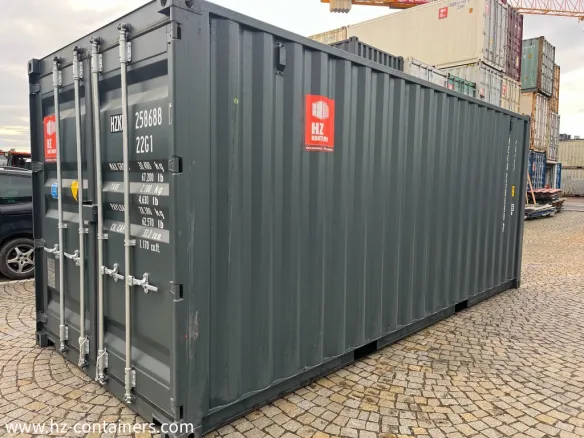


Other container news...
Shipping container 12m (40 ft)
A 12m shipping container is an investment that, if properly selected and cared for, will pay off in decades of trouble-free use. Whether you plan to use it as a warehouse, workshop, garage or the basis for a residential module — the key is careful selection of the condition, a thorough inspection before purchase and high-quality preparation of the base for placement. Take the time to compare offers, check the seller’s references and do not hesitate to personally inspect the container before buying. A properly selected 40-foot container will serve you reliably for many years.
Construction container
A construction container is an investment in safety, order and comfort — whether it is protecting tools from thieves or providing a dignified environment for workers. There are three key decisions: type (storage, residential, sanitary, rubble), form of acquisition (rent vs. purchase) and legislative provision (occupation, building code).

Construction cabin – selection, tips, dimensions and prices
Every construction project – whether a family house, a development project or a reconstruction – starts with the infrastructure. No construction manager, craftsman or investor who needs an on-site office, a changing room for workers or a safe storage for tools can do without a quality construction cell. But navigating the offer is not easy: residential containers, sanitary cells, storage modules, rental, purchase, refurbished pieces… This guide will give you answers to all the essential questions in one place.
Storage container
A storage container is a lockable steel box designed for the safe and dry storage of materials, tools, goods or equipment. Originally created as a shipping container for maritime transport, its durability and versatility have found their way onto construction sites, corporate premises and private land.