
Watertight or Water-Resistant Shipping Container?
Shipping containers are indispensable structures in global trade and logistics. They serve as safe and durable storage solutions that can be adapted for various purposes – from transporting goods across oceans to their conversion into residential or commercial buildings. However, the question often arises regarding their ability to withstand water: are shipping containers watertight, water-resistant, or something in between? Let’s take a closer look at their water-resistant properties, practical applications, and maintenance requirements.
What is a Shipping Container?
A shipping container is a large, standardized steel structure designed primarily for transporting goods by sea, rail, or road. They are robust, stackable, and designed to withstand demanding conditions of global shipping routes. These containers are made from Corten steel, also known as “weathering steel”, which is specially designed to resist corrosion and extend the container’s lifespan.
Main uses of shipping containers:
- Cargo transportation: Transportation of goods between continents by sea, rail, or road.
- Storage solutions: On-site storage for industrial, commercial, and residential needs.
- Converted structures: Conversion into offices, homes, commercial spaces, or emergency shelters.
Are Shipping Containers Watertight or Water-Resistant?
Definition of Key Terms:
- Watertight:
- Completely impermeable to water. A watertight structure can withstand complete submersion without water penetrating inside or damaging its contents.
- Capable of preventing water ingress under certain conditions, such as during rain or splashing water, but not designed for submersion.
- Water-resistant:
- Provides a certain level of protection against water, but with prolonged exposure or high pressure, water penetration may occur.
Reality of Shipping Containers:
Shipping containers are not completely watertight, but are designed to be water-resistant and sealed under normal circumstances. Here’s why:
- Material: Corten steel used in shipping containers is highly durable and resists moisture by creating a protective layer of rust, called patina, which prevents further corrosion.
- Structural features: Rubber seals on the doors create a tight closure that prevents water ingress during rain or splashing water. Additionally, corrugated steel walls provide strength and allow water to drain, minimizing accumulation.
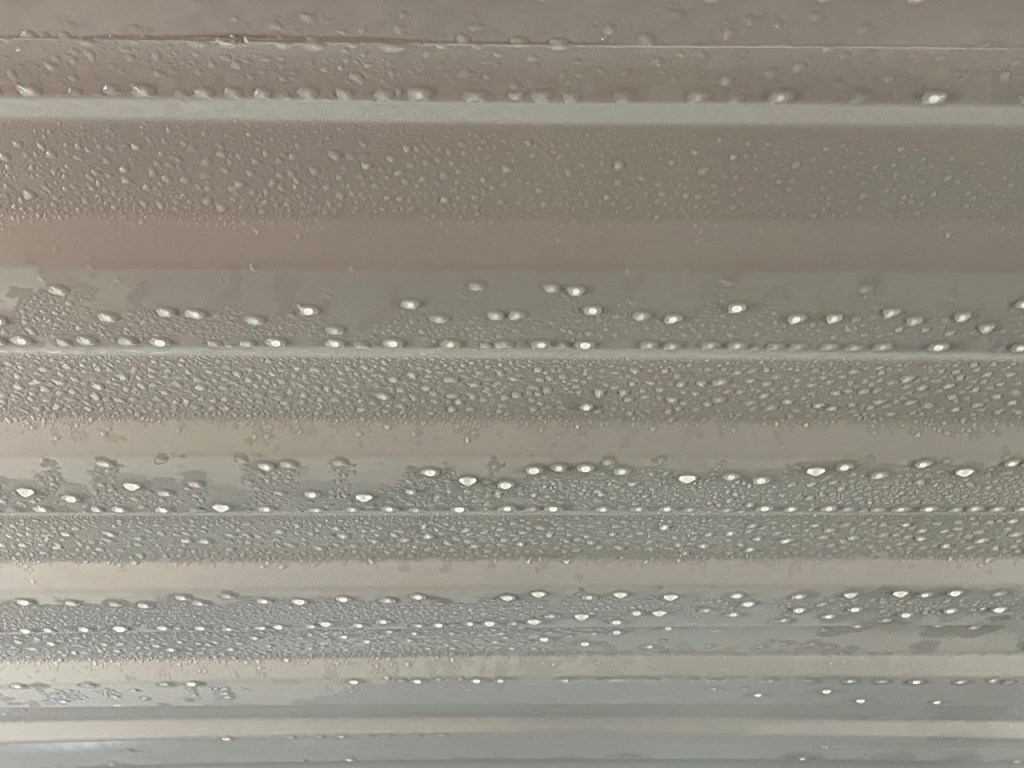
- Ventilation: Most containers are equipped with passive ventilation openings to reduce condensation inside. However, this feature means they are not airtight, which could allow minimal moisture ingress under extreme conditions.
How Water-Resistant Are Shipping Containers?
Standard Shipping Containers:
Standard containers are designed to be sealed and protect cargo from rain, wind, and splashing water during transportation. However, they are not designed for prolonged submersion or extreme water pressure.
Modified Containers:
For specific purposes, such as storing sensitive equipment or creating living spaces, containers can be modified to increase their water resistance:
- Reinforced welded frames: Openings, such as windows or doors, are reinforced with steel frames and welded to prevent water leakage.
- Waterproof coatings: Anti-corrosion paint and waterproof membranes can be applied to the exterior surface.
- Rubber seals and sealing elements: Ensuring that door seals are intact and well-maintained is key to maintaining container tightness.
- Spray foam insulation: Provides not only thermal insulation but also acts as a moisture barrier.
Factors Affecting Water Resistance
- Age and wear:
- Older containers may have rust, holes, or damaged seals, which reduces their water resistance. Regular maintenance is essential.
- Environmental conditions:
- Prolonged exposure to adverse weather, such as heavy rain, snow, or salt water, can compromise container integrity over time.
- Modifications:
- Adding doors, windows, or ventilation openings without proper sealing can create vulnerable points for water ingress.
- Location:
- Containers placed directly on the ground may suffer from water accumulation and corrosion at the base. Raising the container on blocks or a foundation can prevent this.
How to Ensure Container Water Resistance?
Inspection and Maintenance:
- Check for rust and holes:
- Regularly inspect the roof, walls, and floor for signs of corrosion or damage.
- Door seal inspection:
- Rubber seals around the doors should be intact and flexible.
- Immediate repair of damage:
- Small holes or rusty spots should be repaired immediately to prevent further deterioration.
Water Protection Measures:
- Application of anti-corrosion coatings:
- Use quality paint or waterproof membrane to protect the container’s exterior surface.
- Reinforcement of roof and joints:
- Adding a waterproof layer to the roof can prevent leaks during heavy rain.
- Installation of drainage systems:
- Ensure that rainwater can drain from the container and does not accumulate.
Practical Applications of Water-Resistant Containers
Storage Solutions:
Shipping containers are commonly used for storing goods, equipment, or materials. Their water-resistant properties make them ideal for protecting contents from rain and moisture.
Buildings and Living Spaces:
When converted into offices, homes, or commercial spaces, containers are modified to improve their water resistance. This includes adding insulation, sealing joints, and applying waterproof coatings.
Special Uses:
- Data centers: Protection of servers and IT equipment in remote locations.
- Storage of rare books: For example, in the case of Funke Books, where climate-controlled, water-resistant containers are used to preserve antique manuscripts.
Frequently Asked Questions
1. Can Shipping Containers Be Submerged Underwater?
No, standard shipping containers are not designed for submersion. If submerged in water, they will sink and water may eventually penetrate over time.
2. How Can I Improve the Watertightness of My Container?
You can seal openings with welded frames, apply waterproof coatings, and reinforce the roof and door seals. Raising the container off the ground also helps.
3. Does Condensation Occur Inside Containers?
Yes, condensation can occur in humid conditions. To reduce this effect, use desiccants, install ventilation systems, or add insulation.
4. Are All Containers Equally Water-Resistant?
No, the level of water resistance depends on the container’s condition, age, and modifications. Newer containers or those with anti-corrosion coatings are more durable.
Although shipping containers are not completely watertight, they are designed to be water-resistant and sealed, providing significant protection against rain, wind, and moisture. With proper maintenance and modifications, their water resistance can be further improved, making them suitable for a wide range of applications, from storage to living spaces.
Understanding their limitations and potential is key to maximizing their versatility and durability. Whether you use them for transportation, storage, or creative building projects, regular inspections and appropriate waterproofing measures will ensure that your container remains a reliable and durable solution.

 Czech Republic, Jindřichův Hradec
  FREE SHIPPING

