
Shipping Container 20 Side Door Spillfloor – Drip Tray
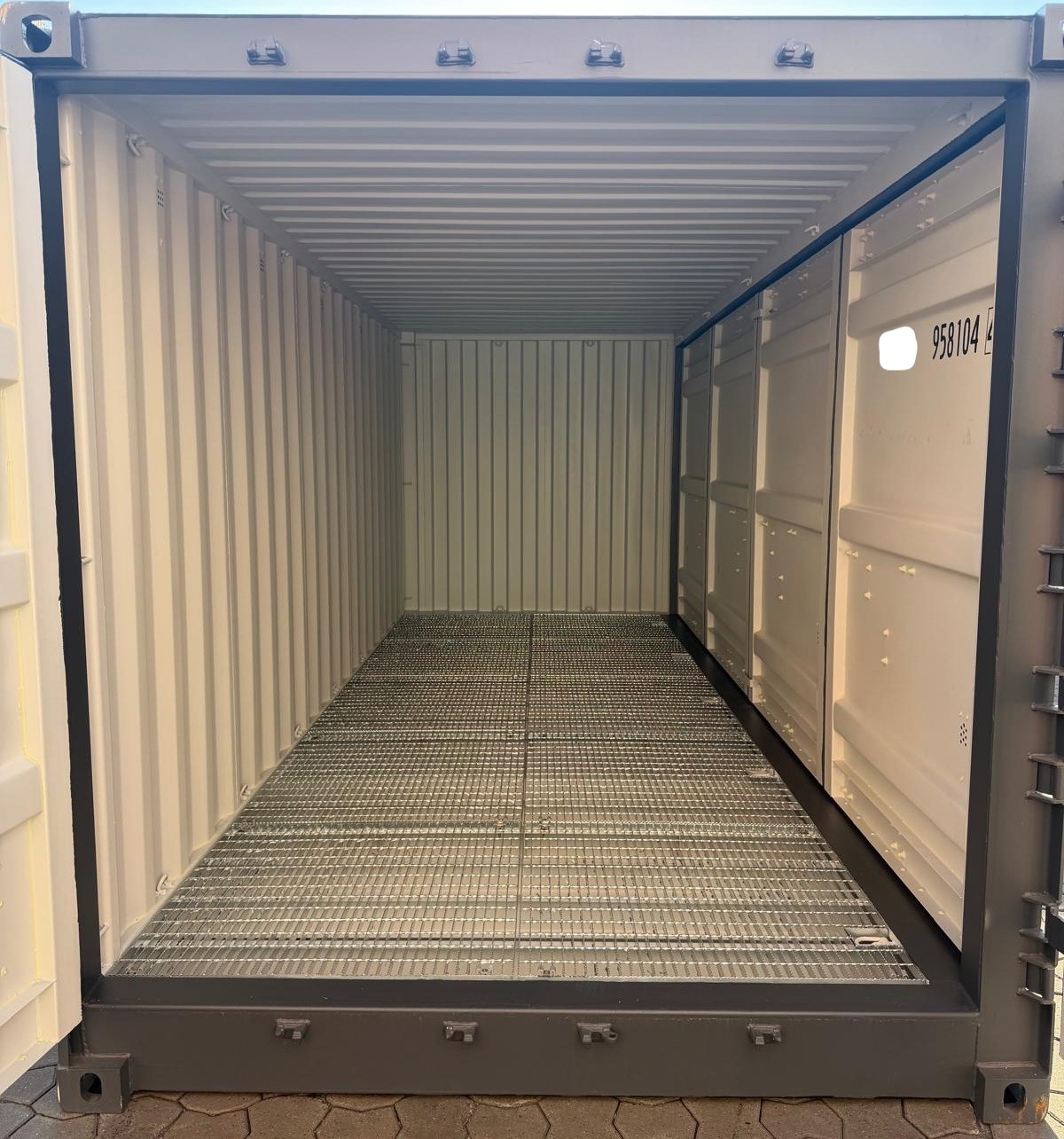
Shipping Container 20 Side Door Spillfloor – Drip Tray is a specialized type of standard 20-foot dry side door (SD) shipping container that has been modified with an integrated, sealed secondary containment system – known as a spill floor or drip tray. This structural element allows for the capture, retention, and safe collection of all leaks, drips, or spilled substances from primary containers stored inside the container. As a result, it effectively prevents the escape of hazardous or polluting substances into the surrounding environment. This modification is key to safe and legally compliant storage and transport of liquids, chemicals, oils, or other potentially harmful materials.
Synonyms and Related Terminology
- 20ft Bunded Container (20-foot container with tray)
- Container with Containment Tray
- Chemical Storage Container (container for storing chemicals)
- Hazardous Materials (Hazmat) Container (container for hazardous substances)
- Environmental Container
- Drip Tray Container (container with drip tray)
- Container with Retention Tank
- Spill Pallet Container (container with spill prevention pallet)
Detailed Explanation and Technical Information
Principle and Significance
The term “Shipping Container 20SD Spillfloor – Drip Tray” represents a combination of two fundamental areas in the world of logistics and industrial safety:
- Standardized ISO shipping container as a basic building block of international goods transport;
- Containment tray (drip tray, spillfloor) as a protective element against liquid leaks.
These containers thus respond not only to the requirement for universal use in transport, but also to increasingly strict environmental legislation and workplace safety requirements.
Structure and Dimensions: 20SD Shipping Container
Basic Construction: The shipping container 20SD (Standard Dry) is the most common type of shipping container. Its dimensions and parameters comply with the ISO 668 standard, which ensures compatibility with global transport infrastructure (ships, trains, trucks).
Typical Dimensions of 20SD Container:
| Parameter | Value (mm) |
|---|---|
| External Length | 6,058 |
| External Width | 2,438 |
| External Height | 2,591 |
| Internal Length | 5,898 |
| Internal Width | 2,352 |
| Internal Height | 2,393 |
| Volume | ~33 m³ |
| Tare (Empty Weight) | ~2,200–2,400 kg (without modifications) |
Construction: The container is welded from high-strength, weather-resistant Corten steel, which ensures long service life in demanding conditions. The basic floor is made of wooden boards, often sea-impregnated (e.g., plywood, bamboo).
Essential Modification: Containment Tray (Spillfloor, Drip Tray)
Problem with Standard Flooring: Standard container floors are not watertight – chemical leaks could seep through and contaminate the surroundings. Therefore, for storage and transport of hazardous liquids, a modification in the form of an integrated secondary containment tray is necessary.
Main Structural Components of Containment Tray:
- Sealed Steel or Plastic Tray:
Typically made from thick-walled (3–6 mm) steel, with surface treatment against corrosion (galvanizing, epoxy paint coatings). Alternatively, highly resistant polyethylene is used for applications with aggressive chemicals. - Steel or Hot-Dip Galvanized Grating:
A removable grating covers the tray and allows safe storage of drums, IBC containers, or canisters. The grating ensures the flow of any leaks into the tray while protecting against contact with spilled liquid. - Drain Valve:
A lockable valve for safe discharge of captured substances (e.g., when disposing of a leak or cleaning). - Ventilation:
Passive vents or ventilation flaps ensure vapor removal and reduce the risk of explosion in case of volatile substances.
Containment Tray Parameters:
According to regulations (e.g., European Directive 2001/59/EC), the secondary containment system must hold at least 110% of the volume of the largest stored container or 25% of the total stored volume (whichever is greater).
Typical Capacity of Containment Tray in 20ft Container:
- 1,200 to 1,500 liters (depending on design and grating dimensions)
Technical Specifications and Equipment (Example for 20ft Spillfloor Container)
| Specification | Typical Value |
|---|---|
| Max. Gross Weight | 30,480 kg |
| Empty Weight (Tare) | 3,400–3,600 kg (increased) |
| Useful Weight (Payload) | 27,000 kg |
| Internal Volume | 31.1 m³ (less than standard) |
| Containment Tray Capacity | 1,400 liters |
| External Dimensions (L/W/H) | 6,058 × 2,438 × 2,591 mm |
| Internal Dimensions (L/W/H) | 5,898 × 2,287 × 2,302 mm |
| Grating Height Above Tray Bottom | 100–200 mm |
| Forklift Pockets | Yes (standard) |
| Door Safety Lock | Yes (lockbox) |
| Ventilation | Yes (min. 2 passive vents) |
| Drain Valve | Yes (lockable) |
Main Functions and Benefits
Environmental Protection and Operational Safety
- Prevention of hazardous substance leaks into soil, water, or sewage systems
- Compliance with legislative requirements for secondary containment (e.g., Water Act No. 254/2001, REACH Regulation, ADR, ČSN EN 14470-1)
- Protection of personnel from direct contact with chemicals
- Reduced risk of fire and explosion through ventilation and separation of hazardous substances
Modularity and Mobility
- Easy relocation as needed (on construction sites, facilities, between operations)
- Possibility of placement in open spaces or indoors
- Quick installation without structural modifications
Hygiene and Easy Maintenance
- Smooth surfaces and removable grating for easy cleaning and decontamination
- Possibility of regular inspection and maintenance (visual inspection of tightness, coating condition, ventilation, and valve function)
Typical Uses and Industries
Chemical Industry: Storage of drums, IBC containers with acids, bases, solvents.
Petrochemistry: Storage of oils, lubricants, fuels, hydraulic fluids.
Agriculture: Storage of pesticides, herbicides, liquid fertilizers.
Construction: Temporary storage of fuel for machinery, chemicals for concrete treatment, etc.
Manufacturing and Industrial Enterprises: Safe storage of cleaning agents, paints, adhesives, operational fluids.
Waste Management: Collection and temporary storage of liquid hazardous waste before disposal.
Additional Specific Examples of Use:
- Protection of machinery hall floors against hydraulic and oil leaks (placement of container directly under critical equipment)
- Mobile chemical storage at events, festivals, etc.
Operating Procedures – Handling, Loading, Maintenance
Loading (Content Uploads):
- Input Inspection:
Check the integrity and cleanliness of the tray, closure of the drain valve, condition of the grating, and ventilation. - Safe Loading:
Use appropriate handling equipment (forklift, dolly, pallet truck). Place containers evenly and stably on the grating. - Cargo Securing:
Secure drums and containers against tipping (e.g., with straps, stops). - Separation of Incompatible Substances:
Substances that react when mixed must not be stored together (e.g., acids + bases).
Response to Leaks:
- Captured liquid remains safely in the tray.
- Use absorbent pads, manual pump, or suction.
- Discharge through valve (professionally, according to hazardous waste regulations).
- Complete cleaning and decontamination before further use.
Regular Maintenance:
- Inspection of tray tightness, condition of anti-corrosion protection, valve and ventilation function.
- Regular cleaning of grating and container interior.
- Record of identified defects and their prompt elimination.
Legislation and Standards
- ADR/RID/IMDG – Transport of Dangerous Goods
- REACH Regulation (EC 1907/2006)
- Water Act No. 254/2001
- EN 14470-1 – Safety Containers for Storage of Flammable Liquids
- Regulation No. 450/2005 – Details on Protection of Waters Against Pollution
- Requirements for Secondary Containment Volume (see above 110%/25%)
Certification:
All containers must comply with applicable technical standards, including CSC (Convention for Safe Containers) approval when used in international transport.
Frequently Asked Questions (FAQ)
What is the difference between a standard shipping container and a container with spillfloor?
A standard container has a plywood/bamboo floor and is not watertight. A spillfloor container has an integrated steel containment tray with grating – making it suitable for substances with leak risk.
What materials is the drip tray made from?
Most commonly from thick-walled steel (Corten or structural steel), surface-protected against corrosion. In some cases, from HDPE (polyethylene) for aggressive chemicals.
Can a standard container be converted to a drip tray container?
Yes, this is a common custom service. The old floor can be removed and replaced with a welded tray and grating.
What regulations must a container for storing chemicals comply with?
It must have adequate secondary containment capacity, be chemically and mechanically resistant, equipped with ventilation and safety features. Additionally, labeling requirements apply according to ADR/CLP and record-keeping.
How is spilled substance in the tray disposed of?
The grating is removed, the liquid is suctioned or absorbed with absorbent material, then professional waste disposal and tray disinfection are required.
How often must inspections and maintenance be performed?
A minimum quarterly inspection of tightness, surface condition, ventilation function, and drain valve is recommended. Complete cleaning is required after any leak.
Conclusion
The Shipping Container 20SD Spillfloor – Drip Tray represents a modern, legally compliant, and safe solution for storage and transport of substances with leak risk. By combining a robust ISO container with a steel containment tray and other safety features, it enables businesses to minimize ecological and operational risks, protect employee health, and simultaneously meet strict legal and regulatory requirements. Its modularity, long service life, and simple maintenance make it an indispensable tool in many industrial sectors.