
Bulk container
A bulk container, also known as a “bulk shipping container”, is a special type of container designed for transporting bulk materials. These containers are designed to allow efficient and safe loading, transport and unloading of bulk products. Most commonly these are materials such as grains, powders, granules, lump materials, coal, gravel, chemicals or cement. Bulk containers are used in a variety of industries, including agriculture, construction and the chemical industry.
A bulk container is therefore used exclusively for the transport and storage of bulk or loose material. This type of container is designed to facilitate the handling and pouring of material through special bulking holes located in the roof. This ensures efficient and safe transportation of these materials.
Construction and design of bulk containers
Bulk containers are usually made of durable materials such as steel or aluminium, which ensure their strength and longevity. A key feature of these containers is the top fill and bottom discharge openings, which make it easier to load and unload materials. The top openings allow easy filling of the container, while the bottom outlet ensures fast and efficient emptying of the contents.
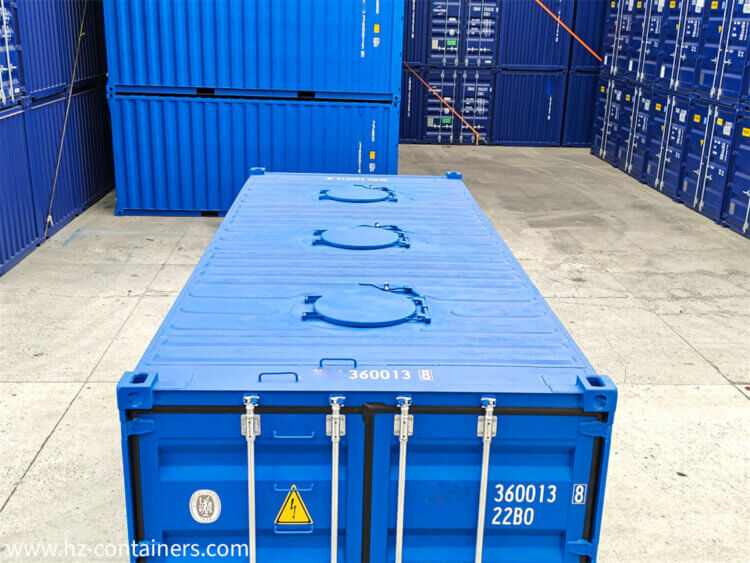
Containers marked “Bulk” have the same shape as a conventional storage container. It is made of a solid steel construction that ensures its durability and stability during transport and storage. There are three filling holes on the roof of the container, which are used to fill the container with material. These openings are equipped with special flaps or lids that allow easy opening and closing.
Bulk containers have three loading hatches in the roof, each with a diameter of approximately 455 mm. The distance between the hatches (centre to centre) is 1.83 m. On the underside of the rear of the container, on the narrower side, there is 1 standard unloading hatch for emptying and discharging bulk material from the container.
When using a bulk container, the material is filled through the spreading holes in the roof using various equipment such as conveyor belts, wheel loaders or vacuum systems. The weight of the material is distributed evenly throughout the container by self-steering. This is important to ensure even weight distribution and container stability during handling.
Advantages of using bulk containers
There are a number of advantages to using bulk containers. The first and most important is the efficiency of transport. Thanks to their special design, containers can be filled and emptied quickly, saving time and reducing labour costs. Containerisation of bulk materials also minimises the risk of contamination and loss of material during transport.
Another important advantage is versatility. Bulk containers are suitable for transporting a wide range of bulk materials, making them the ideal choice for a variety of industrial applications. In addition, due to their robust construction, the containers can be reused, which contributes to sustainability and reduces overall logistics costs.
For Bulk Materials – Bulk Containers
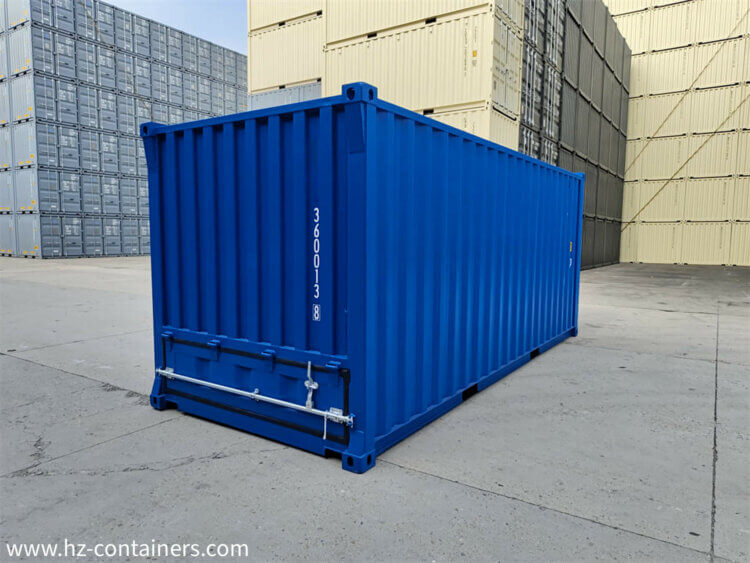
Bulk containers are mainly used in the logistics, construction and agricultural industries for the efficient transport and storage of bulk materials. Thanks to its design with filling holes in the roof, the container can be filled and emptied quickly and conveniently.
Bulk containers are often used in industry, agriculture and other sectors that require the transport of large quantities of non-standard materials. When planning a bulk container shipment, it is important to consider the specific requirements of the material, how it will be loaded and unloaded, as well as ensuring that the safety rules and regulations for the type of material are followed. In most cases, these containers are transported on special semi-trailers that can tip the container to discharge the material.
Types of bulk containers
There are several types of bulk containers that vary in design and specifications according to the user’s needs. The most commonly used types include:
- 20′ bulk container: this type is the most commonly used and is ideal for transporting smaller volumes of bulk materials. It has a standard size of 20 feet and is equipped with a top opening for filling and a bottom outlet for emptying.
- 40′ bulk container: this type is a larger version that offers more capacity for transporting larger volumes of materials. Like the 20′ container, this type has top openings and a bottom outlet.
- Flexible intermediate bulk container (FIBC): these containers are made of woven polypropylene and are designed to be lightweight yet durable. FIBC bags are ideal for transporting smaller volumes of bulk materials and can be easily stored when not in use.
Use of bulk containers in various industries
Bulk containers are widely used in various industries. In agriculture, they are used to transport grain, seeds and fertilizers. In the construction industry, they are ideal for transporting sand, gravel and cement. The chemical industry uses bulk containers to transport chemicals and other hazardous materials.
BULK CONTAINERS FOR SALE – COMPLETE OFFER HERE
Safety and standards
Safety is a key factor when using bulk containers. These containers must meet strict safety and quality standards to ensure the safe transportation of materials. UN Certified FIBC bags, for example, are designed to safely store and transport flammable powders, powders or vapors.
Bulk containers are an efficient and versatile solution for transporting bulk materials. Their robust construction, easy loading and unloading, and wide range of applications make them the ideal choice for a variety of industrial applications. Whether you need to transport grain, sand, chemicals or other bulk materials, bulk containers provide a reliable and efficient way to do it.