
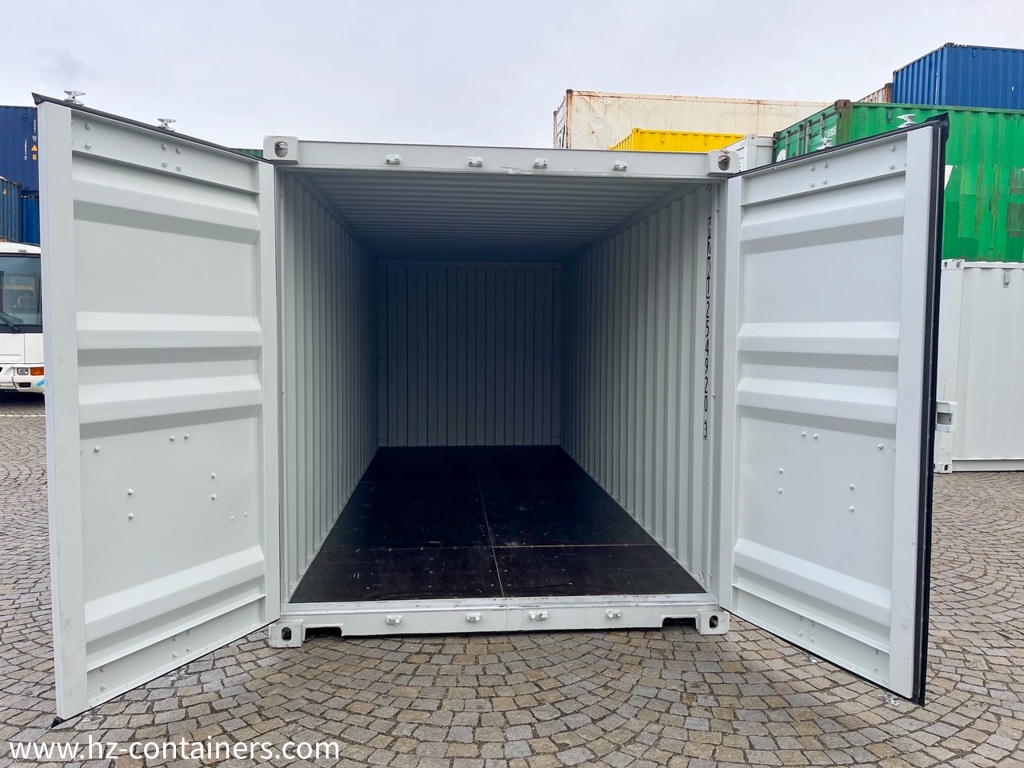
Floor of a Shipping Container – Keruing and Eucalyptus Veneer
Shipping container floor is a key structural element that significantly affects safety, lifespan and usage options of the entire container. Among the most widespread solutions worldwide are floors made of plywood based on hardwood Keruing (Apitong) and eucalyptus veneer, which have become an industry standard due to their exceptional strength, durability and long lifespan even under extreme conditions of international transport.
What is a Shipping Container Floor Made of Keruing and Eucalyptus Veneer?
Shipping container floor made of Keruing and eucalyptus veneer is a multi-layer composite panel (plywood), where the surface and bottom are made of tropical hardwood veneer Keruing (Apitong) and the core (middle layers) are made of eucalyptus veneers or other hardwoods. This combination provides excellent mechanical properties, high resistance to moisture and long lifespan even with frequent loading and handling in an aggressive environment.
Significance in Container Construction
- Load transfer: The floor transfers point and surface loads to the steel cross members of the container frame.
- Ensuring rigidity: Significantly contributes to the overall rigidity and dimensional stability of the container.
- Safety: Quality flooring protects stored goods and enables safe movement of people and equipment inside the container.
- Standards: Must comply with strict international ISO standards (particularly ISO 1496-1), which set minimum requirements for strength, durability and dimensions.
Composition and Technical Structure
Main Materials
| Material | Use in Layer | Key Properties |
|---|---|---|
| Keruing (Apitong) | Surface and bottom layer | High hardness, impact resistance, natural resistance to moisture and insects |
| Eucalyptus | Core (middle layers) | Strength, stability, cost-effectiveness, rapid growth (sustainability) |
Keruing (Apitong)
- Tropical hardwood, botanically classified in the genus Dipterocarpus, originating from Southeast Asia.
- Density up to 850 kg/m³, high hardness (Janka Hardness > 1600 lbf).
- Natural oils and resins increase resistance to rot, moisture, wood-eating insects and mold.
- Excellent bending strength and resistance to dynamic stress (impacts, vibrations, point loads from equipment wheels).
Eucalyptus Veneer
- Fast-growing deciduous tree, often cultivated on plantations in Asia, Australia and South America.
- Density approximately 650–750 kg/m³.
- Ensures stability, rigidity and reduces manufacturing costs without significant reduction in mechanical durability.
- Contributes to ecological sustainability through the possibility of certified cultivation (FSC, PEFC).
Construction and Layering (ply count)
Flooring plywood for containers typically has 19 to 21 layers (plies) of veneer, which are laid crosswise (fiber direction alternates by 90°), which ensures:
- Maximum strength in all directions
- Dimensional stability (resistance to twisting, cracking, delamination)
- High load-bearing capacity for point and surface loads
Typical Dimensions and Specifications
| Parameter | Typical Value |
|---|---|
| Thickness | 28 mm |
| Board Dimensions | 1160 x 2400 mm |
| Number of Layers | 19/21 |
| Weight | 58–69 kg/piece |
| Density | 750–850 kg/m³ |
| Moisture Content | 8–12 % |
| Adhesive Class | WBP (Water & Boil Proof), sometimes melamine 15% |
Adhesives and Bonding
- Phenol-formaldehyde adhesive (WBP): Ensures resistance to water and boiling, long-term stability and prevents delamination even under extreme moisture.
- Melamine adhesives: Sometimes used in the lower layer (approximately 15%), usually in combination with phenolic adhesive.
Surface Treatments and Protection
- Eucalyptus/Keruing film: Increases resistance to abrasion, chemicals and moisture.
- Chemical treatment: Insecticides and fungicides (e.g. Basileum, Tailileum) for protection against pests and mold – mandatory for international transport.
Manufacturing Process of Flooring Boards
Manufacturing of plywood flooring for containers is a highly technological process involving:
- Selection and preparation of logs: Quality straight logs of Keruing and eucalyptus are used.
- Veneer peeling: Logs are peeled into thin layers (0.8–2.0 mm).
- Veneer drying: To 8–12% moisture, preventing future deformations.
- Sorting and adhesive application: Veneers are sorted by quality, WBP adhesive is applied to each layer.
- Cross-layer stacking: Ensures maximum strength and stability.
- Pressing: Cold and then hot pressing (temperature 120–150 °C, pressure 1.0–1.2 MPa).
- Trimming and sanding: Final formatting to precise dimensions, sanding for smooth surface.
- Impregnation and pest protection: Mandatory for export, ensures long lifespan.
- Quality control: Testing of strength, dimensions, moisture, adhesives.
Floor Layout and Assembly in Container
Board Layout
- 20-foot container: 4 boards (1160 x 2400 mm) + 2 smaller boards (for example 636 x 2400 mm) cover the entire floor.
- 40-foot container: 8 boards (4 + 4 in length) + 2 smaller boards for precise width filling.
- Joining: Boards are screwed with self-tapping screws to the cross members from below. Number of screws per board: 40–50 pieces.
Laying Scheme
| Container | Main Boards | Supplementary Boards |
|---|---|---|
| 20′ | 4 × 2400×1160 mm | 2 × ~2400×636 mm |
| 40′ | 8 × 2400×1160 mm | 2 × ~2400×636 mm |
Important Assembly Requirements
- Proper screw tightening (prevention of loosening during vibrations)
- Correct layer orientation (higher strength and dimensional stability)
- Maximum joint tightness (prevention of moisture and insect penetration)
Technical and Functional Properties
Mechanical Properties
- Load capacity: Container floor must withstand point load of min. 7260 N (corresponding to the pressure of a forklift wheel).
- Wear resistance: Keruing surface veneer excellently resists abrasion, scratches, impacts.
- Bending strength: Cross-layer composition minimizes the risk of breaking or cracking even under extreme overload.
Resistance to Moisture and Pests
- WBP adhesive: Ensures that layers resist moisture, rain, temperature changes without delamination.
- Chemical impregnation: Protection against termites, insects, mold mandatory according to international transport regulations.
Insulation Properties
- Wood as natural insulator: Mitigates temperature fluctuations inside the container compared to steel or aluminum floors.
- Vibration damping: Wooden floor absorbs part of vibrations during transport.
Lifespan
- Typical lifespan: 15–20 years in normal container operation, longer with proper maintenance.
- Factors affecting lifespan: Quality of protective coating, frequency and type of loading, degree of surface damage.
Advantages and Disadvantages of Keruing and Eucalyptus Floors
Advantages
- High strength and load capacity (for heavy cargo, High Cube containers, forklift operation)
- Long lifespan in demanding conditions
- Possibility of local repair (replacement of damaged part)
- Cost-effectiveness compared to metal and composite alternatives
- Natural anti-slip surface
- Ecological option when using FSC/PEFC certification
Disadvantages
- Sensitivity to moisture if protective layer is damaged
- Possible health risk from used pesticides (important for residential conversions)
- Natural surface wear (scratches, grooves, abrasion)
- Need for regular maintenance (coatings, joint inspection)
Alternative Container Floor Materials
Bamboo Plywood
- Environmentally friendly solution – rapidly renewable resource
- Hardness and lifespan comparable to Keruing
- Resistance to moisture and pests
- Higher acquisition price compared to standard plywood
Steel and Aluminum Floors
- High load capacity and lifespan (especially in reefers and specialized containers)
- Easy hygienic maintenance
- High weight, higher price, poor thermal insulation
- Surface slipperiness (need for anti-slip treatments)
Composite Floors (WPC, FRP)
- Resistance to water and chemicals
- Low maintenance, long lifespan
- Higher acquisition costs
- Worse repairability compared to wood
Maintenance, Repairs and Safety
Maintenance Principles
- Regular condition inspection: Special attention to cracks, delamination, pest marks and surface damage.
- Cleaning: Removal of dirt, quick drying of spilled liquids.
- Repairs: Minor damage can be resolved with filler, larger damage with patch replacement or entire board replacement.
- Restoration of protective coatings: Polyurethane, epoxy or special container paints.
Safety and Ecological Aspects
- Chemical treatment of floors: Mandatory according to international transport (preventive protection against pests) – important when converting containers to residential or office spaces (floor replacement or sealing of original surface with epoxy).
- Certification: CSC Plate on container doors often indicates the type of treatment used and the year of floor manufacture.
- Ecological choice: Prefer floors from certified sources (FSC, PEFC), or alternative floors (bamboo).
Comparison Table – Flooring Materials in Containers
| Material | Strength | Water Resistance | Maintenance | Lifespan | Price | Ecology |
|---|---|---|---|---|---|---|
| Keruing/Eucalyptus | ★★★★☆ | ★★★★☆ | ★★★★☆ | ★★★★☆ | ★★★★☆ | ★★★☆☆ |
| Bamboo | ★★★★☆ | ★★★★☆ | ★★★★☆ | ★★★★☆ | ★★★☆☆ | ★★★★★ |
| Steel/Aluminum | ★★★★★ | ★★★★★ | ★★★★★ | ★★★★★ | ★★☆☆☆ | ★☆☆☆☆ |
| Composite (WPC) | ★★★★☆ | ★★★★★ | ★★★★★ | ★★★★★ | ★★☆☆☆ | ★★★★☆ |
Conclusion
Shipping container floor made of Keruing and eucalyptus veneer is an indispensable part of modern logistics and storage. Due to its construction, durability and repair possibilities, it remains the most common choice for most transport containers in the world. With proper maintenance, it offers long lifespan, high safety and relatively favorable ecological footprint – especially when using certified materials or transitioning to alternative materials such as bamboo.

 Czech Republic
  WITHOUT SHIPPING

