
Depot Acceptance – container acceptance at the depot
Depot Acceptance, also known as container acceptance at the depot, is a key process in logistics and the transportation industry, focusing on the acceptance, inspection, and management of containers at depots (specialized warehouses for containers). This process includes a detailed inspection of the containers, recording their condition, organizing documentation, and ensuring they meet all standards for further use in the supply chain. Depot Acceptance serves as a critical point in the transportation flow, ensuring the quality and safety of containers before their next movement.
In the context of container transport, this process is essential to ensure that containers meet predefined standards, whether for the transport of goods, storage, or other logistics operations. Additionally, this process contributes to the efficient management of both empty and full containers, reducing costs and minimizing risks associated with non-compliant containers.
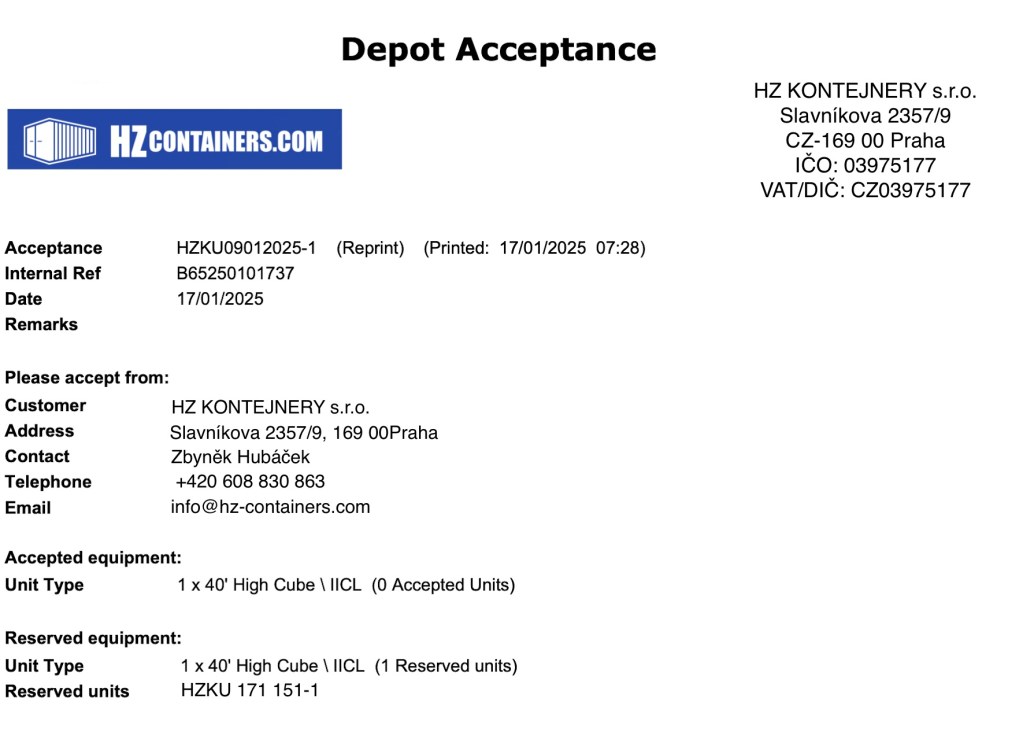
What Does Depot Acceptance Mean?
Depot Acceptance is the process by which a container is accepted and inspected upon arrival at the depot. This process includes the following key steps:
- Container Owner Approval: A container cannot be accepted without written consent from the owner or an authorized representative. This rule is critical for ensuring accountability and control over containers, especially when handling damaged or contaminated units.
- Container Condition Inspection: Upon arrival at the depot, an inspection is conducted to determine the current condition of the container. The inspection includes checking for physical damage, cleanliness, and the functionality of all mechanical parts such as doors, seals, and the frame structure.
- Documentation: After the container is accepted, an EIR (Equipment Interchange Receipt) is filled out, which is a document used to accurately record the container’s condition, assign responsibility, and organize information.
- Further Steps: Based on the inspection results, the container is either repaired, stored, or prepared for further use. This step ensures that only containers meeting the set standards are used in the supply chain.
Key Terms Related to Depot Acceptance
Container Depot
Container Depot, also known as container depot, is a specialized facility where containers are stored, repaired, and managed. These depots are strategically located near ports or logistics centers to facilitate container handling and reduce transportation costs. Depots can also be located inland as Inland Container Depots (ICDs), which serve for the storage of containers near industrial centers.
Container Condition
Container Condition is one of the main factors examined during Depot Acceptance. This process includes checking the following aspects:
- Physical Damage: Cracks, dents, or other defects that could affect the container’s functionality.
- Cleanliness: Ensuring the container is not contaminated with hazardous or harmful materials.
- Technical Parameters: Functionality of doors, seals, and frame structure.
EIR (Equipment Interchange Receipt)
The EIR is a key document used during the Depot Acceptance process. It contains information such as the container’s prefix and number, delivery date, container condition (damaged or ready), signatures of responsible individuals, and other details.
Why is Depot Acceptance Important?
Depot Acceptance plays a key role in logistics processes for several reasons:
- Ensuring Quality: The Depot Acceptance process verifies that containers meet the standards required for safe transportation or storage.
- Efficient Inventory Management: Depots act as centers for managing empty and full containers, allowing for better planning and availability.
- Cost Reduction: Through effective inspection and management of containers, transportation and storage costs are reduced.
- Ensuring Safety: Containers that do not meet safety standards are identified and either repaired or removed from service.
How does Depot Acceptance work in practice?
1. Acceptance of the container at the depot gate
The containers are first brought to the depot, where their condition is checked upon arrival. This step includes recording:
- Prefix and container number.
- Delivery date.
- Names and signatures of the carrier and depot representatives.
2. Container condition inspection
The containers undergo an inspection that includes:
- Checking for damage (e.g., cracks, rust, deformation).
- Ensuring the container is not contaminated with hazardous materials.
- Checking functionality (e.g., door seals, frame).
3. Documentation completion
Based on the inspection, an EIR (Equipment Interchange Receipt) is filled out, which is a document confirming the container’s condition upon acceptance.
4. Next steps
Depending on the inspection results, the container is either:
- Repaired: If damage is detected, the container is sent for repair.
- Stored: Containers in satisfactory condition are stored.
- Prepared for shipment: If the container is needed for immediate transport, it is prepared for further shipment.
How does Depot Acceptance affect logistics?
Depot Acceptance brings several benefits to logistics processes:
- Better control and tracking: Inspections and documentation allow tracking the condition of containers across the entire supply chain.
- Risk reduction: Identifying damaged containers helps prevent losses and accidents during transportation.
- Cost optimization: Efficient management of containers in depots saves maintenance and storage costs.
Depot Acceptance is a key process in logistics that ensures containers meet all quality, safety, and usability requirements. This process enables efficient container management, cost reduction, and optimization of the supply chain. It is a crucial step in ensuring smooth transportation and storage of goods.

 Czech Republic, Třebíč
  WITHOUT SHIPPING

